

-
Yodelar analysed 4,218 IA sector-classified funds with available ongoing charges figure data to compare fund costs with Yodelar Rating distribution.
-
The lowest-cost quartile had an average OCF of 0.16%, compared with 1.20% for the highest-cost quartile.
-
The highest-cost quartile had the weakest Yodelar Rating profile, with 14.5% rated 4 or 5 stars and 68.5% rated 1 or 2 stars.
-
When funds were compared within their own IA sectors, the highest-cost group again had the weakest rating profile, with 69.3% rated 1 or 2 stars.
Fund charges are one of the few costs investors can identify before they invest. Performance is uncertain, market conditions change, and fund managers can move through stronger and weaker periods. The ongoing charge, however, is known in advance and is deducted whether a fund performs well or poorly.
This makes charges important, but they should not be assessed in isolation. A lower-cost fund is not automatically a better fund, and a higher-cost fund is not automatically poor. Some higher-cost funds may be appropriate where they provide specialist exposure, have delivered strong historic results compared with similar funds, or play a specific role within a wider portfolio.
The more useful question for investors is whether the charge being paid appears reasonable when viewed alongside the fund’s historic performance record, sector ranking, rating profile and role in the portfolio.
To assess this, Yodelar analysed 4,218 Investment Association (IA) sector-classified funds with available ongoing charges figure data. The analysis grouped funds by OCF and reviewed how funds in each cost group were distributed across Yodelar Rating bands.

How The Yodelar Rating Is Used In This Analysis
The analysis in this article does not compare the average return of low-cost funds with the average return of high-cost funds. Instead, it compares fund charges with Yodelar Rating distribution. This distinction is important because the tables show the proportion of funds in each cost group that were rated 4 or 5 stars, and the proportion rated 1 or 2 stars.
Yodelar Ratings are based on historic fund performance relative to funds in the same IA sector. The rating process considers how consistently a fund has ranked against comparable funds over multiple time periods, including 1, 3 and 5 years, with volatility also considered as part of the assessment.
A 4 or 5 star Yodelar Rating indicates a stronger historic performance profile compared with similar funds. A 3 star rating indicates a more mixed, average or incomplete performance profile. A 1 or 2 star rating indicates a weaker historic performance profile compared with similar funds.
The purpose of this analysis is therefore to understand whether higher-cost funds had a stronger or weaker Yodelar Rating profile than lower-cost funds. It does not suggest that charges alone determine performance, nor does it suggest that any rating can predict future returns.
Why Charges Should Be Reviewed
Most funds publish an ongoing charges figure, often referred to as the OCF. This is the annual cost of running the fund, expressed as a percentage. A fund with an OCF of 0.20% costs around £20 a year for every £10,000 invested, while a fund with an OCF of 1.20% costs around £120 a year for every £10,000 invested.
The difference becomes more meaningful as portfolio values increase. On a £100,000 holding, the difference between a 0.16% OCF and a 1.20% OCF is around £1,040 a year before any platform, adviser or transaction costs are considered.
Charges do not need to be the lowest available to be justified. However, where a fund is more expensive than comparable alternatives, investors should expect there to be a clear reason for that higher charge. That reason may relate to performance, specialist exposure, diversification or the specific role the fund plays within the portfolio.
What The Yodelar Charge Analysis Found
Based on fund information as at 30 April 2026, Yodelar grouped 4,218 IA sector-classified funds with available OCF data into four cost bands, ranging from the lowest-cost 25% of funds to the highest-cost 25% of funds.
The lowest-cost quartile had an average OCF of 0.16%. In this group, 20.8% of funds were rated 4 or 5 stars, while 54.5% were rated 1 or 2 stars.
The highest-cost quartile had an average OCF of 1.20%. In this group, 14.5% of funds were rated 4 or 5 stars, while 68.5% were rated 1 or 2 stars.
| Funds by OCF across all sectors | Average OCF | Funds with a 4 or 5 star Yodelar rating | Funds with a 1 or 2 star Yodelar rating |
|---|---|---|---|
| Lowest-cost 25% of funds | 0.16% | 20.8% | 54.5% |
| Lower-middle cost 25% of funds | 0.51% | 19.2% | 61.5% |
| Higher-middle cost 25% of funds | 0.82% | 17.7% | 63.9% |
| Highest-cost 25% of funds | 1.20% | 14.5% | 68.5% |
The data shows that the highest-cost group had the weakest Yodelar Rating profile. It had the lowest proportion of 4 and 5 star rated funds and the highest proportion of 1 and 2 star rated funds.
This should not be interpreted as evidence that low-cost funds are always better. More than half of the lowest-cost quartile was also rated 1 or 2 stars, which shows that cost alone is not a reliable measure of fund quality. The more balanced conclusion is that higher charges were not associated with a stronger Yodelar Rating profile in this dataset.

Why Sector Comparisons Provide A Fairer View
Comparing all funds together can be useful, but it has limitations. Some fund sectors naturally have higher costs than others because they invest in more specialist markets or require more active research. A smaller companies fund, for example, may have a different cost structure from a broad index-tracking fund.
For this reason, Yodelar also compared funds by cost within their own IA sectors. This provides a fairer view because each fund is assessed against funds investing in broadly similar areas.
When funds were grouped by cost within their own sectors, the pattern was similar. The lowest-cost funds within their sectors had 21.1% rated 4 or 5 stars and 53.7% rated 1 or 2 stars. The highest-cost funds within their sectors had 14.2% rated 4 or 5 stars and 69.3% rated 1 or 2 stars.
| Funds grouped by cost in their sector | Average OCF | Funds with a 4 or 5 star Yodelar rating | Funds with a 1 or 2 star Yodelar rating |
|---|---|---|---|
| Lowest-cost 25% within each sector | 0.24% | 21.1% | 53.7% |
| Lower-middle cost 25% within each sector | 0.55% | 19.3% | 62.1% |
| Higher-middle cost 25% within each sector | 0.79% | 17.5% | 63.6% |
| Highest-cost 25% within each sector | 1.14% | 14.2% | 69.3% |
This sector-level comparison is the more relevant test because it reduces the effect of natural cost differences between sectors. It shows that, even when funds were compared with broadly similar alternatives, the highest-cost group had the weakest Yodelar Rating profile.
The data does not show that higher charges caused weaker ratings. It does show that higher-cost funds were not more likely to have stronger Yodelar Ratings, either across the full fund universe or within their own IA sectors.
What This Means For Investors
The analysis does not support a simple move towards the cheapest available funds. Some low-cost funds had weak Yodelar Ratings, and some higher-cost funds had stronger ratings. Cost is therefore best treated as one part of the review process rather than the deciding factor.
The main value of this analysis is that it helps investors identify when a fund may require closer review. A higher charge may be reasonable where the fund has delivered strong historic results compared with similar funds, provides useful diversification or gives access to an area that is difficult to invest in cheaply.
A higher charge is harder to justify where the fund also has a weak historic rating profile. In that situation, investors may be paying more for a fund that has not compared favourably with similar alternatives under the Yodelar Rating methodology.
This is particularly relevant for investors who have held the same funds for several years without reviewing them. A fund may still show a positive return, but that does not necessarily mean it has performed well compared with other funds in the same sector. Reviewing charges alongside sector ranking and rating data gives a clearer view of whether each fund remains appropriate.
When A Higher Charge May Be Reasonable
A higher-cost fund may still represent good value if it provides something that cheaper alternatives do not. This could include specialist exposure, a differentiated investment approach, or a strong long-term record compared with funds in the same sector.
The important point is that the charge should be supported by evidence. Investors should be able to identify why the fund is held, how it has compared with similar funds, and whether the additional cost has been justified by its historic results or its role in the portfolio.
Where a fund is higher cost, weakly rated and no longer has a clear role, it may be a sign that further review is needed. This does not automatically mean the fund is unsuitable, but it does mean the holding should not be ignored.
Summary
Yodelar’s latest analysis reviewed 4,218 IA sector-classified funds with available OCF data and compared charges with Yodelar Rating distribution. The analysis found that the highest-cost quartile had the weakest rating profile, with 68.5% of funds rated 1 or 2 stars across the full fund universe.
When funds were compared within their own IA sectors, the highest-cost group again had the weakest rating profile, with 69.3% rated 1 or 2 stars. This sector-level comparison is particularly useful because it compares funds with broadly similar alternatives.
The findings do not show that investors should always choose the cheapest fund. They show that higher charges were not associated with stronger Yodelar Ratings in this dataset. For investors, the practical conclusion is that every fund charge should be reviewed in context, using historic performance, sector ranking, risk, rating data and suitability.
A fund’s cost should be understood before investing and reviewed regularly after investing. Where a fund is more expensive than comparable alternatives, there should be clear evidence to support why that charge is being paid.
Download The Complete Fund Performance Report
The Yodelar Complete Fund Performance Report provides fund-level data across IA sectors, including performance figures, sector ranking, sector averages, OCF data and Yodelar Ratings. It is designed to help investors compare funds with similar alternatives and better understand how their holdings have performed historically.
The report can help investors identify whether their funds have ranked strongly or weakly within their sectors, whether they hold higher-cost funds, and whether any holdings may need further review. The report is for information only and does not provide personal financial advice.

Claim A Free Yodelar Portfolio Analysis
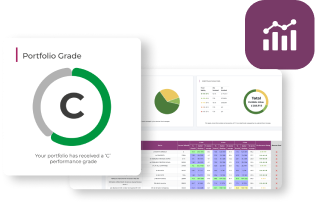
A free Yodelar portfolio analysis reviews each fund in an investor’s portfolio and shows how the holdings compare with similar funds based on historic data. The analysis identifies sector ranking, Yodelar Rating and an overall portfolio grade from A to F.
The analysis can help highlight funds that may need closer review, including holdings with higher charges, weaker ratings or duplicated exposure. It does not provide personal advice and does not recommend whether to buy, sell or switch any investment.

Speak To An Adviser About Your Portfolio
Investors who want to understand whether their current portfolio remains suitable can arrange a no obligation call with an adviser. The discussion can cover the investor’s current holdings, portfolio analysis, long-term objectives, time horizon and attitude to risk.
Any personal recommendation would only be made after understanding the investor’s wider financial position, objectives and risk profile. Any recommendation would include a clear explanation of risks, costs and the ongoing service provided.