

- The Hargreaves Lansdown Wealth Shortlist can help investors narrow fund choice, but it should not replace fund-by-fund research.
- Our analysis found that the list includes funds with strong sector rankings, but also several funds with weaker historic performance compared with their Investment Association sector peers.
- Recent removals show that funds can remain on a preferred list during periods of weaker performance or after changes that may affect long-term confidence.
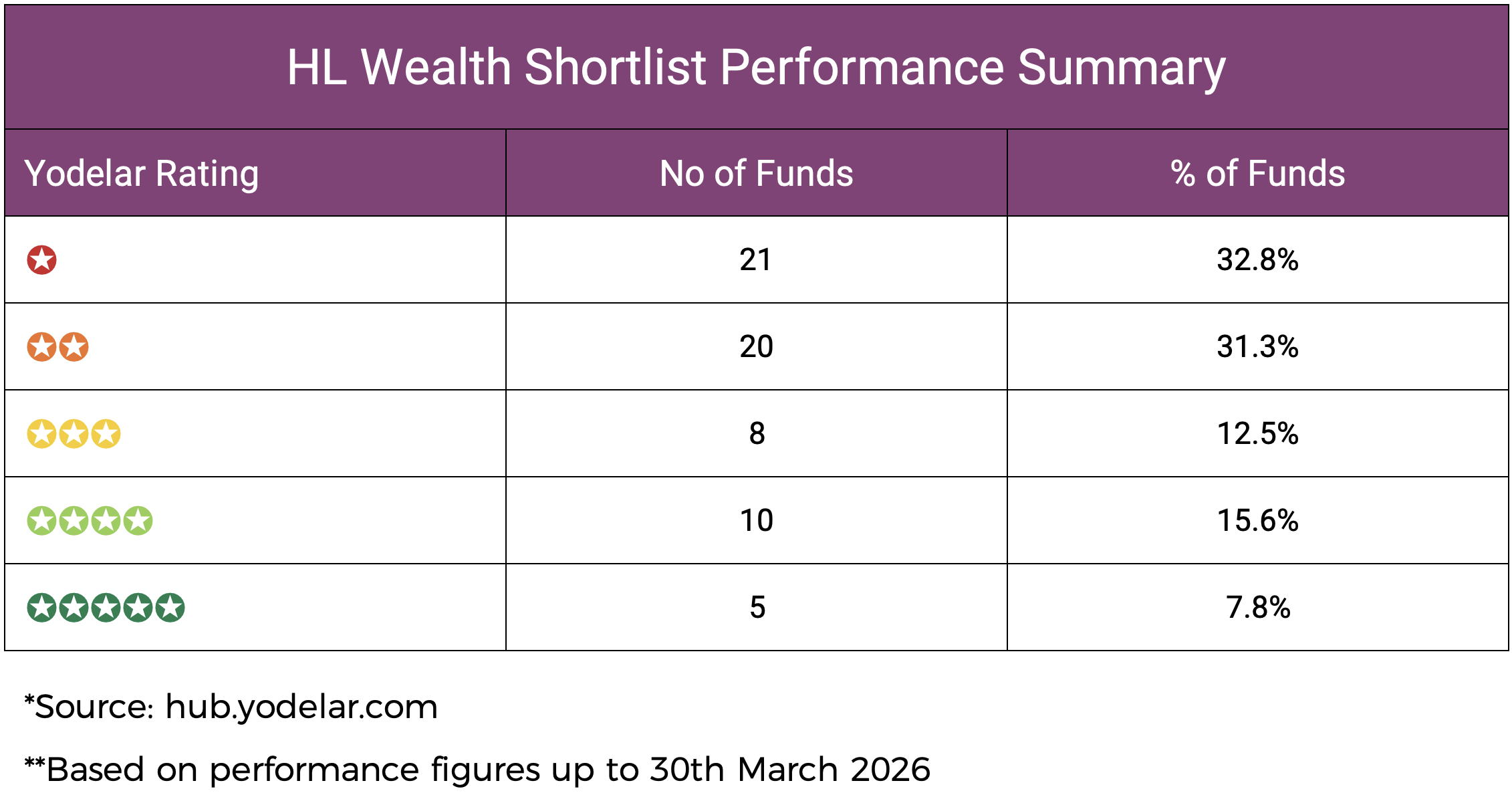
- We identified several Wealth Shortlist funds with 1-star Yodelar Ratings, meaning they had weaker historic sector-relative performance under our rating methodology.
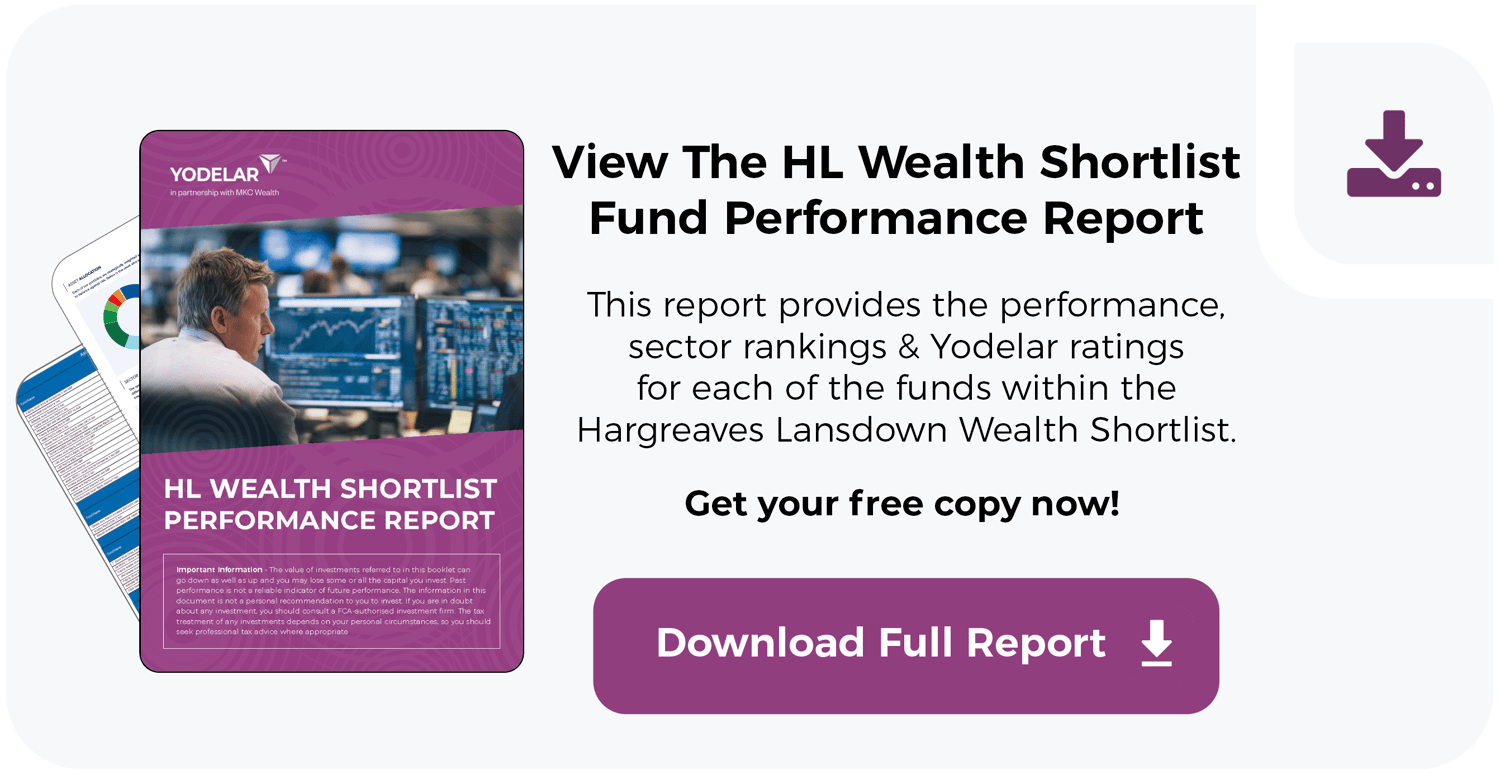
- Investors can download the full fund-by-fund report to see each Wealth Shortlist fund’s performance, sector ranking and Yodelar Rating.
The Hargreaves Lansdown Wealth Shortlist is used by many investors as a shortcut when choosing funds. It can be helpful, but it should not be mistaken for a full assessment of fund quality.
A fund appearing on the list may give investors confidence, particularly if they are managing their own ISA, SIPP or investment portfolio. But shortlist inclusion does not automatically mean a fund has consistently performed well against similar funds. It also does not show whether the fund is suitable for the investor’s objectives, attitude to risk or wider portfolio.
This matters because investors do not buy the whole shortlist. They choose individual funds from it. If those funds have weak sector rankings or poor historic performance compared with peers, the wider reputation of the list offers little protection.
Our latest analysis found that the Wealth Shortlist includes funds with strong historic sector-relative performance, but also several funds that have ranked poorly over multiple periods. This does not mean the shortlist has no value. It means investors should use it as a starting point for research, not as a substitute for reviewing each fund properly.
The key question for investors is not simply whether a fund appears on the Wealth Shortlist. It is whether that fund has delivered competitive results, whether it still has a clear role in the portfolio, and whether it remains suitable for their circumstances.
How Yodelar Rates Fund Performance
What Recent Removals Show Investors
Recent Wealth Shortlist removals show why investors should monitor the funds they hold rather than wait for a shortlist update.
Baillie Gifford American was removed after a period of weaker performance and elevated volatility compared with peers. Our data shows why this fund required closer review before its removal. It held a 1-star Yodelar Rating, returned -6.87% over 1 year, and ranked 252nd out of 256 funds in the Investment Association (IA) North America sector. Over 5 years, it returned -20.55%, ranking 208th out of 209.
Royal London UK Smaller Companies was also removed after manager changes and confirmation that the fund was expected either to close or merge into another strategy. Our data also showed weaker historic results. The fund held a 1-star Yodelar Rating, with a 1-year return of -6.64%, ranking 39th out of 43, and a 5-year return of -23.13%, ranking 32nd out of 42 in the IA UK Smaller Companies sector.
These examples do not mean investors should automatically sell a fund when it is removed from a shortlist. They do show why performance should be reviewed before a platform update forces the issue. A fund can remain on a preferred list while its sector ranking has already weakened.
New Additions Still Need Checking
New additions to a shortlist can be useful, but they still need the same level of review as any other fund.
Invesco Global Emerging Markets was added to the Wealth Shortlist in December 2025. In our analysis, it had a 4-star Yodelar Rating, with a 3-year return of 63.19%, ranking 17th out of 162, and a 5-year return of 51.85%, ranking 18th out of 147 in the IA Global Emerging Markets sector.
Vanguard Global Small-Cap Index was added in February 2026. In our analysis, it had a 3-star Yodelar Rating, with a 1-year return of 18.69%, ranking 76th out of 545, and a 5-year return of 33.05%, ranking 252nd out of 410 in the IA Global sector.
The point for investors is that inclusion is not enough. A fund may be added for valid reasons, but investors still need to understand how it has performed, what risk it carries, what it costs and whether it improves the portfolio they already hold.
Stronger Wealth Shortlist Funds
The Wealth Shortlist does include funds that have delivered strong historic results compared with their sector peers. These funds show why preferred lists can be useful when they help investors identify funds with strong sector-relative records.
Artemis Global Income ranked 1st in sector over 1, 3 and 5 years, making it one of the strongest examples in our review. Fidelity Special Situations also compared well, with a 5-star Yodelar Rating and strong 3 and 5-year rankings.
Jupiter India shows why sector ranking is important. Its 1-year return of -10.09% may look weak in isolation, but it still ranked 3rd out of 25 funds in its sector. Over 3 and 5 years, it ranked 2nd out of 21.
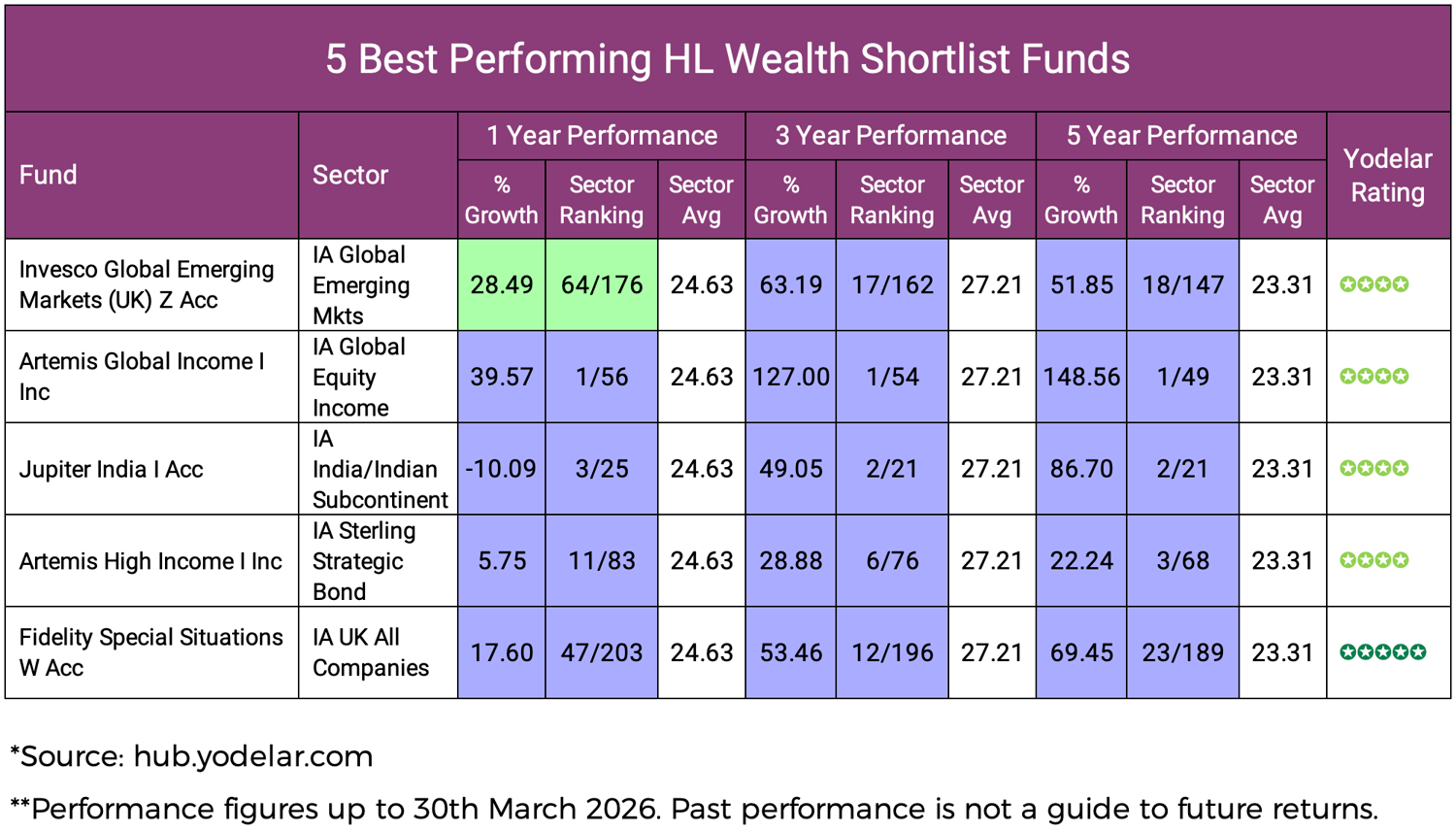
This is useful for investors because it shows why headline returns need context. A fund should be judged by how it has performed compared with funds investing in a similar area, not just by whether the return appears high or low in isolation.

Weaker Rated Funds
Our analysis also identified several Wealth Shortlist funds with weaker historic sector-relative performance. These are the funds investors should be most careful to review, particularly where they have been held for several years without reassessment.
Baillie Gifford Japanese ranked 97th out of 99 over 1 year and 80th out of 86 over 5 years. Baillie Gifford Monthly Income ranked 201st out of 228 over 1 year and 158th out of 192 over 5 years in the IA Mixed Investment 40-85% Shares sector.
Pyrford Global Total Return and Rathbone Global Opportunities also carried 1-star Yodelar Ratings in our analysis and sat in the weaker half of their sectors over key periods.
These figures do not mean the funds are automatically unsuitable for every investor. A fund may still have a role because of risk profile, diversification, income needs, tax position or wider portfolio structure. However, a weak rating and poor sector ranking should prompt further review.
Investors should not assume that a fund has a strong historic record simply because it appears, or previously appeared, on a recognised shortlist.
Download The Wealth Shortlist Fund Ranking Report
To support this review, we have produced a fund-by-fund report covering the Wealth Shortlist funds analysed. The report shows each fund’s Yodelar Rating, Investment Association sector and sector ranking over the periods reviewed.
The report can help investors see which Wealth Shortlist funds have ranked strongly against their peers and which have not. It can also help identify funds that may warrant closer review before adding new holdings or continuing with existing ones.
The report is designed as a research tool. It does not provide personal advice and does not recommend whether to buy, sell or switch any investment.
Claim A Free Yodelar Portfolio Analysis
A fund ranking report can show how Wealth Shortlist funds have performed, but it cannot tell you whether your own portfolio is well structured.
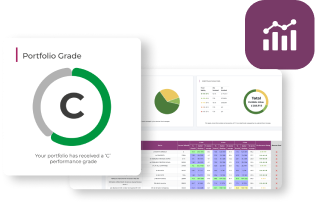
A free Yodelar portfolio analysis reviews each fund you hold, compares it with funds in the same sector and shows how much of your portfolio is invested in stronger and weaker rated funds. It also provides an overall portfolio grade from A to F.
This can be particularly useful for investors who have chosen funds from the HL Wealth Shortlist, other preferred fund lists, or fund recommendation tables. The analysis can help identify whether those choices have supported performance or whether parts of the portfolio may need closer attention.

Book a No Obligation Call With An Adviser
For investors who identify underperforming funds, the next question is what a more structured investment approach could look like.
A no obligation call with one of our advisers gives you the opportunity to discuss your Yodelar portfolio analysis, your long-term objectives and your attitude to risk. The adviser can explain how firms such as MKC Invest approach portfolio construction, fund selection and ongoing portfolio management.
The purpose of the call is to help you make a more informed decision about your current arrangements and whether professional advice may be appropriate. Any personal recommendation would only be made after understanding your financial position, objectives, time horizon and attitude to risk, and would include a clear explanation of risks, costs and ongoing service.