

-
A positive portfolio return does not automatically mean the portfolio is well structured.
-
Several funds can appear diversified but still hold many of the same companies, sectors or regions.
-
A fund can make money and still rank poorly compared with similar funds.
-
Portfolio risk can change over time, even if the investor has made few changes.
-
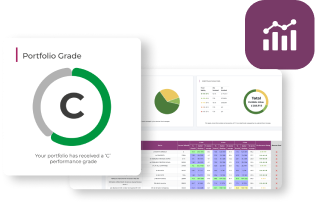
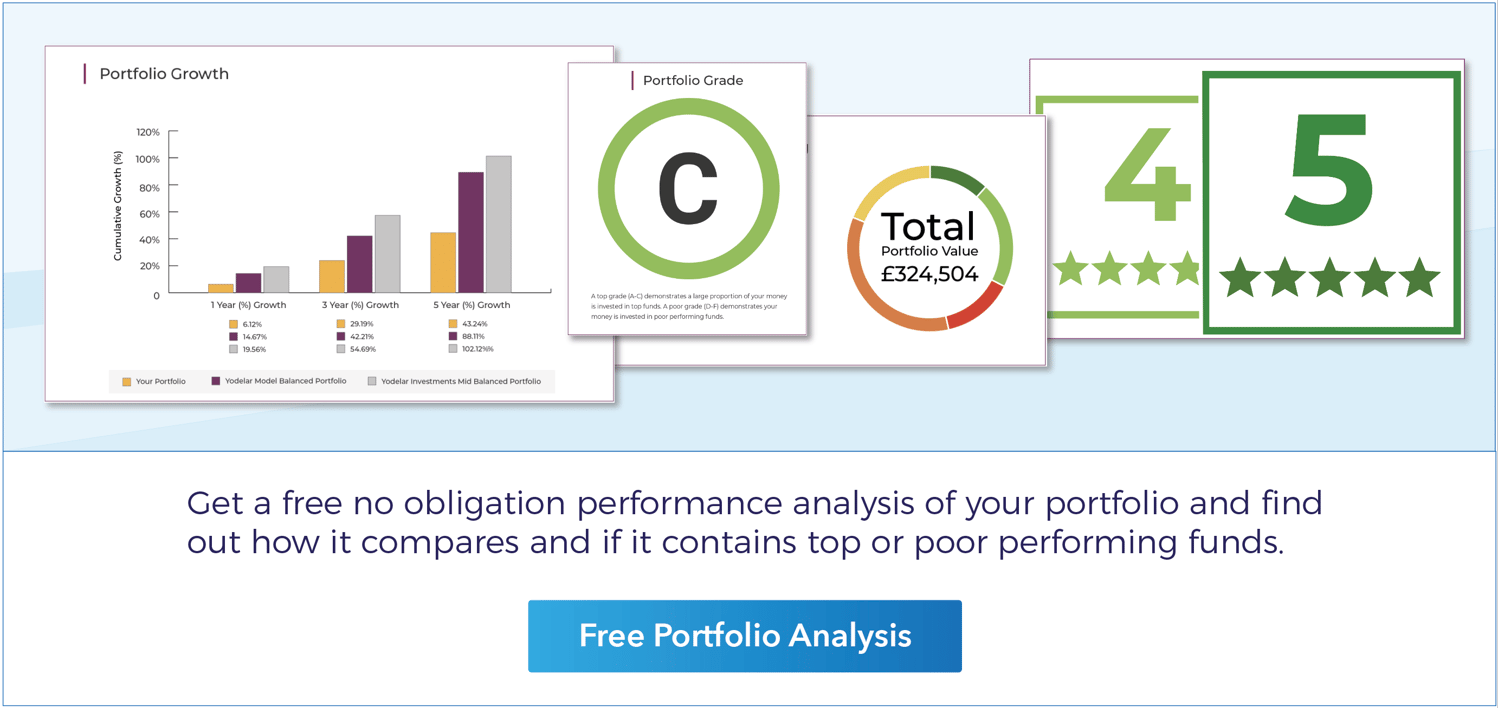
Our free portfolio analysis reviews each fund’s 1, 3 and 5-year performance, sector ranking and Yodelar Rating, while also helping identify duplication, concentration, higher charges and risk that may be greater than expected.
Most investors can see whether their portfolio has gone up or down. They can check the value, see the funds they hold and review recent performance.
But that is only part of the picture.
A portfolio statement will not usually show whether several funds hold the same companies, whether risk has drifted higher than expected, whether charges are being justified, or whether individual funds have fallen behind similar alternatives.
That matters because a portfolio can look reasonable on the surface and still contain problems that may weaken future returns. It may have grown in value because one market performed strongly, while weaker funds, duplicated holdings or hidden concentration remain unnoticed.
A proper portfolio review looks beneath the headline return. It helps investors understand what each fund has delivered, how it ranks against sector peers, whether the portfolio is properly structured, and whether the current holdings still support the investor’s objectives.
For investors who are unsure whether their portfolio is as strong as it appears, our free portfolio analysis is designed to provide that first layer of evidence.

Account Value Is Only The Starting Point
The first thing most investors check is whether their portfolio has increased in value. That is understandable, but it does not show whether the portfolio is working as well as it should.
A portfolio may have risen because one area of the market performed strongly. It may have benefited from a small number of holdings, while other funds added little value. It may also have taken more risk than the investor realised.
The opposite can also happen. A portfolio may look disappointing when compared with a strong headline index, but still have performed reasonably for its risk level and objective.
This is why performance needs context. The key question is not only whether the portfolio has made money. It is whether each fund has performed competitively, whether the portfolio is properly diversified, and whether the level of risk remains appropriate.
A platform statement shows the result. A portfolio review helps explain what is behind it.

Funds Can Overlap More Than Investors Realise
Many investors believe they are diversified because they hold several funds. That is not always the case.
A portfolio may include funds from different providers, with different names and different fund managers, but still hold many of the same underlying companies. This is common where investors hold several global funds, UK equity funds, mixed investment funds or funds chosen from similar recommended lists.
The result can be false diversification. The portfolio looks spread across multiple funds, but the underlying exposure may be much narrower.
This matters because overlap can increase risk. If several funds depend on the same companies, sectors or regions, those areas may have a larger impact on the portfolio than the investor realises.
A portfolio review can help identify where this overlap exists. It can show whether each fund adds something different, or whether the portfolio has become a collection of funds doing similar jobs.
Good diversification is not about holding more funds. It is about making sure the portfolio works as a whole.
A Positive Return Can Still Be A Weak Result
A fund can add growth and still perform poorly compared with similar funds.
This is one of the most common issues investors miss. A fund may show a positive return on a platform statement, but if most funds in the same sector achieved stronger results over the same period, the fund may still have lagged behind comparable alternatives.
Sector ranking gives this missing context. It shows whether a fund has performed strongly, weakly or broadly in line with funds investing in a similar area.
Our portfolio analysis reviews each fund over 1, 3 and 5 years, where data is available, and compares performance with Investment Association sector peers. This helps investors see which funds have supported the portfolio and which may need closer review.
Yodelar Ratings are based on historic fund performance compared with funds in the same Investment Association sector. They are designed to help summarise historic sector-relative performance and should not be treated as a guide to future returns.
A weaker-ranked fund does not automatically need to be sold. There may be valid reasons for holding it, including risk control, income needs, tax position or specialist exposure. However, the reason for holding it should be clear and current.
A fund should not remain in a portfolio simply because it has been held for years.
Risk Can Drift Without A Clear Decision
A portfolio’s risk level can change even if the investor has made few changes.
If equity markets perform strongly, shares may become a larger part of the portfolio. If one region or sector performs particularly well, it may start to dominate overall returns. If lower-risk holdings lag behind, their role in the portfolio may shrink.
This can leave the investor with a portfolio that is more adventurous than originally intended.
The reverse can also happen. After periods of uncertainty, some investors may move more heavily into cash, money market funds or cautious funds. That may feel safer, but if it is not reviewed, the portfolio may become too cautious for long-term objectives.
Neither position is automatically wrong. The issue is whether the risk level is deliberate and still suitable.
A portfolio review helps investors understand whether their current holdings still match their objectives, time horizon and attitude to risk. This can be particularly important when circumstances change, such as approaching retirement, taking income, receiving an inheritance or needing access to capital.
Charges Should Have A Clear Reason
Charges are one of the few investment costs investors can identify before they invest. They are deducted whether a fund performs well or poorly, so they should not be ignored.
The lowest-cost fund is not automatically the best choice. Some higher-cost funds may justify their charges through strong historic performance, specialist exposure or a clear role within the portfolio.
The issue is paying higher charges for funds that have not delivered competitive results, duplicate other holdings or no longer add anything distinct.
A portfolio review helps investors see whether costs appear supported by the value being delivered. This means looking at charges alongside performance, sector ranking, risk and the role of each fund.
Every fund charge should have a reason. If the reason is no longer clear, the holding may need closer review.
What a Proper Review Looks For
A proper portfolio review should look at more than the total value of the account. It should assess each fund individually and then consider how the funds work together.
This helps identify whether the portfolio is genuinely diversified, whether the funds are performing competitively, whether charges appear justified and whether the level of risk still matches the investor’s objectives.
The most useful reviews look at three areas together: fund performance, portfolio structure and ongoing suitability. Looking at one area in isolation can give an incomplete view. A fund may have performed well but duplicate other holdings. A portfolio may look diversified but rely heavily on one region or sector. Charges may appear small but become harder to justify if a fund has consistently ranked poorly.
This is why a review should be evidence-led. It should show what each fund has delivered, how it compares with similar funds and whether it still has a clear role in the portfolio.

What A Free Portfolio Analysis Can Show
Many portfolio issues are not obvious until each holding is reviewed properly.
Our free portfolio analysis reviews each fund individually, showing 1, 3 and 5-year performance, sector ranking and Yodelar Rating, where data is available.
|
Review area |
What the analysis can show |
|---|---|
|
Fund performance |
Each fund’s available 1, 3 and 5-year performance, rather than just the overall portfolio value. |
|
Sector ranking |
How each fund has performed compared with funds in the same Investment Association sector. |
|
Yodelar Rating |
A summary of each fund’s historic sector-relative performance profile. Ratings are not a guide to future returns. |
|
Stronger and weaker funds |
How much of the portfolio is held in funds with stronger or weaker historic performance records. |
|
Duplication |
Whether different funds may be exposed to similar companies, sectors, regions or asset types. |
|
Concentration |
Whether the portfolio relies heavily on one area, such as a region, sector or investment style. |
|
Charges |
Whether fund costs appear reasonable when viewed alongside performance, ranking and portfolio role. |
|
Risk exposure |
Whether portfolio risk may be higher than expected or more concentrated than intended. |
|
Portfolio structure |
Whether each fund has a clear role or whether the portfolio has become a collection of funds added over time. |
|
Model comparison |
Where appropriate, backdated performance can be compared with a similar-risk MKC Invest model. This is a historic comparison only and not a recommendation. |
Any comparison with a similar-risk MKC Invest model is based on historic backdated performance only. It is not a recommendation to invest in an MKC portfolio and should not be treated as a guide to future performance.
The analysis does not provide personal advice and does not recommend whether to buy, sell or switch any investment. It is designed to give investors a clearer evidence base before deciding whether further review may be useful.
Request your free portfolio analysis
Why Waiting Can Be Costly
Many investors only review their portfolio properly after performance has disappointed. By then, the issue may have been building for some time.
A fund may have been falling behind its sector for several years. A portfolio may have become more concentrated as markets moved. Charges may have become harder to justify. Risk may have drifted away from the investor’s original plan.
This does not mean investors should make constant changes. Frequent switching can create its own problems. The value of a review is that it provides evidence before decisions are made.
A good review helps investors avoid reacting only to short-term performance. It shows whether the portfolio still has a clear structure and whether each fund continues to serve a purpose.
For many investors, the most useful time to review a portfolio is before there is an obvious problem.
Book A No Obligation Call
For investors who want to understand whether their current portfolio remains suitable, a no obligation call with an adviser from our advice partner, MKC Wealth, can help.
The discussion can cover the investor’s current holdings, portfolio analysis results, long-term objectives, time horizon and attitude to risk. It can also explain how a more structured approach to portfolio construction and ongoing review may work.
Any personal recommendation would only be made after understanding the investor’s financial position, investment objectives, time horizon and attitude to risk. Any recommendation would include a clear explanation of risks, costs and ongoing service.

Summary
A portfolio review reveals more than performance. It shows whether the portfolio is properly structured, whether each fund still has a clear role, and whether the balance between return, risk and cost remains appropriate.
A portfolio may have grown in value but still contain duplication, weaker-ranked funds, unnecessary costs or risk that has moved away from the original plan. These issues are not always visible from a platform statement, which is why reviewing only the headline return can be misleading.
The value of a review is the clarity it provides. It helps investors understand what has contributed to results, what may be holding the portfolio back, and whether the current holdings still support their objectives.
Before assuming a portfolio is working well, investors should look beneath the headline return. For investors who want that clearer view, our free portfolio analysis is the starting point.

Source and methodology note: Our free portfolio analysis reviews each fund using available historic performance data, Investment Association sector ranking and Yodelar Rating. Yodelar Ratings are based on historic sector-relative performance and are not a guide to future returns. Any comparison with a similar-risk MKC Invest model is based on historic backdated performance and does not represent a recommendation to invest. Figures and ratings may change over time.