

-
Active and passive funds can both play a useful role, but neither approach is automatically better.
-
A low-cost passive fund can still be unsuitable if it gives the wrong exposure or increases concentration.
-
A higher-cost active fund should be judged on performance, sector ranking, charges and its role in the portfolio.
-
The most important question is how each fund contributes to the full portfolio, not whether it is active or passive.
-
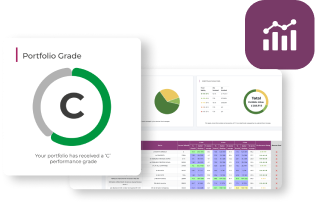
Our free portfolio analysis can help investors assess each fund’s 1, 3 and 5-year performance, sector ranking and Yodelar Rating, while also identifying duplication, concentration and excessive risk.
Many investors ask whether active or passive funds are better.
That is the wrong starting point.
A passive fund can be low cost, simple and efficient, but still expose an investor to the wrong market, the wrong level of risk or too much concentration. An active fund can justify a higher charge, but only if it has delivered value, compares well with similar funds and has a clear role in the portfolio.
The real question is not whether active or passive investing wins in theory. It is whether the investor is using each approach in the right way.
For self-investors, this matters because portfolios are often built from mixed decisions. A tracker fund may be added for low cost, an active fund may be chosen after strong performance, and another fund may be bought from a recommended list. Each decision may seem reasonable on its own, but the final portfolio may not be properly balanced.

The Wrong Question
Active versus passive is often presented as a simple choice. Some investors prefer active funds because they want a fund manager to make decisions. Others prefer passive funds because they want lower costs and broad market exposure.
Both views can be reasonable, but both can also be too simplistic.
A portfolio is not stronger simply because it uses active funds. It is not automatically better because it uses passive funds either. What matters is whether each fund is suitable for the job it is meant to do.
A passive fund may be an efficient way to access a broad market. An active fund may be useful where skilled fund selection can add value, where the market is more specialist, or where the investor wants a more flexible approach. But if either fund is selected without considering the full portfolio, the result can still be poor.
The better question is: what role should this fund play, and is it the best way to achieve that role?
Where Passive Funds Can Work
Passive funds can be useful because they are usually simple, transparent and low cost. They aim to track a market or index rather than rely on a fund manager making active decisions.
This can work well where the investor wants broad exposure to a market and does not want to pay more for active fund management. It can also help keep costs under control, which matters because charges are deducted whether a fund performs well or poorly.
Passive funds may also reduce the risk of choosing an active manager who fails to perform well against their peers. Instead of trying to pick a manager, the investor accepts the return of the index being tracked, less costs.
For some parts of a portfolio, this can be a sensible approach. The issue is not passive investing itself. The issue is assuming that low cost and simplicity automatically make the fund suitable.
A passive fund still needs to be reviewed. Investors should understand what index it tracks, what companies or assets it holds, what regions it is exposed to, and how it fits with the rest of the portfolio.

Where Passive Funds Can Fall Short
Passive funds do not make judgement calls. They follow the index they are designed to track.
That can be a strength, but it can also be a limitation.
If an index becomes heavily weighted towards a small number of companies, sectors or regions, a passive fund tracking that index will usually follow that concentration. If an investor holds several passive funds that track similar markets, the portfolio may become more duplicated than expected.
Passive funds also do not automatically manage risk around an investor’s life stage, income needs or wider objectives. A tracker fund may be well designed, but it does not know whether the investor is approaching retirement, drawing income, investing for growth or trying to reduce volatility.
This is where self-investors can be caught out. They may choose a passive fund because it is low cost, but not fully understand what exposure they are buying. A cheap fund can still be the wrong fund if it increases risk, duplicates other holdings or does not match the investor’s objective.
Low cost is helpful, but it is not the same as good portfolio construction.

Where Active Funds Can Add Value
Active funds aim to do more than track an index. The fund manager makes decisions about what to buy, what to avoid and how the fund should be positioned.
This can be useful in some areas. Specialist markets, smaller companies, income strategies, flexible bond funds and more complex sectors may give active managers more opportunity to add value. An active fund may also provide a different style or approach that helps diversify a portfolio.
But active funds should earn their place. A higher charge can be justified only if there is clear evidence that the fund has added value, provided useful exposure or played a specific role that cheaper alternatives may not have delivered.
This is where sector ranking matters. A fund may have made money, but still performed poorly compared with similar funds. Investors should therefore review how the fund has performed against peers over 1, 3 and 5 years, where data is available.
An active fund should not be held simply because it has a well-known manager, strong branding or a good story. It should be held because the evidence supports its role in the portfolio.
Where Active Funds Can Fail
Active funds can disappoint. Some underperform their sector peers for long periods. Some charge more without delivering stronger results. Some become too large, lose key managers, change style, or no longer behave as expected.
This does not mean active funds should be avoided. It means they should be monitored.
The danger for self-investors is holding active funds for too long without reviewing whether they still justify their place. A fund may have been selected years ago for good reasons, but those reasons may no longer apply.
A weak active fund can be particularly damaging because the investor may be paying a higher charge while also receiving weaker performance compared with similar funds. That combination should prompt closer review.
The question is not whether active management can work. It is whether the specific active funds in the portfolio have worked well enough to justify their cost, risk and role.

The Mix Matters More Than The Label
Many portfolios contain both active and passive funds. That can be sensible, but the mix should be deliberate.
A portfolio may use passive funds for broad, low-cost market exposure and active funds where there is a stronger case for manager skill or specialist selection. Another portfolio may be mostly passive, but use active funds for income, bonds or specific markets. Another may use mostly active funds where the investor is comfortable paying more for fund manager decisions.
There is no single mix that is right for everyone.
MKC Invest’s Contemporary Active range is an example of a structured approach that combines actively managed funds with low-cost index-tracking funds. MKC Invest states that it allocates active management where it believes it can add value and uses passive funds where a lower-cost approach may be more appropriate. This is not a recommendation to invest in that portfolio range, but it shows why the active/passive decision should be made by role, not by preference alone.
The key point for investors is that the portfolio should not be a random mix of active and passive funds collected over time. Each holding should have a purpose, and the full portfolio should work together.
A Low-Cost Portfolio Can Still Be Poorly Built
Low costs can help improve investor outcomes, but low cost alone does not make a portfolio suitable.
A portfolio made entirely from cheap tracker funds can still be too concentrated, too risky, too cautious or poorly matched to the investor’s objectives. It may also lack exposure to areas that could be useful, depending on the investor’s circumstances.
This is why passive investing should still be reviewed carefully. The investor should know what each tracker holds, how much overlap exists between funds, how the portfolio is spread across regions and asset types, and whether the risk level remains suitable.
MKC Invest’s Baseline Index range is designed to deliver long-term capital growth by tracking global equity and bond markets, using a small number of index funds in proportions aligned with defined risk levels. This highlights an important point: even a simple index-based approach still needs structure, risk control and clear purpose.
For self-investors, the issue is not whether a passive approach can work. It is whether their own passive fund choices have been built into a proper portfolio.
A Higher-Cost Portfolio Must Prove Its Value
Active funds often cost more than passive funds. That does not make them poor value automatically, but it does raise the standard of evidence investors should expect.
If an active fund charges more, investors should be able to see why. Has it performed competitively against similar funds? Has it provided exposure that cheaper funds do not? Has it reduced risk, improved diversification or delivered a useful income profile?
If the answer is unclear, the fund may need review.
A higher-cost portfolio can be justified where the funds are strong, the structure is clear and the additional cost is supported by evidence. But higher charges become harder to defend when funds rank poorly, duplicate cheaper holdings or no longer have a clear role.
This is where fund-by-fund analysis matters. Investors should not judge an active portfolio by the reputation of its managers or the strength of one holding. Each fund should be assessed on performance, sector ranking, charges and contribution to the overall portfolio.
What Investors Should Check
Investors do not need to choose between active and passive as an identity. They need to understand what each fund is doing.
A useful review should ask:
|
Review question |
Why it matters |
|---|---|
|
What is the fund’s role? |
Each holding should have a clear reason for being in the portfolio. |
|
Is the fund active or passive? |
This helps explain how returns are being generated and what the investor is paying for. |
|
Has the fund ranked well against peers? |
Active funds in particular should be tested against similar funds. |
|
What does the fund actually hold? |
Passive and active funds can both create concentration or overlap. |
|
Are charges justified? |
Higher costs should be supported by evidence of value. |
|
Does the portfolio rely too much on one approach? |
A portfolio may become too dependent on one market, manager style or index. |
|
Does the mix fit the investor’s objective? |
The active/passive mix should support the investor’s goal, time horizon and risk level. |
These questions help move the decision away from labels. The issue is not whether a fund is active or passive. The issue is whether it improves the portfolio.
Start With A Free Portfolio Analysis
Many investors do not know whether their active funds have justified their place or whether their passive funds are creating hidden concentration.
Our free portfolio analysis reviews each fund individually, showing 1, 3 and 5-year performance, sector ranking and Yodelar Rating, where data is available. It can also help identify duplication, concentration, excessive risk, higher charges and funds that may no longer have a clear role.
For active funds, the analysis can help show whether historic performance has compared well with sector peers. For passive funds, it can help identify whether the portfolio is becoming overly reliant on a particular market, region or asset type.
Where appropriate, the analysis can also compare backdated portfolio performance with a similar-risk MKC Invest model. This does not provide personal advice and does not recommend whether to buy, sell or switch any investment. It is designed to help investors understand whether their current portfolio structure may need further review.
For self-investors, this can be a useful first step before deciding whether the current active/passive mix is working as intended.

Book A No Obligation Call
For investors who want to understand whether a more structured approach may be appropriate, a no obligation call can help.
The discussion can cover the investor’s current portfolio, portfolio analysis results, long-term objectives, time horizon and attitude to risk. It can also explain how different investment approaches, including active, passive or blended strategies, may be considered within a wider financial plan.
Any personal recommendation would only be made after understanding the investor’s financial position, investment objectives, time horizon and attitude to risk. Any recommendation would include a clear explanation of risks, costs and ongoing service.
MKC Invest states that its investment portfolios are only available to retail investors who have received a personal recommendation from an MKC Wealth financial planner.

Summary
Active and passive funds can both be useful. Neither approach is automatically right or wrong.
The mistake is treating active or passive investing as a belief system rather than a portfolio decision. A passive fund can be low cost but still unsuitable. An active fund can be higher cost but still valuable if it has delivered strong results and plays a clear role.
For investors, the real test is evidence. Each fund should be reviewed against its peers, its cost should be understood, and its role in the portfolio should be clear.
A strong portfolio is not built by choosing sides. It is built by using the right tools for the right reasons.
For self-investors who are unsure whether their active funds are adding value, or whether their passive holdings are creating concentration, our free portfolio analysis can provide a clearer starting point.