

-
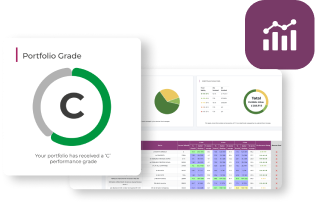
Yodelar’s review of 423 investor portfolios found that more than half contained structural inefficiencies such as duplication, imbalance, or persistently weaker funds.
-
Within major IA sectors, the performance gap between top- and bottom-quartile funds exceeded 70% over five years, showing how fund selection can heavily influence results.
-
Duplication was a recurring issue, with portfolio overlap in core holdings often exceeding 60%, reducing diversification and efficiency.
-
Portfolio drift, particularly during periods of sharp market movement such as the 2022–2024 technology rebound, can distort risk levels and long-term balance if not rebalanced.
Even during periods of strong market performance, many investor portfolios fall short of their potential. They underperform not because of poor timing or volatility, but because of structural inefficiencies that quietly erode returns.
Yodelar’s research into portfolio construction and fund performance shows that inefficiency is one of the most pervasive — and overlooked — causes of long-term underperformance. It is rarely visible at a glance, yet even modest inefficiencies can, over time, create a substantial gap between what investors could have achieved and what they actually receive.
This article explores the main causes of inefficiency, how they impact long-term results, and the role of disciplined portfolio management in closing this gap.
Understanding the Efficiency Gap
The efficiency gap describes the difference between a portfolio’s expected return based on its level of risk and market exposure, and the actual return achieved once inefficiencies are taken into account.
This insight comes from Yodelar’s review of 423 individual investor portfolios submitted for a Yodelar Portfolio Analysis over the past year. Each portfolio was assessed for fund performance, sector ranking, Yodelar rating, overlapping holdings, concentration risk, and overall asset allocation. The findings reflect real investor portfolios rather than model examples, offering a practical view of how inefficiencies arise in everyday investment arrangements.
90% of the portfolios analysed included at least one fund that had consistently delivered returns below its sector average. Many also showed wider inefficiencies. Duplication of underlying holdings appeared frequently, as did unbalanced exposure across regions and asset classes. A number of portfolios were heavily concentrated with the same fund managers, while others continued to hold funds that had recorded persistent underperformance relative to their sector averages.
These issues can be difficult to spot. Many investors hold between 10 and 12 funds and assume that variety alone provides good diversification. Yet when several funds invest in the same markets or even the same companies, the benefit of diversification quickly diminishes.
Performance can therefore drift away from what would normally be expected for the portfolio’s chosen risk level — not due to markets, but to structure. Factors such as duplication, uneven weighting, and weaker funds can steadily reduce a portfolio’s efficiency and growth potential over time.
This is the essence of the efficiency gap: the gradual erosion of portfolio effectiveness caused not by external market forces but by internal design and oversight.
The Data Behind the Disparity
To understand how inefficiencies affect returns, it helps to look at the variation in fund performance across Investment Association (IA) sectors. Using data from Yodelar’s October 2025 analysis (covering performance up to 29 September 2025), clear patterns emerge — even within the same sector and risk level, outcomes can vary dramatically.
Within the IA Global sector, the average fund delivered 11.16% growth over 1 year, 35.47% over 3 years, and 62.22% over 5 years. Yet over the same five-year period, top-quartile funds achieved an average of 102.04%, while bottom-quartile funds averaged just 24.65%.
A similar spread appears elsewhere. In IA UK All Companies, sector averages were 8.31%, 36.54%, and 61.77% across 1, 3, and 5 years, while the top quartile achieved 98.86% and the weakest quartile 38.05% over five years. The IA Global Emerging Markets sector showed a comparable difference, with the best funds growing 70.51% versus 12.77% for the lowest quartile.
Even income-focused funds show wide dispersion. In IA UK Equity Income, the average fund grew 9.58% over 1 year, 40.75% over 3 years, and 78.83% over 5 years, while top-quartile funds averaged 118.62% growth and the weakest quartile 41.62%.
These figures illustrate how fund choice within a portfolio can significantly influence results. Two investors may hold similar risk profiles and sector exposures yet experience very different outcomes depending on their underlying fund selection.
Across the 423 portfolios reviewed, this pattern was consistent: many contained funds that lagged their sector averages, reducing overall efficiency. Comparing each fund’s performance, ranking, and rating — alongside overlap, risk, and allocation — showed how modest underperformance across several holdings can combine to create measurable long-term drag.
While past performance is not a guide to future returns, these findings highlight the value of continual oversight and evidence-based selection. Efficiency is not only about diversification — it is about ensuring that every fund contributes meaningfully to overall growth potential.

The Hidden Cost of Duplication
Duplication is one of the most frequent and underestimated causes of inefficiency. It occurs when portfolios hold several funds that appear different in name or brand but share many of the same underlying investments.
This often happens when portfolios are built around well-known fund houses rather than distinct strategies. For instance, funds from Fundsmith, Fidelity, and Lindsell Train may appear complementary, yet often share similar large-cap holdings such as Microsoft, Visa, and Unilever.
When duplication is high, investors pay multiple management charges for exposure to the same assets, while gaining little or no extra diversification. Yodelar’s portfolio analysis frequently identifies over 60% overlap across core holdings, where investors believe they are diversified but are in fact concentrated around the same companies.
Duplication is not just a diversification problem — it is a structural inefficiency that reduces the effectiveness of portfolio design. Without transparency of underlying holdings, it often goes unnoticed, quietly undermining both risk control and performance consistency over time.
How Portfolio Drift Erodes Efficiency
Portfolio drift occurs when asset weightings shift as markets move unevenly. A portfolio might begin with a balanced 60% equity and 40% bond split, but after a period of strong equity returns could unintentionally shift to 70/30, increasing risk without deliberate intent.
The reverse can occur when equities fall, leaving investors underexposed to growth assets during recoveries. Both scenarios distort the intended balance and can weaken long-term outcomes.
Recent market trends highlight how quickly drift can occur. Funds within the IA Technology & Technology Innovation sector — one of the most volatile — recorded average losses of -27.46% in 2022, followed by strong rebounds of 38.94% in 2023 and 23.45% in 2024. Such wide fluctuations can cause significant shifts in portfolio composition if not rebalanced. A portfolio heavily exposed to technology would have seen its weighting fall sharply in 2022, then rise substantially in subsequent years, altering both its sector exposure and overall risk profile.
Without regular rebalancing, drift compounds over time. Strong performers begin to dominate while weaker areas shrink, increasing volatility and narrowing diversification. Periodic, data-driven rebalancing helps restore alignment, keeping portfolios consistent with their intended risk level and long-term objectives.
The Impact of Inertia on Portfolio Efficiency
Investor inertia — where holdings remain unchanged for extended periods — can also undermine efficiency. As markets evolve, some funds may no longer perform as strongly as they once did, but remain in place simply because they have not been reviewed.
In the IA UK Equity Income sector, for instance, top-quartile funds achieved 41.2% growth over five years, compared with 23.5% for the sector average. This variation illustrates why ongoing monitoring is essential to maintain a portfolio’s competitiveness within its chosen sectors.
Familiarity with established funds or brands is understandable, yet even small gaps in performance can accumulate over time. Regular, evidence-based reviews help ensure that each holding continues to play an effective role and that portfolios remain aligned with current conditions and long-term goals.

Maintaining Oversight and Closing the Gap
Addressing inefficiency requires consistent, data-led oversight rather than one-off reviews. Portfolios evolve over time, and even well-constructed strategies can drift if not monitored closely. Periodic analysis helps identify duplication, assess fund performance relative to peers, and ensure allocations remain appropriate for the investor’s objectives and risk level.
Effective oversight does not depend on a particular management approach. What matters is discipline — maintaining a clear understanding of how each fund contributes to the whole and ensuring decisions are based on evidence rather than assumption.
Even small improvements in structure can make a meaningful difference over the long term. Portfolios that are reviewed regularly and maintained efficiently tend to preserve balance, manage risk more effectively, and stay positioned to capture market opportunities as conditions change.
Building a More Efficient Portfolio
Improving efficiency begins with transparency. Investors should understand what they hold, how those holdings perform relative to their peers, and whether the overall structure remains suitable for their goals. A portfolio review can highlight where adjustments may be needed.
Key areas to assess include:
-
Duplication: Are multiple funds investing in the same companies or sectors?
-
Performance: Do all holdings remain competitive within their sectors?
-
Balance: Has market movement altered the intended asset or regional mix?
-
Cost: Are ongoing charges proportionate to the exposure achieved?
By addressing these factors, investors can improve efficiency without increasing risk. This process is analytical, focusing on measurable elements such as diversification, fund quality, and cost.
Applying this discipline regularly helps portfolios remain aligned with objectives, ensuring they operate efficiently through changing market conditions.

Conclusion
Portfolio inefficiency is one of the most common — yet preventable — causes of underperformance. It rarely stems from market movement alone but from internal issues such as duplication, drift, and lack of ongoing oversight.
By maintaining diversification, rebalancing periodically, and reviewing holdings regularly, investors can help close the efficiency gap and strengthen long-term outcomes.
In a market where fund and sector performance can vary widely, efficient portfolio design and regular maintenance remain among the most effective ways to improve consistency and preserve growth potential over time.