

-
Money market funds were the bestselling asset class in 2025, with £6.9 billion of inflows, according to the Investment Association.
-
Short Term Money Market was also the best-selling sector in 2025, as investors used cash-like funds for flexibility and liquidity during uncertain markets.
-
Fidelity’s 2026 best-selling fund lists also show continued demand for cash and money market funds.
-
Money market funds can be useful, but they are not a complete investment plan and may not support long-term growth objectives.
-
Investors should review whether cash, money market funds and lower-risk holdings are being used deliberately, or whether they are quietly holding back the portfolio.
Cash Feels Comfortable But It Still Needs A Plan
When markets feel uncertain, cash can feel like the safest place to be.
That helps explain why money market funds have become so popular. The Investment Association reported that money market funds were the bestselling asset class in 2025, attracting £6.9 billion of inflows. It also said investors favoured cash-like investments as a flexible and liquid option during periods of uncertainty.
The trend continued into 2026. In March, the IA reported record money market inflows of £2.01 billion and net retail inflows of £2.1 billion into Short Term Money Market funds.
This behaviour is understandable. Cash and money market funds can be useful where investors want liquidity, lower volatility or a holding place for money that may be needed soon.
The risk is when they become a default position rather than a deliberate part of the plan.
A portfolio with too much in cash-like holdings may feel comfortable, but it may struggle to support long-term goals such as retirement income, capital growth or passing wealth on to family.

Why Investors Are Holding More Money Market Funds
There are several reasons investors have been attracted to money market funds.
Interest rates have made cash-like returns more noticeable than they were for much of the previous decade. Market uncertainty has also made some investors reluctant to commit more money to equities. Concerns about concentrated US technology exposure, geopolitical uncertainty and tax speculation have all affected investor behaviour.
The IA noted that 2025 retail fund flows reflected uncertainty around geopolitics, trade, defence, pre-Budget speculation and concerns over concentration in major US equity markets. It also reported that equity funds saw £16.8 billion of outflows during the year, while money market, mixed asset and fixed income funds attracted more defensive demand.
That context matters. Investors are not necessarily moving to cash because they believe it is the best long-term investment. Many are doing it because they want to reduce uncertainty.
That can be reasonable. But it should still be reviewed.
A defensive position should answer a clear question: what is this money for, and when will it be needed?
What Cash-Like Funds Have Delivered
Money market funds have delivered positive returns over the periods reviewed, but their role is different from equity or mixed investment funds.
|
IA sector |
Average 6-month return |
Average 1-year return |
Average 3-year return |
Average 5-year return |
|---|---|---|---|---|
|
IA Short Term Money Market |
2.26% |
4.42% |
14.66% |
17.94% |
|
IA Standard Money Market |
1.86% |
3.91% |
14.74% |
18.21% |
|
IA Targeted Absolute Return |
2.67% |
7.56% |
23.04% |
27.01% |
|
IA Mixed Investment 20-60% Shares |
5.58% |
12.98% |
30.95% |
23.31% |
|
IA Volatility Managed |
7.40% |
16.49% |
36.77% |
29.92% |
|
IA Global |
8.91% |
22.20% |
48.65% |
49.41% |
|
IA North America |
8.97% |
23.11% |
58.26% |
69.76% |
|
IA Global Emerging Markets |
26.69% |
46.53% |
73.07% |
45.08% |
*Source: hub.yodelar.com. Performance up to 30th June 2026
**Past performance is not a guide to future returns
This table is not a comparison of which sector investors should choose. These sectors have different objectives, risks and roles.
The point is that cash-like funds have delivered lower but more stable returns compared with higher-risk sectors. That may be entirely suitable for money that needs to be held cautiously. It may be less suitable for money that needs to grow over many years.
This is where investors need to be clear. If money is held in a money market fund for a short-term purpose, that may be sensible. If it is held there because the investor is unsure what else to do, the portfolio may need a more structured review.

Money Market Funds Are Not Bank Accounts
money market funds can be lower risk, but they are still investments.
They are not the same as a bank savings account. They invest in short-term financial instruments and aim to provide stability and income, but the value can still move and returns are not guaranteed.
This distinction matters because some investors may treat a money market fund as if it is identical to cash in the bank. It is not.
Money market funds can have a useful place in ISAs, SIPPs and investment portfolios, particularly where liquidity or lower volatility is required. But investors should understand what they hold, what risks apply, and whether the fund is being used for the right reason.
Cash-like funds are tools. They are not a full investment plan.
The Risk Of Being Too Comfortable
The danger with cash is that it can feel right even when it is not doing enough.
For an investor with a short time horizon, high cash or money market exposure may be appropriate. For an investor who needs long-term growth, too much cash-like exposure may reduce the chance of meeting the objective.
The FCA has highlighted that around 7 million UK adults with £10,000 or more in cash savings could be missing out on the benefits of investing throughout their lives. It also noted that fewer than 1 in 10 people obtain regulated financial advice, while many people say they feel overwhelmed or do not know enough to invest.
That does not mean everyone with cash should invest. Cash can be right for emergency savings, planned spending, short-term needs or lower-risk positioning.
The issue is when cash becomes the long-term plan by default.
A portfolio should be built around what the money needs to achieve. If the objective is long-term retirement income, wealth growth or inheritance planning, the level of cash-like exposure should be deliberate and reviewed regularly.
Defensive Decisions Can Still Create Risk
Many investors think risk only means losing money in the stock market.
That is too narrow.
There is also the risk of not growing enough. There is the risk of inflation reducing spending power. There is the risk of holding too much in lower-returning assets when the investor needs the portfolio to support long-term objectives.
A cautious position can therefore be suitable or unsuitable depending on the investor’s circumstances.
For example, someone holding money for a house purchase in two years may need a very different approach from someone investing for retirement over 20 years. Someone already drawing income may need liquidity and stability, but still require enough growth to support withdrawals over time.
The problem is not defensive investing. The problem is defensive investing without a plan.

What Investors Should Review
Investors holding cash or money market funds should ask whether those holdings have a clear role.
|
Review question |
Why it matters |
|---|---|
|
What is the money for? |
Short-term money and long-term investment money should not be treated the same. |
|
When will it be needed? |
A shorter timeframe may justify lower-risk holdings. |
|
Is the position too large? |
Too much cash-like exposure can reduce long-term growth potential. |
|
What is the rest of the portfolio doing? |
Cash should be reviewed alongside equities, bonds and other holdings. |
|
Is the return enough for the objective? |
A lower-risk return may not support long-term goals. |
|
Is the investor avoiding decisions? |
Cash can become a holding place when a clearer plan is needed. |
These questions are not about forcing investors out of cash. They are about making sure the position is deliberate.
Cash and money market funds can be useful when they have a clear role. They can be less useful when they become a substitute for planning.
Start With A Free Portfolio Analysis
Many investors do not know whether their current portfolio is too cautious, too risky or simply poorly balanced.
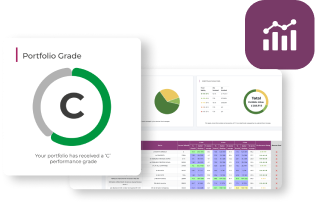
Our free portfolio analysis reviews each fund individually, showing 1, 3 and 5-year performance, sector ranking and Yodelar Rating, where data is available. The analysis can also help identify weaker-rated holdings, duplication, concentration, higher charges and funds that may no longer have a clear role.
For investors holding cash funds, money market funds or other defensive holdings, the analysis can help show whether those holdings are being used appropriately within the wider portfolio.
Where appropriate, the analysis can compare backdated portfolio performance with a similar-risk MKC Invest model. This is a historic comparison only. It does not provide personal advice, is not a recommendation to invest in an MKC portfolio and should not be treated as a guide to future performance.
The aim is not to tell investors to take more risk. It is to help them understand whether their current portfolio is built around their actual objectives.

Speak To An Adviser
For investors who want to understand whether their current approach remains suitable, a no obligation call with an adviser from our advice partner, MKC Wealth, can help.
The discussion can cover current holdings, portfolio analysis results, objectives, time horizon, income needs and attitude to risk. It can also explain how a more structured planning process may help connect cash, investments and longer-term goals.
Any personal recommendation would only be made after understanding the investor’s financial position, investment objectives, time horizon and attitude to risk. Any recommendation would include a clear explanation of risks, costs and ongoing service.

Summary
Cash and money market funds are popular for understandable reasons. They can provide flexibility, liquidity and lower volatility during uncertain markets.
But they are not a complete plan.
A large cash-like position may be sensible for short-term needs, but it may also hold back long-term objectives if it is left in place without review. Investors should know why cash is held, how much is needed, and whether the rest of the portfolio is doing enough to support future goals.
The strongest portfolios are not built by avoiding risk completely. They are built by using risk deliberately, with each holding linked to a clear purpose.
For investors who have moved into cash or money market funds, the next step is not necessarily to invest more aggressively. It is to review the full portfolio and understand whether the current structure still fits the plan.

Sources and Methodology
Investment Association 2025 and 2026 fund flow data used to assess demand for money market, mixed asset and defensive strategies.
Fidelity International best-selling ISA and SIPP funds data referenced to identify current investor demand for cash funds, money market funds and global trackers.
FCA targeted support and consumer investment data referenced for the advice gap and consumers holding substantial cash savings.
Sector performance data from our analysis of Investment Association sector-classified funds using performance data to 30 June 2026. Figures are rounded. Past performance is not a reliable guide to future returns.