

-
We reviewed 36 funds in the Investment Association (IA) Infrastructure sector, using performance data to 31 August 2026.
-
The sector averaged growth of 13.15% over one year, 31.84% over three years and 31.12% over five years.
-
Among the 26 funds with five year records, results ranged from growth of 80.55% to a loss of 7.77%.
-
Five of those 26 funds received a 4 or 5 star Yodelar Rating, while 16 received a 1 or 2 star rating.
-
The accompanying download includes performance, sector rankings and Yodelar Ratings for all 36 funds reviewed, including those without a complete five year history.
Infrastructure funds offer a way to invest in the businesses behind electricity supplies, transport links and communications networks. These are services people rely on every day, making the sector worth considering for investors seeking income, long term growth or a different mix of companies from those in their existing funds.
However, essential services do not guarantee dependable investment returns. Infrastructure funds can invest in very different businesses and countries, from established electricity networks to clean energy projects. The value of those investments can also be affected by borrowing costs, spending requirements and the price paid for their shares.
Our review of the Investment Association (IA) Infrastructure sector examines how its funds have performed, which have ranked highest and where results have been weaker. Whether you already hold an infrastructure fund or are considering investing in one, the findings provide a clearer view of what these funds have delivered against their sector peers.

Infrastructure Fund Performance Summary
Among the 26 funds with five year performance records, 19.2% received a 4 or 5 star Yodelar Rating, while 61.5% received a 1 or 2 star rating. Ten funds with shorter histories are included in the download but excluded from this rating summary.
Yodelar Ratings summarise historic performance against sector peers. They do not assess personal suitability and are not a guide to future returns.
Infrastructure Sector Performance
|
Period |
Reported average growth |
|---|---|
|
6 months |
-1.22% |
|
1 year |
13.15% |
|
3 years |
31.84% |
|
5 years |
31.12% |
Performance figures up to 31st August 2026. Source: hub.yodelar.com. Past performance is not a guide to future returns.
The one year average of 13.15% gives a different impression from the six month loss of 1.22%. Both are relevant. Looking only at the longer period would miss the more recent weakness, while looking only at six months would overlook the gains over the full year.
Sector averages also need context. The IA notes that infrastructure funds can focus on different regions and activities, and that comparisons require additional care. A fund investing across global infrastructure businesses may behave differently from one focused on UK investments or a particular part of the energy market.

Five Highest Returning Infrastructure Funds
The following funds recorded the highest five year growth figures in the dataset. These are not recommendations, and the ranking does not account for differences in risk or investment approach
|
Fund |
1 year growth |
3 year growth |
5 year growth |
5 year sector rank |
Yodelar Rating |
|---|---|---|---|---|---|
|
BNY Mellon Global Infrastructure Income Inst W Acc |
19.62% |
65.93% |
80.55% |
1/26 |
5 stars |
|
Atlas Global Infrastructure A Unhedged GBP |
21.59% |
40.48% |
66.10% |
2/26 |
5 stars |
|
WS Nomura Global Infrastructure Securities B Acc |
12.10% |
41.01% |
59.75% |
3/26 |
3 stars |
|
Wellington Enduring Infrastructure Assets NU Acc GBP |
16.35% |
55.07% |
52.65% |
4/26 |
4 stars |
|
abrdn Global Infrastructure Equity Institutional Acc GBP |
16.15% |
45.31% |
50.89% |
5/26 |
5 stars |
Performance figures up to 31st August 2026. Source: hub.yodelar.com. Past performance is not a guide to future returns.
BNY Mellon Global Infrastructure Income
BNY Mellon Global Infrastructure Income recorded growth of 80.55% over five years and 65.93% over three years, ranking first in the Investment Association (IA) Infrastructure sector over both periods. Its one year growth of 19.62% ranked third out of 36 funds, giving it a strong record across all three periods reviewed. It received a 5 star Yodelar Rating.
The strategy seeks income and capital growth from infrastructure businesses around the world. Its investment process places emphasis on whether companies can sustain their dividend payments, rather than simply selecting those offering the highest income today. For investors, the sector rankings provide evidence of competitive performance, but they do not establish how much income was paid or whether payments met a particular investor’s needs.
Atlas Global Infrastructure
Atlas Global Infrastructure recorded growth of 66.10% over five years, ranking second out of 26 funds. Its one year growth of 21.59% also ranked second, while its three year result of 40.48% placed eighth out of 32. The fund received a 5 star Yodelar Rating.
ATLAS assesses infrastructure businesses by examining the money their assets could generate over many years. It considers the length of customer contracts, the rules governing what companies can charge, and the effect of inflation and borrowing costs. For investors, this means the approach looks beyond whether a business provides an essential service and examines how dependable its future earnings may be. Those assessments inform investment decisions, but they do not guarantee returns.
WS Nomura Global Infrastructure Securities
WS Nomura Global Infrastructure Securities recorded five year growth of 59.75%, ranking third out of 26 funds. Its three year growth of 41.01% ranked seventh, although its one year result of 12.10% placed 19th out of 36. It received a 3 star Yodelar Rating, so its high five year position should not be mistaken for consistently leading the sector over every period.
The fund seeks a combination of income and capital growth from infrastructure investments. Its published holdings span businesses such as electricity and water suppliers, airports and energy networks, rather than focusing on one infrastructure activity. For existing investors, the distinction in its performance record is useful: the longer term rankings were strong, while its latest one year result was closer to the middle of the sector.
Wellington Enduring Infrastructure Assets
Wellington Enduring Infrastructure Assets recorded growth of 52.65% over five years, ranking fourth out of 26 funds. Its three year growth of 55.07% ranked second, while its one year result of 16.35% placed fifth out of 36. It received a 4 star Yodelar Rating.
The fund focuses on companies owning assets used over many years, including electricity networks, transport infrastructure, energy networks and data infrastructure. Wellington looks for advantages such as long term contracts or operating arrangements that may make earnings more dependable. This explains the type of business the fund seeks, but dependable business income does not mean a fund’s share price will remain stable. Its competitive sector rankings should still be considered alongside the risks of the investments held.
abrdn Global Infrastructure Equity
abrdn Global Infrastructure Equity recorded growth of 50.89% over five years and 45.31% over three years, ranking fifth in its sector over both periods. Its one year growth of 16.15% ranked seventh out of 36 funds. The fund received a 5 star Yodelar Rating.
The current approach invests across transport, utilities, energy and communications businesses. Rather than concentrating solely on one theme, it examines companies involved in several parts of the infrastructure market.
There is an important qualification to the longer record. Published fund research notes that the fund followed a global equity income approach before changing to infrastructure in 2023. Its five year result therefore spans different investment approaches and should not be presented as five years of performance from the current infrastructure strategy alone.

Five Lowest Returning Infrastructure Funds
|
Fund |
1 year growth |
3 year growth |
5 year growth |
5 year sector rank |
Yodelar Rating |
|---|---|---|---|---|---|
|
TM Gravis Clean Energy Income C Acc GBP |
12.01% |
7.33% |
-7.77% |
26/26 |
1 star |
|
FP Foresight Global Real Infrastructure A Acc GBP |
13.36% |
20.73% |
-2.26% |
25/26 |
1 star |
|
FP Foresight UK Infrastructure Income A Acc |
11.89% |
20.46% |
0.55% |
24/26 |
1 star |
|
ARC TIME UK Infrastructure Income II C Acc |
11.45% |
21.35% |
0.85% |
23/26 |
1 star |
|
VT RM Alternative Income Retail Acc GBP |
4.28% |
13.65% |
2.22% |
22/26 |
1 star |
Performance figures up to 31st August 2026. Source: hub.yodelar.com. Past performance is not a guide to future returns.
All five funds recorded positive one year figures, but their five year positions remained near the bottom of the sector. An investor looking only at the latest year could therefore miss a much weaker longer term record.
TM Gravis Clean Energy Income illustrates why the fund’s focus matters. It invests in listed investments involved in the operation, funding, construction and supply of clean energy. That is a more specific approach than investing across a broad range of infrastructure businesses.
Its five year loss of 7.77% does not establish that every clean energy fund is unsuitable or explain all the reasons behind its performance. It does give existing investors a clear reason to review the holding against its sector peers and the purpose for which it was selected.
Reliable Services Do Not Guarantee Reliable Returns
An electricity network can remain essential while the companies behind it face rising costs. A business can have long term customers but still need substantial spending on repairs, upgrades or new projects. Borrowing costs and the rules governing what it can earn also affect its financial position. These are factors infrastructure managers examine when assessing investments.
For investors, the distinction is between the service being provided and the investment being held. The need for electricity or transport does not guarantee that shares in the businesses providing them will hold their value.
This matters when an infrastructure fund has been selected to provide balance or income. Those can be valid reasons for researching a fund, but the label alone does not establish how much its value might move or whether it will behave differently from the rest of the portfolio. The IA specifically highlights the variety of approaches within this sector.
The same care applies to inflation. Investors should not assume every infrastructure fund will benefit when prices rise. The effect depends on the businesses held, their costs and whether their contracts or operating arrangements allow income to rise as well.

Download The Infrastructure Fund Report
The full report includes all 36 infrastructure funds in the supplied dataset, with available performance figures, sector rankings, Yodelar Ratings and ongoing charges.
It allows investors to review funds outside the highest and lowest tables, including those with shorter histories. The download is a research tool and does not assess whether an investment is personally suitable.

Review The Holding Within Your Portfolio
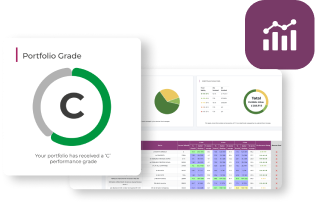
An infrastructure fund may be only one part of your investments. Our free portfolio analysis reviews available fund performance, sector rankings and Yodelar Ratings across the holdings you provide, and can help identify possible duplication and concentration.
Upload a recent statement or provide your fund names and approximate values. The analysis is information, not a recommendation to buy, sell or switch.
Investors who want to discuss whether the portfolio still suits their circumstances can also book a no obligation call with an adviser from our advice partner, MKC Wealth. Any recommendation would follow a fuller assessment and explanation of risks, costs and services.

Summary
Infrastructure funds offer access to businesses providing essential services, but the latest figures show that investors have received very different results. Five year growth ranged from 80.55% to a loss of 7.77%, with substantial differences in rankings across shorter periods too.
For an existing investor, the useful question is whether the fund has delivered the performance and role expected of it. An essential service, an income objective or a positive recent return is not enough to answer that on its own.
The full report lets you check the fund’s record. A portfolio analysis then helps you consider that holding alongside everything else you own, before deciding whether a wider advice discussion would be useful.