

-
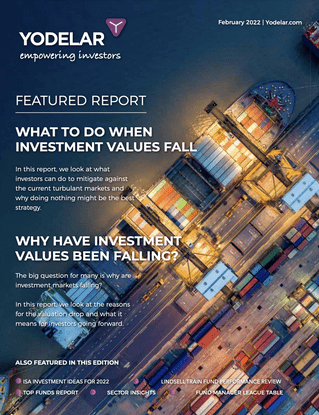
This edition features our in-depth report on the active passive debate and why investors should focus less on labels and more on how each fund fits within the wider portfolio.
-
The magazine includes investor education articles on hidden weak funds, investment process, portfolio benchmarking and the risks of judging performance without proper context.
-
Our latest performance review compares 253 Fidelity, Vanguard and BlackRock funds using performance data to 30 June 2026.
-
The fund manager league table ranks 80 fund managers using performance data from 2,885 Investment Association sector-classified funds.
-
The August edition also includes sector popularity data, retail fund sales, funds under management, sector performance rankings and fund performance tables covering more than 3,000 IA sector-classified funds.
This edition brings together fund research, portfolio education, sector analysis and fund manager comparisons to help investors better understand how their investments are positioned.
The aim is to help investors look beyond headline performance. A portfolio may include well-known fund names, low-cost trackers or funds that have performed well in isolation, but that does not always mean the portfolio is efficient, well diversified or aligned with the investor’s objectives.
Each section of the magazine is designed to give investors practical insight they can apply to their own portfolio. It helps readers assess whether their funds have ranked strongly against sector peers, whether their portfolio is properly structured and whether a more detailed review may be needed.

1. The Active Passive Debate Investors Often Get Wrong
The featured report examines one of the most common debates in investing: whether active or passive funds are better.
The article explains why this is often the wrong starting point. Active and passive funds can both play a useful role, but neither approach is automatically better. A passive fund can be low cost and efficient, but still expose investors to the wrong market, too much concentration or a risk level that does not fit their objectives. An active fund can justify a higher charge, but only if there is evidence that it has delivered value and still has a clear role in the portfolio.
In this article:
We explain where passive funds can work well, where they can fall short, where active funds can add value and where active funds can fail. The report also looks at why the active passive mix should be decided by portfolio role rather than preference alone.
Summary:
This article helps investors understand that the issue is not whether active or passive investing wins in theory. The more important question is whether each fund is being used in the right way and whether the full portfolio works together.
2. Is Your Portfolio Hiding Weak Funds?
This article focuses on the weaknesses that can remain hidden inside a portfolio, even when the overall value has risen.
A platform statement may show fund names, values and recent performance, but it will not always show whether several funds hold the same companies, whether risk has drifted, whether charges are being justified or whether individual funds have fallen behind sector peers.
In this article:
We explain why account value is only the starting point. The article looks at fund overlap, false diversification, risk drift, charges and why a positive return can still be weak if competing funds in the same IA sector performed much better.
Summary:
This article gives investors a clearer way to assess whether their portfolio is as strong as it appears. It shows why a proper portfolio review should look beneath the headline return and assess each fund individually.
3. Do You Have An Investment Process Or Just A Collection Of Funds?
Many self-investors hold funds chosen at different times and for different reasons. One may have been selected after strong performance, another from a shortlist, another because it was low cost and another because it filled a gap at the time.
Individually, each decision may have made sense. Together, they may not add up to a clear investment process.
In this article:
We look at the difference between having a portfolio and having a process. The article explains why investors should have rules for reviewing funds, assessing performance, checking charges, monitoring risk and deciding when a fund no longer deserves its place.
Summary:
This article helps investors understand that a portfolio should not simply be a collection of old decisions. It should have structure, discipline and a clear process for ongoing review.

4. Is Your Portfolio Being Compared To The Wrong Benchmark?
Many investors know whether their portfolio has made money. Fewer know whether it has performed well.
This article explains why the benchmark matters. A portfolio can rise in value and still lag sector peers, similar-risk portfolios or a more suitable benchmark. It can also look disappointing against a strong headline index while still performing reasonably for the level of risk being taken.
In this article:
We explain why positive returns are not enough, why headline indices can mislead, why fund-level comparison matters and why overall portfolio performance should be judged against a suitable risk-based comparison.
Summary:
This article helps investors understand whether they are measuring their portfolio properly. It also shows why fund performance, sector ranking, portfolio structure and risk level should all be reviewed together.
5. Fidelity vs Vanguard vs BlackRock Who Performed Best
This performance review compares three of the best-known fund groups used by UK investors.
The article analyses 253 BlackRock, Fidelity and Vanguard funds using performance data to 30 June 2026. It found that BlackRock recorded the highest average returns across the 1, 3 and 5-year periods reviewed, Vanguard had the strongest Yodelar Rating profile and the lowest average ongoing charges figure, while Fidelity had the weakest overall rating distribution.
In this article:
We compare the average performance, costs and Yodelar Rating distribution across all three fund groups. The review also highlights the highest and lowest 5-year returns in the dataset and explains why provider name alone should not be used as the basis for fund selection.
Summary:
This article shows that no single provider dominated across every measure. For investors, the key point is that the specific fund held matters more than the fund group name.

Fund Manager League Table
The August edition includes our latest fund manager league table.
The table ranks 80 fund managers using performance data from 2,885 Investment Association sector-classified funds. Fund managers are ranked by the proportion of their funds that achieved a 4 or 5 star Yodelar Rating compared with those rated 1 or 2 stars.
Key insights:
MAN Group ranked first, with 62% of its funds receiving a top 4 or 5 star Yodelar performance rating. Brown Advisory ranked last, with 100% of its funds receiving a poor 1 or 2 star Yodelar performance rating.
Across the 2,885 funds analysed, 549 received a top 4 or 5 star rating, while 1,754 received a poor 1 or 2 star rating.
Summary:
The league table gives investors a data-led view of fund manager performance across a wide fund universe. It helps show which fund houses have a higher proportion of consistently strong funds and which have a greater concentration of weaker funds.
Sector Popularity And Retail Fund Flows
The magazine also includes Investment Association data showing recent investor behaviour across sectors and asset classes.
This section looks at monthly and quarterly sector popularity, sector sales and funds under management. The data shows where UK investors have been adding money and where outflows have been concentrated.
Key insights:
In May 2026, Mixed Bond was the best-selling sector, while Europe Excluding UK recorded the weakest net retail sales. Over the most recent quarterly data shown, Short Term Money Market remained a major area of demand, reflecting continued interest in cash-like and lower-risk holdings.
The retail sales section also shows that total retail sales reached £2.536 billion in May 2026, while UK funds under management stood at £1.729 trillion.
Summary:
This section helps investors understand where money has been moving across the UK fund market. It adds useful context to performance data by showing how investor behaviour has shifted across equity, fixed income, money market and mixed asset sectors.

IA Sector Performance Rankings
The August edition ranks IA sectors by average performance over 1 month, 3 months, 6 months, 1 year, 3 years and 5 years.
This section gives investors a clear view of which sectors have performed strongest across different timeframes and which areas have lagged.
Key insights:
The strongest 6-month sector returns were led by IA Asia Pacific Excluding Japan, IA Global Emerging Markets and IA Technology & Technology Innovation. IA Healthcare and Biotechnology had the strongest 1-month average return, while IA Technology & Technology Innovation remained one of the strongest sectors over longer periods.
Summary:
The sector tables help investors understand which areas have driven recent returns. They also show why performance should be reviewed across several timeframes rather than judged only by the most recent period.
Fund Performance And Sector Ranking Tables
The final section of the magazine includes detailed fund performance tables.
These tables list the 1, 3 and 5-year performance, sector ranking and Yodelar Rating for more than 3,000 main unit Investment Association sector-classified funds.
Key insights:
The tables show which funds have consistently ranked strongly against sector peers and which have not. Funds with 4 or 5 star Yodelar Ratings have ranked strongly across the periods analysed, while funds rated 1 or 2 stars have shown weaker historic performance against competing funds in the same IA sector.
Summary:
This section supports evidence-based fund review. It gives investors the data needed to compare their own funds with sector peers and identify holdings that may need closer review.
Download the Latest Investor Magazine
To access the complete data, fund comparisons and in depth analysis featured in this edition, download your copy of the Yodelar Investor Magazine. It provides the full insight required to assess fund performance, identify inefficiencies, and strengthen long term portfolio structure.