

-
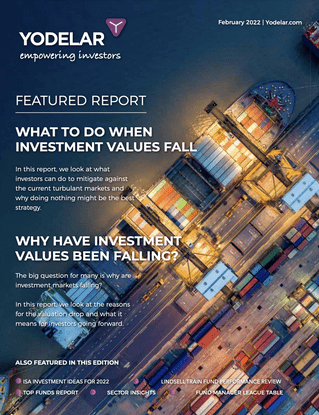
This edition features eight questions to help investors assess whether their portfolio reviews provide meaningful insight or simply an update on performance.
-
We examine how strong markets can conceal portfolio risks, including overlapping holdings and excessive dependence on particular companies or investment themes.
-
Our inheritance tax planning feature explores why timing matters and how family objectives should be balanced with the investor’s own financial security.
-
The latest Artemis review assesses 23 funds using performance data to 31 August 2026, highlighting differences in results and sector rankings across the range.
-
The edition also explains the distinction between factual portfolio analysis and personal financial advice, helping investors understand what each can provide.
A growing portfolio can be reassuring. But a higher value does not necessarily tell you whether the funds inside it are competitive, whether risks are building or whether the investments still support the outcome you want.
The October edition brings together portfolio education, fund research and financial planning insight to help investors look more closely at these questions. From the quality of an investment review to the decisions involved in passing wealth to family, the focus is on understanding how individual investments fit into a wider plan.

What’s Featured In The Latest Magazine?
1. Is Your Portfolio Being Properly Reviewed? 8 Questions Every Investor Should Ask
The featured report examines one of the most overlooked questions in investing: whether a portfolio is actually being reviewed, or simply being valued.
A portfolio can grow in value while holding funds that have lagged comparable alternatives. Stronger performers can hide weaker ones, several funds can hold the same companies and markets, and the overall level of risk can drift away from what the investor originally intended. A review that only confirms whether the account went up or down will not reveal any of this.
In this article:
We set out eight questions investors can use to judge the quality of their investment review. Has each fund been reviewed individually? Is the portfolio being compared fairly? Are stronger investments hiding weaker ones? Does every fund still have a clear purpose? Is the portfolio genuinely diversified? Has its risk changed? Does it still support the investor's current plans? And does the investor understand what each service they pay for actually provides?
Summary:
This article helps investors understand that a proper portfolio review should do more than confirm whether an account went up or down. It should provide clear evidence of how each fund has performed against its sector peers, why each holding is there, what it costs and whether the portfolio still fits the investor's objectives.
2. Why Strong Markets Can Still Carry Hidden Portfolio Risk
This article looks at why risk can often build when markets have already performed well.
Strong returns can create a false sense of security. When performance has been driven by a narrow group of companies and sectors, a portfolio that appears diversified may depend on the same market assumptions far more than its investor realises. HSBC Asset Management data from August 2026 shows the ten largest companies now represent 37.6% of the S&P 500, the highest level of concentration since at least 1994.
In this article:
We explain why broad index trackers can still be concentrated, why the AI boom needs careful monitoring and why several risks can arrive at once, including US market concentration, fiscal pressure, geopolitical tension and supply chain disruption. The article also uses Taiwan's position in advanced semiconductor manufacturing to show how a regional risk can quickly become a global one.
Summary:
This article helps investors understand that a defensive review is not market timing. The message is review, not panic. Investors should check that apparent diversification does not mask dependence on the same companies, sectors or assumptions, and that the level of risk being taken still supports their objectives.

3. Why Delaying Inheritance Tax Planning Can Cost Families Dearly
Inheritance tax planning is often left until later in life, yet many of the most useful planning options need time to work.
HMRC inheritance tax receipts reached £2.3 billion between April and June 2026, £96 million higher than the same period a year earlier, with June 2026 the highest month on record. The nil-rate band remains £325,000 and the residence nil-rate band £175,000, with both thresholds frozen until 2030-31. From 6 April 2027, most unused pension funds and pension death benefits will also fall within the scope of inheritance tax.
In this article:
We explain why a strong portfolio is not the same as a strong plan, why frozen thresholds and investment growth can push more estates above the threshold and why the 2027 pension changes make a portfolio review more important. The article also covers gifting and the seven-year rule, why a will is important but not the full plan, why the portfolio must support lifetime needs first and what an investment-led inheritance tax review should cover.
Summary:
This article shows that inheritance tax planning works best when it starts early and is reviewed regularly. Doing nothing may feel easier, but it can leave families with fewer choices later. It helps investors understand whether their current arrangements will deliver what they intend for their family while still supporting their own needs first.
4. Artemis Fund Review 2026: Which Funds Performed Best
This performance review assesses one of the most recognised active fund managers used by UK investors.
The article analyses 23 Artemis funds using performance data to 31 August 2026. It found that 11 funds, representing 47.8% of those analysed, received a 4 or 5 star Yodelar Rating, while 5 funds, or 21.7% of the range, received a 1 or 2 star rating.
In this article:
We identify the Artemis funds that have ranked strongest in their sectors, including Artemis Global Income, which ranked first in its sector over 1, 3 and 5 years with a five year return of 165.27%, and Artemis SmartGARP European Equity and Artemis SmartGARP UK Equity, which also ranked first in their sectors over five years, returning 147.03% and 127.16% respectively. The review also highlights funds that have lagged, such as Artemis Strategic Assets, and shows why different periods matter: Artemis Income ranked 18th out of 65 sector peers over five years, but 49th over one year.
Summary:
This article shows why a fund group should not be favoured or avoided as a whole. Artemis has some of the strongest funds in their sectors, but it also has funds that have ranked well below their peers. Each fund should be assessed individually on its sector ranking and its role within the portfolio.

Fund Manager League Table
The October edition includes our latest fund manager league table.
The table ranks 85 fund managers using performance data from 3,095 Investment Association sector-classified funds. Fund managers are ranked by the proportion of their funds that achieved a 4 or 5 star Yodelar Rating compared with those rated 1 or 2 stars.
Key insights:
MAN Group ranked first, with 58.3% of its funds receiving a top 4 or 5 star Yodelar performance rating. Brown Advisory ranked last, with 100% of its 12 funds receiving a poor 1 or 2 star Yodelar performance rating.
Across the 3,095 funds analysed, 679 received a top 4 or 5 star rating, while 1,752 received a poor 1 or 2 star rating.
Summary:
The league table gives investors a data-led view of fund manager performance across a wide fund universe. It shows which fund houses have a higher proportion of consistently strong funds and which have a greater concentration of weaker funds, and it is a useful starting point before reviewing each fund on its own merits.
Sector Popularity And Retail Fund Flows
The magazine also includes Investment Association data showing recent investor behaviour across sectors and asset classes.
This section looks at monthly and quarterly sector popularity, sector sales and funds under management. The data shows where UK investors have been adding money and where outflows have been concentrated.
Key insights:
In July 2026, Volatility Managed was the best-selling sector with net retail inflows of £444 million, followed by Short Term Money Market and Global. UK All Companies recorded the weakest net retail sales, with outflows of £1.3 billion, as UK equity funds saw their largest monthly outflows since January 2025. Fixed income was the best-selling asset class, attracting £863 million, while equity funds overall recorded outflows of £2.1 billion.
The retail sales section also shows that net retail sales reached £278 million in July 2026, the ninth consecutive month of positive flows, while UK funds under management stood at £1.72 trillion.
Summary:
This section helps investors understand where money has been moving across the UK fund market. It adds useful context to performance data by showing how investor behaviour has shifted between equity, fixed income, money market and mixed asset sectors, and why continued demand for lower-risk and cash-like holdings sits alongside strong equity markets.

IA Sector Performance Rankings
The October edition ranks IA sectors by average performance over 1 month, 3 months, 6 months, 1 year, 3 years and 5 years.
This section gives investors a clear view of which sectors have performed strongest across different timeframes and which areas have lagged.
Key insights
The strongest 6-month sector returns were led by Asia Pacific Excluding Japan. Healthcare and Biotechnology had the strongest 1-month average return, while the Technology & Technology Innovation sector had the highest 5 year average returns.
Summary
The sector tables help investors understand which areas have driven recent returns. They also show why performance should be reviewed across several timeframes rather than judged only by the most recent period, and why a sector that has led over six months may not have been the strongest over five years.
Fund Performance And Sector Ranking Tables
The final section of the magazine includes detailed fund performance tables.
These tables list the 1, 3 and 5-year performance, sector ranking and Yodelar Rating for more than 3,000 main unit Investment Association sector-classified funds, using performance data to 31 August 2026.
Key insights
The tables show which funds have consistently ranked strongly against sector peers and which have not. Funds with 4 or 5 star Yodelar Ratings have ranked strongly across the periods analysed, while funds rated 1 or 2 stars have shown weaker historic performance against competing funds in the same IA sector.
Summary
This section supports evidence-based fund review. It gives investors the data needed to compare their own funds with sector peers and identify holdings that may need closer review.
Download The Latest Investor Magazine
Download your free copy of the October Yodelar Investor Magazine for the full featured reports and analysis. Use the questions and findings to take a closer look at your investments and prepare for a more informed conversation about your financial plans.