

-
Inheritance tax planning is often delayed until later life, but many of the most useful planning options need time to work.
-
HMRC inheritance tax receipts reached £2.3 billion between April and June 2026, £96 million higher than the same period a year earlier, with June 2026 the highest month on record.
-
The inheritance tax nil-rate band is £325,000 and the residence nil-rate band is £175,000, with thresholds frozen until 2030-31.
-
From 6 April 2027, most unused pension funds and pension death benefits will be brought into scope of inheritance tax.
-
A strong investment portfolio is not enough on its own. Without a clear financial plan, investors may still leave their family with avoidable tax, poor liquidity, unsuitable risk or a portfolio that does not support the intended outcome.
A Strong Portfolio Is Not The Same As A Strong Plan
Many investors spend years building an investment portfolio but far less time considering what that portfolio is ultimately meant to achieve.
For some, the aim is retirement income. For others, it is long-term growth, financial security, helping children or grandchildren, or passing wealth on as efficiently as possible. In many cases, it is a combination of these objectives.
This is why inheritance tax planning should not be treated as a separate issue to be dealt with later. It is part of long-term investment planning. The funds held, the level of risk taken, the account structures used, the income drawn and the timing of any gifts can all affect whether a portfolio supports the investor’s wider family objectives.
A portfolio can perform well and still sit inside a weak financial plan. The issue is not simply the return achieved by the funds. It is also how the investments are held, whether the tax wrappers are suitable, whether enough liquidity is available, whether pension rules have been considered, and whether the portfolio supports both lifetime needs and family objectives.
The key question is not simply whether the portfolio has performed well. It is whether the portfolio, the account structure and the wider plan are working towards the outcome the investor wants.

Inheritance Tax Is Becoming Harder To Ignore
Inheritance tax is still paid by a minority of estates, but the number affected has been rising. HMRC’s latest inheritance tax liability statistics show that 31,500 estates paid inheritance tax in 2022 to 2023, an increase of 3,700, or 13%, from the previous tax year. This represented 4.62% of UK deaths.
Receipts are also increasing. HMRC reported inheritance tax receipts of £3.2 billion for April 2026 to July 2026, £0.1 billion higher than the same period last year. HMRC also stated that June 2026 receipts were the highest on record.
The Office for Budget Responsibility forecast, in November 2025, that inheritance tax receipts would be £8.7 billion in 2025 to 2026 and that receipts would rise further by 2030 to 2031. The OBR also states that the £325,000 threshold is frozen up to and including 2030 to 2031.
For investors, the issue is not only the tax bill their beneficiaries may face. It is the lack of planning clarity. Many people do not know whether inheritance tax may apply, whether their pension position has changed, whether gifts have been recorded properly, or whether their investment portfolio is structured around the right family outcome.
By gifts, we mean assets or money given away during lifetime. Some gifts may remain within the inheritance tax calculation if the person making the gift dies within seven years, so the timing, affordability and record keeping can matter.
The first step is not a product or a complex arrangement. It is understanding the current position.
Frozen Thresholds Increase The Need To Plan
Inheritance tax is still paid by a minority of estates, but the number affected has been rising. HMRC’s latest inheritance tax liability statistics show that 31,500 estates paid inheritance tax in 2022 to 2023, an increase of 3,700, or 13%, from the previous tax year. This represented 4.62% of UK deaths.
Receipts are also increasing. HMRC reported inheritance tax receipts of £3.2 billion for April 2026 to July 2026, £0.1 billion higher than the same period last year. HMRC also stated that June 2026 receipts were the highest on record.
The Office for Budget Responsibility forecast, in November 2025, that inheritance tax receipts would be £8.7 billion in 2025 to 2026 and that receipts would rise further by 2030 to 2031. The OBR also states that the £325,000 threshold is frozen up to and including 2030 to 2031.
For investors, the issue is not only the tax bill their beneficiaries may face. It is the lack of planning clarity. Many people do not know whether inheritance tax may apply, whether their pension position has changed, whether gifts have been recorded properly, or whether their investment portfolio is structured around the right family outcome.
By gifts, we mean assets or money given away during lifetime. Some gifts may remain within the inheritance tax calculation if the person making the gift dies within seven years, so the timing, affordability and record keeping can matter.
The first step is not a product or a complex arrangement. It is understanding the current position.
Pension Changes Make The Portfolio Review More Important
Pensions have often played an important role in later-life and estate planning. For some investors, unused defined contribution pension funds were viewed as a way to pass wealth on outside the inheritance tax estate.
That assumption is changing.
From 6 April 2027, the government will bring most unused pension funds and pension death benefits into the value of a person’s estate for inheritance tax purposes.
This does not mean investors should rush to withdraw pension money or make gifts without advice. That could create income tax, retirement income or wider planning risks.
It does mean pension, investment and inheritance tax planning should be reviewed together. If pensions are no longer treated in the same way for inheritance tax, some investors may need to rethink how they draw income, use ISAs, hold general investment accounts, make gifts or maintain accessible funds.
For investors with meaningful pension and investment wealth, 2027 is not far away. Waiting until the rules apply may leave less time to plan properly.
Investment Growth Can Create A Planning Problem
Strong investment performance is usually a good thing. It can help fund retirement, support future withdrawals and build wealth for the next generation.
But growth can also create a planning issue if the estate is not being reviewed.
A portfolio that was once below inheritance tax thresholds may move above them. A pension that was expected to sit outside the estate may need to be reconsidered. An investment account that has grown substantially may create future tax, liquidity or gifting questions.
This does not mean investors should reduce growth for the sake of tax planning. That would be too simplistic. Growth is often essential, particularly where the investor still needs income, inflation protection or long-term security.
The point is that growth should be connected to a plan. Investors should understand whether the portfolio is being built mainly for their own lifetime needs, for family wealth transfer, or for a combination of both.
A portfolio without a plan can create uncertainty. A portfolio connected to a plan can help investors make clearer decisions about risk, income, gifting, tax wrappers and legacy.
Gifting Needs More Than Good Intentions
Gifting can be a valuable part of inheritance tax planning, but it needs structure.
GOV.UK states that inheritance tax may have to be paid after death on some gifts made within seven years, depending on who received the gift, its value and when it was made. It also confirms the £3,000 annual exemption and the importance of keeping records of gifts made.
This is why delay matters. A gift made early enough may eventually fall outside the estate. A gift made too late may not achieve the same result.
However, gifting should never be viewed only as a tax exercise. It must be affordable. Giving away too much can weaken future financial security, especially if the investor later needs income, care funding, home repairs or emergency capital.
A good gifting decision should be linked to the investment plan. The investor needs to know how much they can afford to give, what they need to retain, where future income will come from and whether the portfolio can still support their own lifestyle.
The aim is not simply to reduce an estate. The aim is to pass wealth on in a controlled, affordable and properly planned way.
A Will Is Important But It Is Not The Full Plan
A will is essential, but it is not a full financial plan.
Research from the Money and Pensions Service found that 56% of UK adults did not have a will, including 53% of adults aged 50 to 64 and 22% of those aged 65 and over.
Without a will, assets may not pass as intended, and the process for loved ones can become more difficult. However, even a valid will does not automatically make an estate tax-efficient. It does not decide whether pension nominations are up to date, whether gifts should be made, whether life cover should be written in trust, or whether the investment portfolio is suitable for both lifetime and inheritance objectives.
This is where families can confuse paperwork with planning.
Documents matter, but the financial strategy still needs to work. A proper plan should connect the will, pensions, investments, property, gifting, tax allowances, liquidity and family objectives.
The Portfolio Must Support Lifetime Needs First
Inheritance tax planning should not weaken the investor’s own financial security.
This is an important point. Some investors focus so much on passing wealth on that they risk giving away too much, reducing liquidity or leaving themselves with a portfolio that no longer supports their own retirement.
A suitable plan should start with the investor’s own needs. That includes income, emergency funds, potential care costs, housing, family support and the ability to adapt if circumstances change.
Only after that can the inheritance position be reviewed properly.
This is why portfolio structure and account structure both matter. A high-growth portfolio may be too volatile if money is needed soon for gifts, income or care. A very cautious portfolio may reduce the chance of meeting long-term family objectives. A portfolio held in the wrong mix of accounts or wrappers may also be less efficient than it could be.
Good inheritance tax planning is not about giving away as much as possible. It is about understanding what can be passed on without compromising the investor’s own financial position.
Poor Planning Can Undermine Investment Success
Some investors have strong portfolios but weak planning. Others have a plan on paper, but the portfolio does not support it efficiently.
Both can create problems.
A strong investment return does not mean wealth will be passed on efficiently. Equally, an estate plan may not work as intended if the portfolio is too risky, poorly diversified, expensive or not aligned with future needs.
This is particularly important for self-managed investors. They may be confident selecting funds, but inheritance tax planning requires a wider view. It needs to consider family circumstances, retirement income, pensions, gifting, liquidity, tax allowances, risk and the timing of wealth transfer.
A portfolio built only for returns may ignore estate planning realities. A portfolio built only to reduce risk may fail to grow enough to support long-term objectives.
Good planning is about balance. It should help the investor retain enough for their own lifetime needs while passing wealth on as efficiently as possible, where appropriate.
That balance is difficult to achieve without understanding both the portfolio and the plan.
The Cost Of Doing Nothing
Doing nothing is still a decision.
It may mean the estate grows into a larger inheritance tax problem. It may mean pension changes are not reviewed before 2027. It may mean gifts are delayed until the seven-year rule becomes harder to use. It may mean the investment portfolio remains misaligned with the investor’s family objectives.
Schroders Personal Wealth reported that 71% of people said they did not understand how inheritance tax works or what beneficiaries might have to pay. The same report found that more than 40% of people did not have a will in place, with common reasons including lack of time or believing it was too early.
That is the real risk. Families often delay because the issue feels distant. But inheritance tax planning can become harder when time has already passed.
The most useful plans are usually built early, reviewed regularly and adjusted as circumstances change.

What An Investment-Led IHT Review Should Cover
A useful inheritance tax review should not start with a product. It should start with a clear picture of the investor’s position and the role their portfolio is meant to play.
| Review area | Why it matters |
| Estate value | Shows whether inheritance tax may be an issue. |
| Investment portfolio | The portfolio should support lifetime needs and legacy objectives. |
| Pension position | Pension death benefits and nominations should be reviewed, especially ahead of 2027. |
| Income needs | Investors should know what they need to retain before considering gifts. |
| Gifting capacity | Gifts should be affordable, planned and properly recorded. |
| Tax wrappers | How assets are held can be as important as the funds selected. |
| Liquidity | The estate may need accessible funds to meet tax, costs or family needs. |
| Risk level | The portfolio should not take unnecessary risk or become too cautious for the plan. |
| Fund quality | Weak funds, duplication and excessive concentration can undermine long-term outcomes. |
| Will and beneficiaries | Assets should be likely to pass as intended. |
| Ongoing review |
Plans should be updated as tax rules, markets and family circumstances change. |
This does not mean every investor needs a complex estate planning structure. Many do not. But investors with meaningful assets should understand whether their current arrangements are likely to deliver the outcome they want.
Start With A Portfolio Analysis
Inheritance tax planning begins with understanding what is owned, where it is held and whether the portfolio is doing the right job.
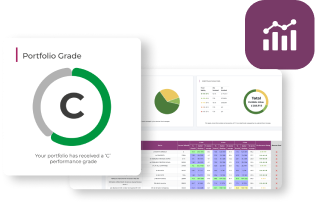
Our free portfolio analysis reviews each fund individually, showing available 1, 3 and 5-year performance, sector ranking and Yodelar Rating. Yodelar Ratings are based on historic sector-relative performance and are not a guide to future returns.
The analysis can also help identify weaker-rated holdings, duplication, concentration, higher charges and funds that may no longer have a clear role.
It does not provide personal advice, tax advice or a recommendation to buy, sell, gift or transfer any investment. It is designed to give investors a clearer view of their portfolio before deciding whether a fuller planning review may be useful.
For investors thinking about inheritance tax, this can be an important first step. Before building a long-term plan, it is useful to know whether the current portfolio is efficient, suitable for the investor’s objectives and properly structured.

Book A No Obligation Planning Call
For investors who want to understand whether their current arrangements remain suitable, a no obligation call with an adviser from our advice partner, MKC Wealth, can help.
The discussion can cover the investor’s current portfolio, long-term objectives, family priorities, retirement needs and potential inheritance tax concerns. It can also explain how a more structured financial planning process may help connect investments, tax allowances, gifting, pensions and estate planning.
Any personal recommendation would only be made after understanding the investor’s financial position, investment objectives, time horizon, attitude to risk and estate planning objectives. Any recommendation would include a clear explanation of risks, costs and ongoing service.
Estate planning may also require legal or tax advice. The right approach depends on individual circumstances.

Summary
An investment portfolio should not sit separately from the inheritance tax plan.
The facts are clear. Inheritance tax receipts are rising, thresholds remain frozen, pension rules are changing from April 2027, and many adults still do not fully understand how inheritance tax may affect their family.
For investors, the issue is not only tax. It is whether the wider financial plan is strong enough. A portfolio can perform well and still fail to support the intended family outcome. A plan can exist on paper but still be weakened by poor fund selection, unsuitable risk, unnecessary costs, lack of liquidity or the wrong mix of tax wrappers.
Good planning connects the portfolio to the objective. It helps investors understand what they need for their own lifetime, what they may be able to pass on, what risks they are taking and how the estate may be affected by tax.
Doing nothing may feel easier, but it can leave families with fewer choices later.
For investors who have built meaningful wealth and have not reviewed how their portfolio fits into their inheritance tax position, the next step should not be delayed. A portfolio review and planning conversation can help identify whether the current approach is still suitable, or whether a more structured plan is needed.

Sources