

-
The Iran conflict has increased uncertainty in energy markets, which can influence inflation expectations, currency movements and investor risk appetite.
-
Around 20% of global oil and liquefied natural gas (LNG) flows pass through the Strait of Hormuz, which explains why energy prices react quickly when tensions rise.
-
Sectors most sensitive to prolonged disruption are typically those linked to commodities, global trade and inflation expectations.
-
However, market reactions to geopolitical events have historically been temporary in many cases.
-
Portfolio diversification and clear asset allocation remain the most practical tools for managing uncertainty.
Why Markets Are Reacting to the Conflict
Geopolitical events rarely affect financial markets in isolation. Instead, they tend to influence a small number of economic variables that feed through into investment performance.
In the case of Iran, the most important channel is energy supply. According to the US Energy Information Administration, roughly 20% of global petroleum liquids consumption passes through the Strait of Hormuz, alongside a similar share of global LNG trade.
Because this route is critical for energy exports from the Middle East, any threat to shipping immediately raises concerns about supply disruption. Markets therefore respond quickly through oil prices, transport costs and inflation expectations.
Early market reactions reflected this dynamic. Energy prices rose sharply as investors assessed the potential impact of disruption in the region.
For investors, the key question is not simply whether markets move in the short term. It is which parts of the market are most sensitive to these changes.

The Market Starting Point
Performance data for Investment Association sector-classified funds up to 27 February 2026 provides a useful baseline. These figures are cumulative and inclusive of fund charges.
Selected sector averages before the conflict escalated include:
| IA Sector | 1 Month | 3 Months | 6 Months | 1 Year |
|---|---|---|---|---|
| IA Commodity & Natural Resources | 7.21% | 23.61% | 40.06% | 59.81% |
| IA Global Emerging Markets | 8.58% | 15.63% | 26.43% | 35.56% |
| IA North America | 1.27% | 0.69% | 6.56% | 7.96% |
| IA Technology & Technology Innovation | -0.17% | 0.78% | 10.72% | 17.15% |
| IA Global Government Bond | 1.85% | 0.03% | 2.62% | 1.91% |
Two observations stand out:
First, commodity-linked sectors had already delivered strong returns before the conflict.
Second, North America and technology had shown weaker short-term momentum relative to these other sectors.
Understanding this starting point helps explain why certain sectors react more quickly when geopolitical events occur.
Which Investment Association (IA) Sectors Are Most Sensitive
The following sectors tend to be the most sensitive if energy disruption persists.
IA Commodity and Natural Resources
Funds in this sector invest primarily in companies linked to commodities such as oil, gas, mining and materials.
If energy prices remain elevated, companies operating in these areas may see direct impacts on revenues and profitability. However, returns within the sector can vary widely depending on whether funds focus more heavily on energy producers, mining companies or diversified resources.
IA Infrastructure
Infrastructure funds typically hold companies involved in utilities, transport networks, energy assets and communication systems.
These businesses may experience two opposing effects:
- Inflation-linked revenues can increase when prices rise.
- Borrowing costs may increase if interest rates remain higher for longer.
As a result, infrastructure funds can react differently depending on their underlying holdings.
IA Global Emerging Markets and IA Latin America
Many emerging market economies are closely linked to commodity production or global trade flows.
Higher commodity prices can support exporters, while higher inflation or currency volatility can create pressure elsewhere. For this reason, emerging market funds often experience increased volatility during geopolitical shocks.
IA North America and IA Technology
Funds in these sectors often hold companies whose valuations are sensitive to interest rate expectations.
If energy prices feed into higher inflation expectations, central banks may keep interest rates elevated for longer. This environment can affect growth-oriented sectors differently from commodity-linked sectors.
This does not imply long-term weakness. It highlights where short-term sensitivity can occur.

Time in the Market vs Timing the Market
Periods of geopolitical tension often tempt investors to react quickly.
However, history shows that markets frequently recover following major geopolitical events. Research from the International Monetary Fund examining geopolitical risk events found that markets often experience short-term declines, but the broader trend over time has frequently been recovery rather than permanent loss.
This highlights an important principle for long-term investors: remaining invested over time has historically been more important than attempting to predict short-term market movements.
Attempting to time entry and exit points during volatile periods can lead investors to miss subsequent recoveries. While no outcome is guaranteed, maintaining a long-term perspective has historically been an important component of investment discipline.

Why Diversification and Asset Allocation Matter
Events like the Iran conflict often reveal how concentrated portfolios may have become.
Diversification works by spreading exposure across different regions, sectors and asset classes so that a single event does not dominate overall performance.
For example:
- Commodity-linked assets may react to energy shocks.
- Technology and growth sectors may respond to interest rate expectations.
- Bonds can react differently depending on inflation and risk sentiment.
A portfolio balanced across these drivers can help reduce reliance on any one outcome.
Asset allocation plays a similar role. The mix between equities, bonds and cash-like holdings influences how a portfolio responds when markets become more volatile.
Reviewing Portfolio Exposure
Understanding these exposures is often easier with structured analysis.
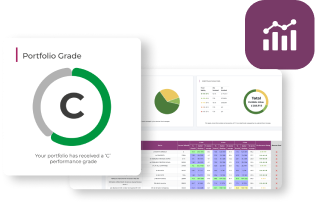
A Yodelar Portfolio Analysis reviews how each fund in a portfolio compares with its sector peers and assesses how holdings interact within the overall portfolio structure.
The analysis can help identify:
- overlapping exposures across funds
- concentration in particular sectors or regions
- differences between individual fund performance and sector averages
Rather than focusing on short-term market events, this type of review helps investors understand how efficiently their portfolio is structured.

Conclusion
The Iran conflict has increased uncertainty in global markets, primarily through its potential impact on energy supply, inflation expectations and investor confidence.
If disruption were to persist, sectors most closely linked to energy prices, inflation and interest-rate expectations may experience greater volatility than others. However, historical experience shows that market reactions to geopolitical events are often temporary, and outcomes can vary widely across sectors.
For investors, the key takeaway is not to predict the path of the conflict, but to ensure portfolios remain diversified and aligned with long-term objectives.
Maintaining a balanced allocation across regions, sectors and asset classes can help portfolios navigate periods of uncertainty. Regular portfolio reviews can provide clarity on where exposures lie and whether diversification remains effective.
In uncertain periods, structure and discipline often matter more than prediction.