

- Gold and silver have become some of the most purchased exchange traded products among UK investors in early 2026. Platform buy lists show precious metals dominating ETF purchases.
- Cash-like funds and bond sectors are attracting strong inflows. Many investors appear to be repositioning portfolios in response to market uncertainty.
- Several traditional equity sectors have experienced significant withdrawals.
Broad UK equity and global equity funds have seen notable outflows. - Geopolitical tensions have triggered sharp market reactions. Oil prices and government bond yields moved quickly following the escalation involving Iran.
- Rapid portfolio changes during uncertain periods can create unintended risks.
Investors reacting to headlines may weaken diversification without realising it.
A Changing Investment Landscape
The early months of 2026 have brought noticeable changes in how UK investors are investing their money.
Data published by several UK investment platforms and the Investment Association (IA) shows that investors have been moving money into areas such as money market funds, bond sectors and precious metals. At the same time, several broad equity sectors have experienced notable withdrawals.
These shifts have taken place against a backdrop of rising geopolitical tension, market volatility and ongoing uncertainty around inflation and interest rates.
Taken together, the data highlights how quickly investor behaviour can change when market conditions become uncertain. However, while flows into and out of different sectors and 'purchase rankings' from platforms provide insight into where money is moving, they do not necessarily show how individual portfolios are positioned.
Understanding how these trends affect an individual portfolio requires looking beyond headline flows and examining how funds interact within a portfolio structure.

The Investments Appearing Most Frequently In Platform Buy Lists
Platform rankings, showing the most frequently purchased investments, provide a useful snapshot of retail investor behaviour.
While individual funds differ, the most frequently purchased investments tend to fall into a small number of themes.
| Investment Theme | Examples Appearing In Platform Rankings | Interpretation |
|---|---|---|
| Global equity exposure | Vanguard FTSE Global All Cap, Fidelity Index World | Investors seeking broad international diversification |
| Income focused funds | Artemis Global Income | Demand for steady income and established companies |
| Mixed asset portfolios | Vanguard LifeStrategy range | Investors spreading risk across asset classes |
| Cash like strategies | Royal London Short Term Money Market | Demand for lower volatility assets |
| Precious metals | iShares Physical Gold ETC, iShares Physical Silver ETC | Interest in traditional defensive assets |
The presence of both global equity funds and defensive assets highlights an important point.
Many investors appear to be attempting to remain invested while simultaneously reducing perceived portfolio risk.
IA Sector Data Shows Where Money Is Actually Flowing
Platform purchase lists show investor behaviour, but sector flow data provides another useful perspective.
The Investment Association publishes monthly statistics showing how much money investors add to or withdraw from different sectors of the UK fund market.
In January 2026 the sectors receiving the strongest inflows were largely those designed to reduce volatility or provide income.
| IA Sector | Net Retail Sales January 2026 |
|---|---|
| Volatility Managed | £377m |
| £ Corporate Bond | £353m |
| Short Term Money Market | £337m |
| Global Emerging Market Bond Local Currency | £159m |
| UK Gilts | £143m |
These sectors share several characteristics. Many aim to produce smoother returns than equity markets or generate income through bonds. Money market funds in particular are designed to protect capital while delivering modest returns.
The data suggests that many investors have been focusing more on stability and income during the opening months of the year.
For individual investors, these sector trends provide useful context. However, they do not necessarily show how a particular portfolio is structured. Two investors holding funds in the same sector may still experience very different results depending on which funds they hold.

The Sectors Experiencing Outflows
The same Investment Association data also shows where investors have been withdrawing capital.
| IA Sector | Net Retail Sales January 2026 |
|---|---|
| UK All Companies | – £419m |
| Global | – £369m |
| Specialist | – £213m |
| Asia Pacific ex Japan | – £207m |
| UK Equity Income | – £160m |
These figures show that several broad equity sectors experienced significant withdrawals during the period.
However, sector outflows do not necessarily mean that investors have stopped investing in equities altogether. In many cases they reflect a shift in where investors believe better opportunities may exist.
Within most sectors there can be a wide range of fund performance. Some funds may continue to attract interest while others see money withdrawn. This means that two investors holding funds within the same sector can experience very different results depending on which funds they hold.
Platform purchase rankings illustrate this point. While the overall UK equity sector recorded outflows, certain actively managed UK equity funds still appeared among the most purchased investments on several platforms.
This highlights an important point for investors. Sector trends provide useful context, but the quality of the funds held within a portfolio can play a significant role in long term performance.
The Influence Of Geopolitical Events
Geopolitical developments have also influenced investor behaviour during the opening months of 2026.
The escalation of tensions involving Iran in late February triggered sharp movements across several global markets. Oil prices rose rapidly as traders reacted to the possibility of disruptions to global energy supply. Gold also attracted renewed interest as investors sought assets often viewed as defensive.
Higher oil prices can influence inflation expectations and interest rate outlooks. Rising energy costs can feed into wider price pressures across the economy, which can affect both equity and bond markets.
Market commentary from investment platforms during this period also highlighted increased volatility across several asset classes.
| Market Movement | Observed Reaction | Implication |
|---|---|---|
| Oil prices | Brent crude rose sharply | Higher energy costs may influence inflation |
| Gold demand | Precious metals gained investor interest | Investors often seek perceived safe havens |
| Bond markets | Gilt yields moved higher | Rising yields typically lead to falling bond prices |
While geopolitical shocks can cause sharp short term market reactions, financial markets have experienced many similar events over time. Although these events can influence investor sentiment, predicting how markets will respond in the short term is often difficult.
For investors, reacting quickly to developments like these can sometimes lead to portfolio changes that prioritise short term market movements over long term diversification.
The Risk Of Reacting To Geopolitical Headlines
Periods of geopolitical uncertainty often lead investors to reassess their portfolios. However, making investment decisions mainly in response to short term events can carry risks.
Investors may sell certain investments quickly and move money into assets that appear safer at that moment. While this can feel like a sensible reaction during uncertain periods, it can sometimes weaken diversification and introduce new risks if market conditions change.
Trying to predict market turning points based on geopolitical developments can also be difficult. Financial markets often react rapidly to new information and prices can move before the broader economic impact of an event becomes clear.
For this reason, many long term investment strategies focus less on reacting to individual events and more on maintaining diversification across regions, sectors and asset classes. A well structured portfolio is designed to cope with different market conditions rather than relying on the ability to predict short term market movements.
Why Portfolio Structure Matters More Than Many Investors Realise
The trends highlighted earlier in this article also reveal a challenge that many investors face when building portfolios.
Holding several funds can give the impression of diversification. However, this is not always the case.
Different funds often invest in many of the same companies or follow similar strategies. As a result, a portfolio that appears diversified may still depend heavily on a relatively small number of stocks or sectors.
Global equity funds provide a good example. Many widely held global funds invest heavily in large US technology companies. When several funds within a portfolio hold the same companies, the portfolio’s performance can become increasingly dependent on those businesses.
A similar issue can occur when investors hold several funds within the same sector or region. Although the fund names differ, the underlying holdings can overlap significantly. Instead of spreading risk more widely, this can gradually concentrate exposure to the same parts of the market.
Understanding how funds interact within a portfolio therefore requires more than simply counting the number of funds held. It involves looking at how those funds perform compared with others in the same sector and whether the overall portfolio is genuinely diversified.

Understanding How Your Portfolio Compares
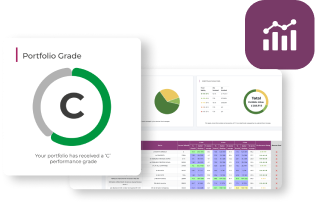
Yodelar provides a free Portfolio Analysis service designed to help investors review the structure and performance of their portfolios.
Investors can submit the names of the funds they hold along with the amount invested in each fund. The analysis then compares those funds against others in the same sector and reviews how the overall portfolio has performed.
Each fund is rated using a five star system based on sector quartile rankings across one, three and five year periods. The portfolio is then graded from A to F depending on the proportion of higher rated funds it contains.
The analysis also compares the historical performance of the portfolio against a similarly risk rated model portfolio.
More information about the portfolio analysis process can be found here:
https://www.yodelar.com/portfolio-analysis
The analysis is provided for information purposes only and does not represent a personal recommendation.

Conclusion
The investment trends visible during early 2026 highlight a shift in how investors are investing their money.
Precious metals products have become some of the most purchased investments on several major platforms. At the same time, money market funds, bonds and mixed asset strategies have attracted significant inflows.
Conversely, several broad equity sectors have experienced notable withdrawals.
Geopolitical developments have contributed to market uncertainty, but reacting quickly to headlines can sometimes lead investors to weaken diversification in an effort to anticipate market movements.
Understanding how a portfolio is constructed, how its funds compare with others in the same sector and whether it provides genuine diversification can play an important role in long term investment outcomes.
A structured portfolio review can help provide that clarity.

Data sources used in this article
Important Risk Warning
This article is not personal advice. This article gives information as to past performance of investments. Past performance is not a reliable indicator of future performance. Always seek personal advice from an FCA regulated adviser. The value of investments will rise and fall, so you could get less that what you put in.