

-
The Strait of Hormuz is one of the world’s most important energy routes. Before the war, flows through it were around 20 million barrels a day, and the IEA says available alternative pipeline capacity is only about 3.5 to 5.5 million barrels a day.
-
Markets have not treated this as a routine headline. Brent crude surged as much as 65% this month to $119.5 a barrel, European shares slid as oil climbed back above $100, and Asian equities suffered their largest monthly foreign outflows since at least 2008.
-
This is not only an oil issue. European gas prices are up 85% since 28 February and Asian LNG prices are up 143%, which matters for inflation, interest-rate expectations and portfolio behaviour well beyond energy holdings.
-
Periods like this tend to expose weak portfolio construction, especially where investors own funds that look different on paper but are still heavily tied to the same market themes, sectors or regions.
-
A portfolio review can help show whether current holdings are genuinely diversified, while a discretionary approach can make it easier to keep a portfolio aligned when markets, risks and opportunities change.
Calm market conditions can create a sense that portfolio decisions are more straightforward than they may be in practice. When returns are rising and volatility is low, a limited number of funds or even a single global tracker can appear to provide sufficient exposure.
However, different market conditions can lead to different outcomes. Periods of increased volatility or falling markets can highlight how a portfolio behaves under pressure, including how well it is diversified and how it responds to changing conditions.
That is what the current period has highlighted. The U.S.-Israeli conflict involving Iran has turned the Strait of Hormuz from a familiar geopolitical risk into a live market consideration. The IEA has indicated that any significant disruption could materially impact global oil supply, with flows through the strait representing a substantial share of daily production. In a matter of weeks, investors have had to consider oil, gas, inflation, interest rates, shipping, consumer demand and central bank responses at the same time.
For self-investors, this is where managing alone becomes more demanding. The question shifts from “Which fund has done well?” to “Is my portfolio built well enough to cope with this?” This article is a guide to what periods like this can reveal about portfolio quality, diversification and the practical limits of managing everything yourself. It is for information only and is not a personal recommendation.

Why This Shock Matters More Than The Headline
The scale of the Strait of Hormuz disruption is what makes this episode different. The International Energy Agency (IEA) says the route handled around 20 million barrels a day of oil before the war, and that only Saudi Arabia and the UAE currently have pipelines that could potentially bypass it, with estimated spare capacity of just 3.5 to 5.5 million barrels a day. In other words, there is no simple workaround for a full disruption.
That matters because energy prices do not sit politely inside “energy funds”. Reuters reports that Brent crude surged as much as 65% this month to $119.5 a barrel, while European stocks fell as markets adjusted to the possibility that the closure of the strait could prove more persistent than first assumed. By 24 March, the STOXX 600 had dipped to a near four-month low, travel and leisure shares were under pressure, and markets had swung from expecting unchanged ECB rates to pricing at least two quarter-point hikes in 2026.
The pressure has spread further than oil. Reuters noted on 24 March that European gas prices had risen 85% since 28 February and Asian LNG prices 143%, far outpacing the move in crude. That matters because gas often feeds more directly into industrial costs and household bills than oil alone. A portfolio that looks comfortably diversified in normal conditions can start behaving very differently once energy feeds into inflation, growth fears and rate expectations at the same time.
Where Self-Investors Often Get Caught
The first trap is assuming the obvious risk is the only risk. A self-investor may think this is mainly a question of whether they own energy exposure. But when oil and gas rise sharply, the knock-on effects can reach much further. Europe is already repricing inflation risk. Asian markets, many of them heavy energy importers, have seen foreign investors pull money out aggressively. U.S. technology-heavy markets have held up better than some global peers so far, but even there the pressure from higher rates and weaker risk appetite has not disappeared.
The second trap is false diversification. Many self-investors own several funds and assume that means they are well spread. Sometimes they are. Sometimes they are simply holding the same broad themes in slightly different wrappers. A global tracker, a U.S. fund, a technology fund and a growth fund can still leave a portfolio heavily dependent on the same handful of companies, the same style of investing and the same rate-sensitive parts of the market. In calm conditions that overlap can be hard to spot. In volatile conditions it becomes much more obvious.
The third trap is reaction. Reuters’ personal finance coverage put it well in early March: this may be a time to revisit asset allocation because even traditional safe havens have not behaved in the usual way. U.S. Treasuries have not offered their normal comfort, gold has not been a straightforward refuge, and investors have been putting record amounts into money market funds and cash reserves instead. That does not mean every investor should start trading around every headline. It does mean that the old assumptions about what will protect a portfolio cannot simply be taken for granted.
None of this proves that self-managing is wrong. It does show that periods like this demand more than conviction and a few strong opinions. They demand process.

What Better Portfolio Management Looks Like In Volatile Markets
Good portfolio management in a period like this is rarely about guessing the next move in oil. It is about understanding what risks the portfolio is really carrying, and whether those risks are still the ones the investor intended to take.
That starts with a few uncomfortable questions. How much of the portfolio is genuinely diversified by asset type, region and style? How much is still tied to the same growth trade? How exposed is it to sectors that suffer if energy stays high, inflation persists or rates remain higher for longer? How much of the portfolio could fall together, even though the holdings look different on a fund list?
Institutional investors have already been answering those questions in real time. Reuters reported on 23 March that investors bracing for a longer war were seeking shelter in cash and energy shares while cutting bonds and bets on technology and mining. That does not mean private investors should blindly copy those moves. It does show that serious portfolio managers are thinking about structure, not just headlines. They are asking what should be reduced, what should be defended, and where a shock may create longer-term opportunity rather than just short-term fear.
That is where good independent advisers and professional portfolio managers can add value. Not because they can predict the next military development, but because they can bring a broader research process, portfolio modelling, risk analysis and regular fund review to a situation that quickly becomes too complex for many investors to manage consistently on their own. In volatile periods, the value is often less about heroics and more about discipline: checking exposures, trimming overlap, rebalancing risk and keeping the portfolio aligned to its purpose.
Why A Portfolio Analysis Can Help
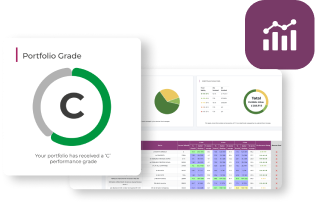
This is exactly where a Yodelar portfolio analysis can be useful. Yodelar says its analysis shows how each individual fund has performed while grading the portfolio as a whole, giving investors a panoramic view of what they own and making it easier to identify areas that could be improved. Its portfolio analysis tool also compares each fund against others in the same sector over one, three and five years, and compares the wider portfolio with a top-performing portfolio.
That matters because periods like this often expose weaknesses that are hard to see from the platform screen alone. A fund may still look respectable in isolation, yet be adding overlap, concentration or unintended risk to the overall portfolio. A portfolio analysis can help show whether the holdings are actually working together, or whether the structure has drifted into something much less balanced than the investor realises.
For a self-investor, that can be a useful first step. It gives a more evidence-based way to assess quality than relying on instinct, recent headlines or a single fund’s past return.

When Speaking To An Adviser Can Help
Sometimes the analysis confirms that the current portfolio is still fit for purpose. In other cases, it shows that the issue is not one weak fund but the way the holdings combine. That is often the point where speaking to an adviser becomes useful, because it turns a list of observations into a clearer decision-making process.
For investors who do not want to manage those decisions alone, it can also be helpful to understand how a discretionary approach works. MKC Invest describes itself as a discretionary portfolio manager, building model portfolios for private investors who are advised by financial planners. It says it offers seven portfolio ranges, each managed to a clear level of risk and built using global investment funds chosen and managed by experts.
That does not mean better results are guaranteed, and it will not be the right solution for everyone. What it can mean is that the portfolio can be reviewed and adjusted within an agreed mandate rather than waiting for the investor to make every change themselves. In periods like this, that may help with the practical side of portfolio management: keeping allocations aligned, reviewing funds as conditions change and making sure the portfolio is still positioned sensibly if market stress starts to create better entry points elsewhere.
For investors who want to understand what their own portfolio may be saying, there is a sensible progression. Start with the analysis. If the findings raise bigger questions about structure, risk or how the portfolio should be managed from here, book a no-obligation call with the advice team and talk it through properly. For some readers, that will confirm they are already doing the right things. For others, it may reveal that managing everything alone has become a bigger task than they first thought.

Conclusion
Periods like this do not prove that self-management is a mistake. They do reveal how demanding it becomes once volatility, inflation risk, sector concentration and portfolio drift all collide. The current market shock is not a tidy investment case study. It is messy, fast-moving and spread across oil, gas, rates, equities and investor sentiment all at once.
That is why the right question for a self-investor is not simply whether they can pick a good fund. It is whether the portfolio as a whole is built well enough to absorb shocks, avoid unnecessary overlap, and still be positioned for what comes next. Good advice and good portfolio management are not about predicting every crisis. They are about giving investors a more structured way to deal with them.
If the past few weeks have made you less certain that your portfolio is as strong or as diversified as you thought, that is not a weakness. It is a useful prompt. Start by seeing what the portfolio analysis shows. Then decide whether the next step is better information, or a better process.