

-
A high income yield can look attractive, but it should be reviewed alongside capital performance, risk, charges and fund quality.
-
A portfolio that pays income is not automatically built to support long-term withdrawals.
-
Several income funds can still hold similar companies, sectors or bond exposure, creating hidden duplication.
-
Investors drawing income need to consider whether their portfolio can support withdrawals through different market conditions.
Many investors approaching or in retirement hold income funds because they want their investments to support regular withdrawals. That can make sense, but an income fund is not the same as an income plan.
A fund may pay an attractive level of income, but still fall in value. A portfolio may produce regular payments, but still be too concentrated, too costly, or too exposed to areas that may not support the investor’s longer-term needs. The income received today also says little about whether the portfolio can continue supporting withdrawals over many years.
This is why income portfolios need careful review. The goal is not simply to find funds with the highest yield. It is to build a portfolio that can provide income in a way that is sustainable, diversified and suitable for the investor’s wider circumstances.

Income Is Not The Same As Security
Income funds can be useful, especially for investors who want regular payments from their portfolio. However, receiving income does not remove investment risk.
A fund may continue paying income while its capital value falls. That means an investor may receive payments but still see the overall value of their holding reduce. For someone relying on their portfolio to support retirement spending, this distinction is important.
MoneyHelper explains that when a pension remains invested in drawdown, its value can rise and fall, meaning retirement income is not guaranteed. It also warns that investors need to plan carefully to reduce the risk of running out of money, particularly if they take too much in the early years or fail to adjust withdrawals when investments perform worse than expected.
This is why an income portfolio should not be judged only by the income it pays today. Investors also need to understand how the underlying funds have performed, what level of risk is being taken, and whether the portfolio remains suitable for the income required.

Why High Yield Can Mislead
A higher yield can be attractive, but it should not be treated as proof that a fund is better.
Sometimes a yield looks high because the fund is investing in higher-risk areas. In other cases, the yield may rise because the fund’s price has fallen. A fund may also pay a high level of income while delivering weak total returns once capital movement is considered.
For investors, the key point is simple: income and value need to be reviewed together.
A fund paying 5% income may look more appealing than one paying 3%, but that comparison is incomplete without looking at capital performance, risk, charges and sector ranking. If the higher-yielding fund has consistently ranked poorly against similar funds, the income alone may not justify its place in the portfolio.
This does not mean high-yielding funds should be avoided. It means the yield should be tested. Investors should ask whether the fund has delivered competitive results, whether the income level appears sustainable, and whether the fund still fits the wider portfolio.
Capital Still Matters
Some investors focus on the income received and pay less attention to the capital value of the portfolio. That can be a mistake.
Capital matters because it supports future income. If the value of the portfolio falls significantly, the same level of withdrawal becomes harder to maintain. This can increase pressure on the remaining assets and may reduce flexibility later in retirement.
For example, an investor withdrawing £10,000 a year from a £250,000 portfolio is taking 4% of the portfolio. If the portfolio falls to £200,000 and the withdrawal remains £10,000, the withdrawal rate has increased to 5%. The investor may still be taking the same cash amount, but the pressure on the portfolio has increased.
This is why income planning should consider both the payments received and the value of the assets still invested. A portfolio that produces income but gradually erodes capital may not be doing the job the investor expects.
A strong income portfolio should therefore be assessed on total return, income level, risk, charges and sustainability, not yield alone.
Withdrawals Change The Portfolio Job
A portfolio being used for withdrawals has a different job from one being built up during working life.
When investors are still adding money, market falls can be uncomfortable but may be easier to absorb over time. When investors are taking money out, the timing of market falls can matter much more. Selling investments after a fall, or withdrawing too much while the portfolio is under pressure, can make it harder for the portfolio to recover.
The FCA’s retirement income advice review highlighted the importance of consumers receiving appropriate advice when accessing pension savings, noting that retirement decisions have become more complex and can involve more risk.
For self-investors, the lesson is clear. A portfolio that was suitable while building wealth may not automatically be suitable when drawing income. The fund mix, risk level, withdrawal rate and tax position may all need to be reviewed.
This does not mean every investor needs to reduce risk in retirement. Some investors still need growth, especially if the portfolio must support income for many years. The point is that the portfolio should be designed around the income need, not simply left unchanged because it has worked in the past.
Income Funds Can Overlap
Holding several income funds does not automatically create a stronger income portfolio.
Different funds may have different names and managers but still invest in similar areas. Several UK equity income funds may hold many of the same dividend-paying companies. Bond income funds may share exposure to similar credit risks. Mixed income funds may already hold assets that overlap with other funds in the portfolio.
This can create a false sense of diversification. The portfolio may look spread across several funds, but the underlying exposure may be more concentrated than the investor realises.
Overlap matters because it can increase risk. If several income funds rely on the same companies, sectors or bond markets, the portfolio may be more vulnerable if those areas weaken.
A proper income review should therefore look beyond the number of funds held. It should assess what each fund owns, how it has performed, whether it duplicates other holdings, and whether it adds something useful to the wider portfolio.

Charges Reduce The Income Left Behind
Charges are especially important for income investors because they are deducted whether a fund performs well or poorly.
A fund with higher charges may still be justified if it delivers strong historic performance, provides useful diversification, or gives access to an area that is difficult to invest in cheaply. However, higher costs become harder to justify when a fund has ranked poorly against similar funds or duplicates exposure already held elsewhere.
For investors taking income, every cost reduces the amount left in the portfolio. That does not mean the cheapest fund is always best, but it does mean charges should be reviewed alongside performance, risk and the role of the fund.
The question is not simply what the fund pays out. It is whether the fund has justified its cost after allowing for performance, income, risk and portfolio fit.
Income Needs Can Change
Income planning should not be treated as a one-off decision.
The amount an investor needs may change over time. Spending can increase or decrease. Inflation can affect the real value of income. Health, family support, care needs, tax allowances and other sources of income can all change.
The portfolio may also change. Funds can alter their income levels. Market conditions can affect capital values. A fund that once played a useful role may become less competitive or less suitable.
This is why income portfolios should be reviewed regularly. Investors need to know whether the income being taken is still reasonable, whether the portfolio remains properly diversified, and whether the fund selection still supports the intended outcome.
A portfolio that was appropriate at the start of retirement may not still be the right structure years later.
What An Income Review Should Check
An income portfolio review should assess more than the level of income being paid. It should look at whether the income is being generated efficiently and whether the portfolio remains suitable for the investor’s wider circumstances.
|
Review point |
Why it matters |
|---|---|
|
Income level |
Shows what the portfolio is currently paying or supporting. |
|
Capital performance |
Helps identify whether income is being supported by a stable or falling portfolio value. |
|
Fund performance |
Shows how each fund has performed over 1, 3 and 5 years, where data is available. |
|
Sector ranking |
Places each fund’s performance in context against similar funds. |
|
Yodelar Rating |
Provides a summary of historic sector-relative performance. |
|
Charges |
Shows whether fund costs appear justified by performance and role. |
|
Duplication |
Identifies where income funds may hold similar assets or rely on the same areas. |
|
Risk level |
Helps assess whether the portfolio remains suitable for the income objective. |
|
Withdrawal rate |
Shows whether the level of withdrawals may place pressure on the portfolio. |
These checks do not provide a personal recommendation on their own, but they can highlight where closer review may be needed.
Where A Structured Income Approach May Help
A structured income approach starts with the investor’s objective, then builds the portfolio around that need.
This means considering how much income is required, how long it may be needed, how much risk is suitable, how withdrawals will be managed, and how the portfolio should be reviewed over time.
MKC Invest’s Income Focus range is designed with the objective of generating a higher level of income from a diversified portfolio and distributing that income to investors. MKC Invest states that its target is to produce at least double the level of income generated by the relevant Baseline Benchmark over each rolling year, although income levels are not guaranteed and will vary over time.
This is not a recommendation to invest in an MKC portfolio. It is an example of how income investing can be approached with a defined objective, rather than simply selecting funds based on headline yield.
For investors, the wider point is that income should be planned. It should be linked to objectives, risk, sustainability and the overall structure of the portfolio.

Start With A Free Portfolio Analysis
Many investors do not know whether their income funds are still competitive, whether they overlap with other holdings, or whether their portfolio is taking more risk than they intended.
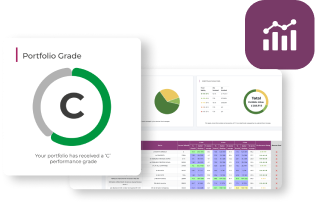
Our free portfolio analysis can help provide that first layer of insight. It reviews each fund individually, showing 1, 3 and 5-year performance, sector ranking and Yodelar Rating, where data is available. It can also help identify weaker-rated holdings, duplication, concentration, excessive risk, higher charges and funds that may no longer have a clear role.
Where appropriate, the analysis can also compare backdated portfolio performance with a similar-risk MKC Invest model. This does not provide personal advice and does not recommend whether to buy, sell or switch any investment. It is designed to help investors understand whether further review may be useful.
For investors holding income funds, drawing from a portfolio, or approaching retirement, this can be a practical first step before deciding whether a more structured income approach may be needed.

Book A No Obligation Call
For investors who want to understand whether their current income strategy remains suitable, a no obligation call can help.
The discussion can cover the investor’s current portfolio, portfolio analysis results, income needs, time horizon and attitude to risk. It can also explain how a structured income approach may work and what factors should be considered before making any recommendation.
Any personal recommendation would only be made after understanding the investor’s financial position, investment objectives, income needs, time horizon and attitude to risk. Any recommendation would include a clear explanation of risks, costs and ongoing service.

Summary
An income fund is not the same as an income plan.
A portfolio may pay regular income but still be poorly structured, overly concentrated, expensive, or exposed to funds that have fallen behind their peers. A high yield may look attractive, but it should be assessed alongside capital performance, risk, charges and sustainability.
For investors drawing income, or preparing to do so, the portfolio has a different job. It must support withdrawals, manage risk and remain aligned with the investor’s wider circumstances. That requires more than simply holding funds that pay income.
The strongest income portfolios are built around a clear objective. They consider how much income is needed, how long it may be required, what level of risk is suitable, and whether each fund continues to justify its place.
For investors who are unsure, a free portfolio analysis can help identify whether their income funds are performing competitively, whether the portfolio contains hidden risks, and whether further review may be appropriate.