

- A portfolio can look diversified because it holds several funds, but still be concentrated in the same companies, sectors or regions.
- Strong overall returns can hide weaker funds, duplicated holdings or a higher level of risk than the investor intended.
- Defensive holdings such as cash, money market funds or cautious funds still need a clear purpose and should be reviewed regularly.
- A fund can deliver a positive return and still rank poorly compared with similar funds.
Most investors know whether their portfolio has gone up or down. Far fewer know whether it is properly structured.
That difference matters.
A portfolio can rise in value and still contain problems that may weaken future returns. It may hold too many similar funds, rely heavily on one region, carry more risk than intended, or include funds that have fallen behind comparable alternatives.
These issues are easy to miss because most platform statements only show fund names, values and recent returns. They rarely show whether several funds own the same companies, whether the portfolio has become too dependent on one market, or whether each fund still has a clear reason for being held.
This article looks at the portfolio mistakes that often remain hidden until markets change. It also explains why regular portfolio analysis can help investors understand whether their holdings still work together.
More Funds Can Mean More Repetition
Many investors assume that holding more funds means they are better diversified. That is not always the case.
A portfolio with 12 or 15 funds may look well spread on a statement. The investor may hold funds from different providers, with different names and different fund managers. But that does not mean the underlying investments are different.
Several global equity funds may all hold many of the same large US companies. A UK equity fund and a UK equity income fund may share similar large dividend-paying businesses. A cautious multi-asset fund may overlap with separate bond and equity funds already held elsewhere.
The risk is that the investor believes they have spread their money widely, when they may have repeated the same exposure through several funds.
This can make a portfolio more vulnerable than it appears. If several funds depend on the same companies, sectors or regions, those areas may have a bigger impact on the overall portfolio than the investor realises.
Good diversification is not about owning a long list of funds. It is about making sure each holding adds something useful and that the portfolio works as a whole.

Strong Returns Can Hide Concentration
Strong performance can create confidence. If a portfolio has risen over several years, it is natural for an investor to believe the strategy is working.
But strong returns do not always prove that a portfolio is well built. They may simply show that the portfolio has been exposed to areas of the market that have performed well.
This is particularly important when returns are driven by a narrow part of the market. Lazard noted in March 2026 that the 10 largest stocks in the S&P 500 made up 38.4% of the index, and that the 10 largest stocks in the MSCI World Index were all US-listed.
For investors holding several funds with similar exposure to large US companies, recent performance may have been supported by the same underlying trend. That does not mean those holdings are poor, but it does mean investors should understand how much of their portfolio depends on the same areas continuing to perform well.
A portfolio can look strong during favourable conditions but still be exposed to a sharper setback if the same areas weaken.

Risk Can Drift Without You Noticing
A portfolio’s risk level can change over time, even if the investor has not made many changes.
If equity markets perform strongly, the equity portion of a portfolio may become larger. If lower-risk assets lag behind, they may become a smaller part of the portfolio. Over time, the investor may end up taking more risk than originally intended.
The opposite can also happen. Some investors may become more cautious after market uncertainty and keep more in cash, money market funds or cautious funds than their long-term objectives require.
Neither outcome is automatically wrong. Some investors are comfortable taking higher levels of risk, while others want a more cautious approach. The issue is whether the risk level is deliberate and still suitable.
An adventurous investor may be comfortable with a portfolio that has high equity exposure. But they should still know where that risk is coming from, whether it is concentrated in one area, and whether the portfolio remains suitable if their circumstances change.
A portfolio that was suitable five years ago may not still be suitable today. Markets change, fund performance changes and personal circumstances change. Regular review helps identify whether the portfolio still reflects the investor’s objectives, time horizon and attitude to risk.
Weak Funds Can Stay Hidden For Years
Many investors continue to hold funds because they are familiar, because they were recommended in the past, or because they have not obviously lost money.
This can be damaging. A fund can deliver a positive return and still perform poorly compared with similar funds. It can appear acceptable on a platform statement while ranking near the bottom of its sector.
This is why sector ranking matters. It shows whether a fund has performed strongly or weakly against funds investing in a similar area.
A fund does not need to be the best performer in its sector to justify its place. There may be valid reasons for holding a lower-returning fund, including risk control, income needs, diversification or tax considerations. But those reasons should be clear.
The risk is leaving a weaker fund in place simply because it has been held for years. Over time, that can quietly reduce the quality of the portfolio.
If a fund has ranked poorly over several periods and no longer has a clear role, it should be reviewed.

Too Many Funds Can Create Portfolio Clutter
Some investors add funds gradually without removing older holdings. A new fund may be bought because it has performed well, appeared on a shortlist, been recommended by a platform or provided exposure to a new theme.
Over time, this can create a cluttered portfolio.
A cluttered portfolio is not necessarily more diversified. It may simply contain several funds doing similar jobs. It can become harder to monitor, harder to rebalance and harder to understand.
This weakens decision-making. If an investor does not know why each fund is held, it becomes difficult to judge whether the fund is still needed.
Every fund should have a clear role. It may provide growth, income, diversification, specialist exposure, access to a particular region, or exposure to an asset type that is not already represented elsewhere. If the role is not clear, the fund may be adding complexity rather than value.
A strong portfolio should be clear enough for the investor to understand what each fund is there to do.
Charges Should Be Judged Against Value
Charges are one of the few parts of investing that investors can see before they invest. They are deducted whether a fund performs well or poorly, so they should not be ignored.
The lowest-cost fund is not automatically the best choice. Some higher-cost funds may justify their charges through strong historic performance, specialist exposure or a clear role within the portfolio.
The issue is paying higher charges for funds that have not delivered competitive results, duplicate other holdings or no longer add anything distinct.
A low-cost fund can still be poor value if it does not fit the portfolio or has consistently lagged its peers. A higher-cost fund can still be justified if it has delivered value that cheaper alternatives have not.
Every charge should have a reason. If a fund is expensive, weakly ranked and not adding anything useful to the portfolio, it should not be ignored.
What Investors Should Check
A proper portfolio review should go beyond the total account value. It should look at each fund individually and then assess how the funds work together.
| Portfolio check | Why it matters |
|---|---|
| Fund performance | Shows what each fund has delivered over key periods. |
| Sector ranking | Places performance in context against similar funds. |
| Fund rating | Helps identify stronger and weaker historic performance profiles. |
| Overlap | Shows whether funds hold similar companies, sectors or regions. |
| Asset allocation | Checks whether the portfolio still matches the intended risk level. |
| Charges | Helps assess whether costs are supported by value. |
| Portfolio role | Confirms why each fund is held and whether that reason still applies. |
This type of review does not mean every weaker fund should be sold. It means investors should understand what they own, why they own it, and whether each holding still supports the wider portfolio.
Start With A Free Portfolio Analysis
Many portfolio problems are not obvious until the holdings are reviewed properly.
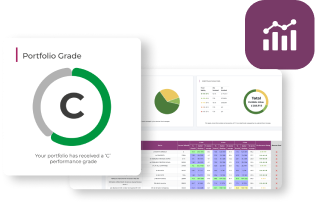
Our free portfolio analysis reviews each fund held, compares it with funds in the same sector and shows how much of the portfolio is invested in stronger and weaker rated funds. It can also help identify duplication, concentration, excessive risk, higher charges and funds that may no longer have a clear role.
This can be particularly useful for investors who have built their portfolio over several years, added funds gradually, relied on fund shortlists, or have not checked whether their holdings still work together.

The analysis does not provide personal advice and does not recommend whether to buy, sell or switch any investment. It is designed to give investors a clearer view of how their portfolio is currently structured and whether further review may be appropriate.
For investors who are unsure whether their portfolio is as strong as it appears, this can be a practical first step.
Summary
Many portfolio mistakes are not obvious from a platform statement. A portfolio can hold several funds but still be concentrated. It can show positive returns but still contain funds that have lagged their peers. It can appear balanced while gradually drifting away from the investor’s intended risk level.
The main risk is assuming that a portfolio is strong because it has gone up in value or because it contains several recognisable funds. That may not be enough.
A better approach is to review each fund in context. Investors should understand how each holding has performed, where it ranks against similar funds, what it costs, whether it overlaps with other holdings and whether it still has a clear role.
Regular portfolio analysis does not remove investment risk, but it can help investors identify problems earlier and make more informed decisions.

Sources