

-
Advice has a visible cost, but the cost of a poorly structured portfolio can be harder to see.
-
A portfolio built from strong past-performing funds can still be duplicated, concentrated or exposed to more risk than the investor intended.
-
A single strong-performing fund can still leave an investor overly reliant on one strategy, market, asset type or fund manager.
-
Good advice is not only about fund selection. It can also support risk management, tax planning, portfolio construction, behavioural discipline and ongoing review.
Many self-investors are confident choosing funds. Online platforms make it easy to compare performance tables, follow fund shortlists, buy low-cost index funds and manage an ISA, SIPP or investment account without speaking to an adviser.
The harder question is whether those choices add up to a properly structured portfolio.
A platform statement can show what an investor owns and how much it is worth, but it does not always show whether the portfolio is duplicated, overconcentrated, too risky, too cautious or poorly matched to long-term objectives.
This is where many investment problems begin. A portfolio may appear to be working because it has risen in value, but that does not necessarily mean it is well built. It may simply mean the market areas it is exposed to have performed well for a period.
A common example is choosing funds mainly because they have performed well in the past. Another is relying heavily on one strong-performing fund and assuming that its past success means the wider portfolio does not need further review. Both approaches can appear sensible, but neither automatically creates a suitable or well-diversified portfolio.
This is something we often see through portfolio analysis work. An investor may hold one fund that has performed well, ranked strongly in its sector or delivered good returns over several years. That can create confidence, but it does not answer the wider question of whether the portfolio is properly diversified, suitable for the investor’s circumstances or exposed to risks that are not obvious from a platform statement.
Financial advice can add value because it looks beyond individual fund performance. Good advice is not simply about selecting funds; it is about building, reviewing and maintaining a portfolio that reflects the investor’s objectives, time horizon, attitude to risk, tax position and wider financial circumstances.
Why Advice Fees Can Be Hard To Judge
Many investors hesitate over advice because the cost is visible. An upfront planning fee or ongoing advice charge can feel expensive, especially when investment platforms, ready-made portfolios and low-cost funds are widely available.
That concern is reasonable. Advice should have a clear purpose, and investors should understand what they are paying for before agreeing to any service. Poor advice, excessive charges or weak ongoing support can reduce the value an investor receives.
The problem is that advice is often judged too narrowly. Some investors ask whether an adviser can simply pick better funds than they can pick themselves, but a portfolio is not just a list of funds. It is a structure that should reflect risk, time horizon, tax position, income needs, diversification and long-term objectives.
As wealth builds, decisions usually become more complex. Investors may hold ISAs, pensions, workplace schemes, cash savings, inherited assets, investment accounts and several funds across different platforms. They may also need to make decisions around retirement income, pension contributions, tax allowances, withdrawals, gifting or passing wealth to family.
At that stage, the question is no longer just whether the investor can choose a fund. It is whether their full financial position is being managed in a joined-up way.
What Good Advice Can Add
Good advice should connect investment decisions to the investor’s wider financial life. It should help answer practical questions such as how much risk is appropriate, whether the portfolio is properly diversified, how withdrawals should be managed and whether the investment strategy still supports the investor’s objectives.
Research from the International Longevity Centre and Royal London found that people who received financial advice were, on average, around £47,000 better off after a decade compared with those who did not receive advice. This should not be treated as a guaranteed outcome, but it does show the potential long-term value of structured financial planning.
Vanguard’s Adviser’s Alpha research also highlights that adviser value is not limited to trying to outperform the market. It identifies areas such as asset allocation, investment selection, rebalancing, tax-efficient strategies, cashflow management and behavioural coaching as important parts of the advice process.
For investors, the important point is that advice is not only about chasing higher returns. It is about improving the quality of decisions across the whole financial plan.
| Advice area | Why it can add value |
|---|---|
| Financial planning | Links investments to specific goals, such as retirement income, inheritance planning or long-term growth. |
| Risk management | Helps investors avoid taking too much or too little risk for their circumstances. |
| Portfolio construction | Builds a portfolio where each holding has a clear role and works with the rest of the portfolio. |
| Tax planning | Helps investors use available allowances and account structures more effectively. |
| Behavioural discipline | Supports investors during periods of market stress, when emotional decisions can be costly. |
| Ongoing review | Keeps the portfolio aligned as markets, fund performance and personal circumstances change. |
None of these areas guarantee better returns. However, together they can help investors avoid common mistakes and make more informed decisions.

Why Fund Picking Is Not A Portfolio Plan
Many self-investors build portfolios by looking for funds with strong past performance. The approach feels logical because a fund that has performed well over 1, 3 or 5 years may appear to be a stronger choice than a fund that has delivered weaker returns.
Past performance is important. It shows what a fund has delivered and how it has compared with similar funds. We regularly highlight weak fund performance because investors should know when a fund has consistently lagged its peers.
However, past performance on its own is not enough to build a suitable portfolio. A fund can have strong historic returns but still be unsuitable for an investor if it takes more risk than expected, duplicates other holdings, increases exposure to an already dominant market, or fails to support the investor’s objectives.
This is one of the main weaknesses of selecting funds from performance tables alone. It focuses on each fund separately but does not show how the funds work together. A collection of strong-performing funds can still create a weak portfolio if the funds rely on the same regions, sectors, companies or investment style.
For example, an investor may hold several global equity funds with different names and different managers. On a platform statement, this may look diversified. In practice, many of those funds may hold similar large US companies, leaving the investor with more exposure to one area of the market than they realise.
A performance-led approach can also encourage investors to buy after strong returns have already happened. The fund may still be good, but the investor’s portfolio may become less balanced if too much exposure is added to a popular area of the market.
This is where advice can add value. A good adviser is not simply looking for funds that have performed well in the past. They are assessing whether each holding has a clear role, whether the portfolio is properly balanced, and whether the overall structure remains suitable for the investor.

When One Strong Fund Becomes The Whole Portfolio
One issue we often see through portfolio analysis work is investors holding most, or sometimes all, of their portfolio in a single fund because that fund has performed well. The fund may have strong past returns, rank well in its sector or be low cost, which can make the investor feel confident that little else needs to be reviewed.
That confidence is understandable, but it can also be misleading. A fund can be strong in isolation and still leave an investor with a poorly balanced portfolio. The issue is not necessarily the quality of the fund, but the level of reliance being placed on it.
A single fund may give exposure to a specific market, region, asset type, investment style or fund manager. If that area continues to perform well, the portfolio may appear successful. If conditions change, the investor may discover that their portfolio was more concentrated than they realised.
A common example is an investor holding only an S&P 500 tracker fund. S&P 500 funds can be low cost, transparent and useful, and they have delivered strong returns for many investors during periods when large US companies have performed well. However, an S&P 500 tracker is not a complete portfolio by itself. It is focused on large US companies, one equity market, one currency exposure and one index approach.
The same issue can apply to any single fund, not just an index fund. A high-performing global fund, technology fund, income fund or mixed investment fund may still create too much reliance on one strategy if it represents most or all of the portfolio.
For investors, the question should not simply be whether the fund has performed well. The more useful question is whether the overall portfolio is suitable.
A single-fund portfolio should be reviewed against several points: whether the investor is too dependent on one fund, what markets and assets the fund actually holds, whether the fund matches the investor’s risk level, whether the portfolio would still be suitable if circumstances changed, and whether there is enough diversification across regions, assets and risk levels.
This does not mean a single fund is automatically unsuitable, and it does not mean investors should make changes without considering their circumstances. It does mean that a fund’s strong past performance should not be used as the only evidence that the wider portfolio is well structured.
The Hidden Risks Self-Investors Often Miss
Many self-investors focus on what is easiest to measure: recent performance, fund charges and account value. These are important, but they do not provide a complete view of portfolio quality.
This is particularly relevant where an investor holds most of their portfolio in one fund, or where several funds appear different but invest in similar areas. In both cases, a platform statement may look reasonable but still fail to show the true level of concentration or duplication.
The more damaging risks are often less visible. A portfolio may have excessive exposure to one region, too much reliance on one investment style, too little defensive exposure, or several funds that behave in a similar way when markets fall.
These issues can remain hidden for years if markets are favourable. The portfolio may rise in value, giving the investor confidence that the strategy is working. The problem only becomes clearer when market conditions change and several holdings fall at the same time.
This is why self-investing can be more difficult than it looks. The challenge is not simply choosing funds. It is understanding how those funds combine, how much risk the investor is really taking, and whether the portfolio can still support their objectives if markets move against them.
Why Behaviour Can Damage Returns
One of the most valuable parts of advice is often the least visible. When markets are rising, many investors feel confident managing their own portfolio. When markets fall, the same investors can feel pressure to make quick changes.
This is where costly mistakes can happen. Some investors move to cash after losses have already occurred. Others chase funds that have recently performed well, even if those funds increase concentration or risk. Some hold weak funds for years because they do not want to accept that a previous decision has not worked.
These decisions may not appear as a single obvious cost, but they can reduce returns, increase risk or leave the portfolio poorly aligned with the investor’s objectives.
Good advice provides structure at the moments when investors are most likely to react emotionally. It can help investors review decisions calmly, stay focused on their long-term plan and make changes for evidence-based reasons rather than short-term market noise.
Advice Guidance And Targeted Support
The distinction between advice, guidance and targeted support has become increasingly important.
Guidance can explain options and help investors understand general considerations. It can be useful, but it does not result in a personal recommendation based on the investor’s full circumstances.
Targeted support is designed to sit between generic guidance and individualised advice. The Financial Conduct Authority (FCA) estimates that around 23 million consumers are currently underserved by the advice and guidance market, and targeted support is intended to help fill that gap by providing support based on groups of consumers with common characteristics.
This may help more people access support. However, targeted support is not the same as full personal advice. A personal recommendation should consider the investor’s objectives, financial position, time horizon, attitude to risk, existing holdings and wider needs.
For investors with larger portfolios, several pensions, retirement decisions or complex family circumstances, personalised advice may still be more appropriate than general guidance or targeted support.
When Advice May Be Most Useful
Advice may be most valuable when the cost of a poor decision is high. This is often the case when investors are approaching retirement, consolidating pensions, drawing income, investing an inheritance or managing a larger portfolio.
It can also be valuable when a portfolio has not been reviewed for several years. Markets change, fund performance changes and personal circumstances change. A portfolio that was suitable at one point may no longer reflect the investor’s objectives or attitude to risk.
Investors may benefit from advice when they are unsure whether their portfolio is too risky, too cautious, too concentrated or too expensive. They may also benefit when they hold funds across different platforms and cannot easily see how the full portfolio fits together.
The aim of advice is not to remove uncertainty. It is to provide a structured process for making better decisions despite uncertainty.

Start With A Free Portfolio Analysis
Many investors are unsure whether they need advice because they do not know how well their current portfolio is structured. A platform statement may show the value of the account, but it does not always show whether the portfolio is duplicated, overconcentrated, too risky or holding weak funds.
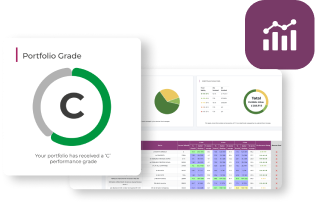
Our free portfolio analysis is designed to provide that first layer of insight. It reviews each fund held, compares it with funds in the same sector and shows how much of the portfolio is invested in stronger and weaker rated funds.
The analysis can also help identify issues that are often overlooked, including duplicated exposure, excessive risk, higher charges and funds that may no longer have a clear role. This can be particularly useful for investors who have built their own portfolio, selected funds mainly on past performance, or become heavily reliant on one fund that has performed well.
The analysis does not provide personal advice and does not recommend whether to buy, sell or switch any investment. It is designed to give investors a clearer view of how their portfolio is currently structured and whether further review may be appropriate.
For self-directed investors, this can be a practical first step before deciding whether professional advice is needed.

Book A No Obligation Call
For investors who want to understand whether professional advice may be appropriate, a no obligation call with one of our advisers can help.
The discussion can cover the investor’s current portfolio, long-term objectives, time horizon and attitude to risk. It can also explain how advice works, what costs apply and what ongoing service is provided.
Summary
Financial advice should not be judged only by whether an adviser can choose funds. Fund performance matters, and weak fund performance should be identified, but a portfolio is more than a collection of funds with strong past returns.
A portfolio built mainly on past performance can still be concentrated, duplicated or exposed to more risk than the investor intended. A portfolio built around one strong-performing fund can feel simple and effective, but it may not provide the structure, diversification or risk control needed for the investor’s wider circumstances.
Good advice can add value by linking investment decisions to a wider financial plan. It can help investors manage risk, review existing holdings, use allowances more effectively, avoid emotional decisions and keep the portfolio aligned as circumstances change.
The key question is not simply whether advice has a cost. It is whether that cost is justified by the structure, oversight and decision-making support it provides.
For investors who are unsure, our free portfolio analysis provides a useful starting point. It can highlight fund performance, sector ranking, duplication, excessive risk, reliance on a single fund and other issues that may warrant closer review before deciding whether advice is appropriate.

Sources
https://www.fca.org.uk/publication/financial-lives/financial-lives-survey-2024-key-findings.pdf
https://ilcuk.org.uk/financial-advice-provides-47k-wealth-uplift-in-decade/