

-
Only a small number of ETFs consistently rank among the strongest performers in their sectors.
-
Out of 7,184 ETFs analysed, fewer than one in nine achieved a top performance rating.
- Some of the strongest returns came from very specific parts of the market.
Gold miners, semiconductors and dividend strategies all featured strongly. -
High ETF returns often come with higher risk. Some of the biggest gains came from narrow sectors or highly concentrated strategies.
-
Sector exposure played a major role in ETF performance. Where an ETF invests has had a large impact on its results.
-
Even strong ETFs can produce weak outcomes if a portfolio lacks balance. Diversification and portfolio structure remain just as important as fund selection.
Exchange traded funds are widely used by investors as a straightforward way to access financial markets. An ETF is a fund that holds a basket of investments often dozens or hundreds of companies and trades on a stock exchange in the same way as a share.
Their simplicity and low cost have helped drive strong growth in popularity. However, widespread use does not mean all ETFs deliver similar results.
Our latest Yodelar ETF review highlights just how wide the performance gap can be. The analysis examined 7,184 ETFs and assessed how each ranked within its sector across several periods. While many delivered positive growth, only a relatively small proportion consistently ranked among the higher performing funds within their sectors.
In total, just 193 ETFs achieved a 5-star Yodelar rating, while a further 630 achieved a 4-star rating. That means fewer than one in nine ETFs analysed achieved a top performance rating.
This highlights an important point for investors. While ETFs are often used to gain broad market exposure, the difference between average sector performance and consistently top ranked ETFs can be significant.
The ETFs featured in this article were selected from those that achieved a 4- or 5-star Yodelar rating in the latest review. Each demonstrated strong sector rankings across multiple periods, highlighting funds that have delivered comparatively strong results within their respective sectors.

ETF Performance Summary
The table below shows how the 7,184 ETFs analysed in the review were distributed across the Yodelar rating system.
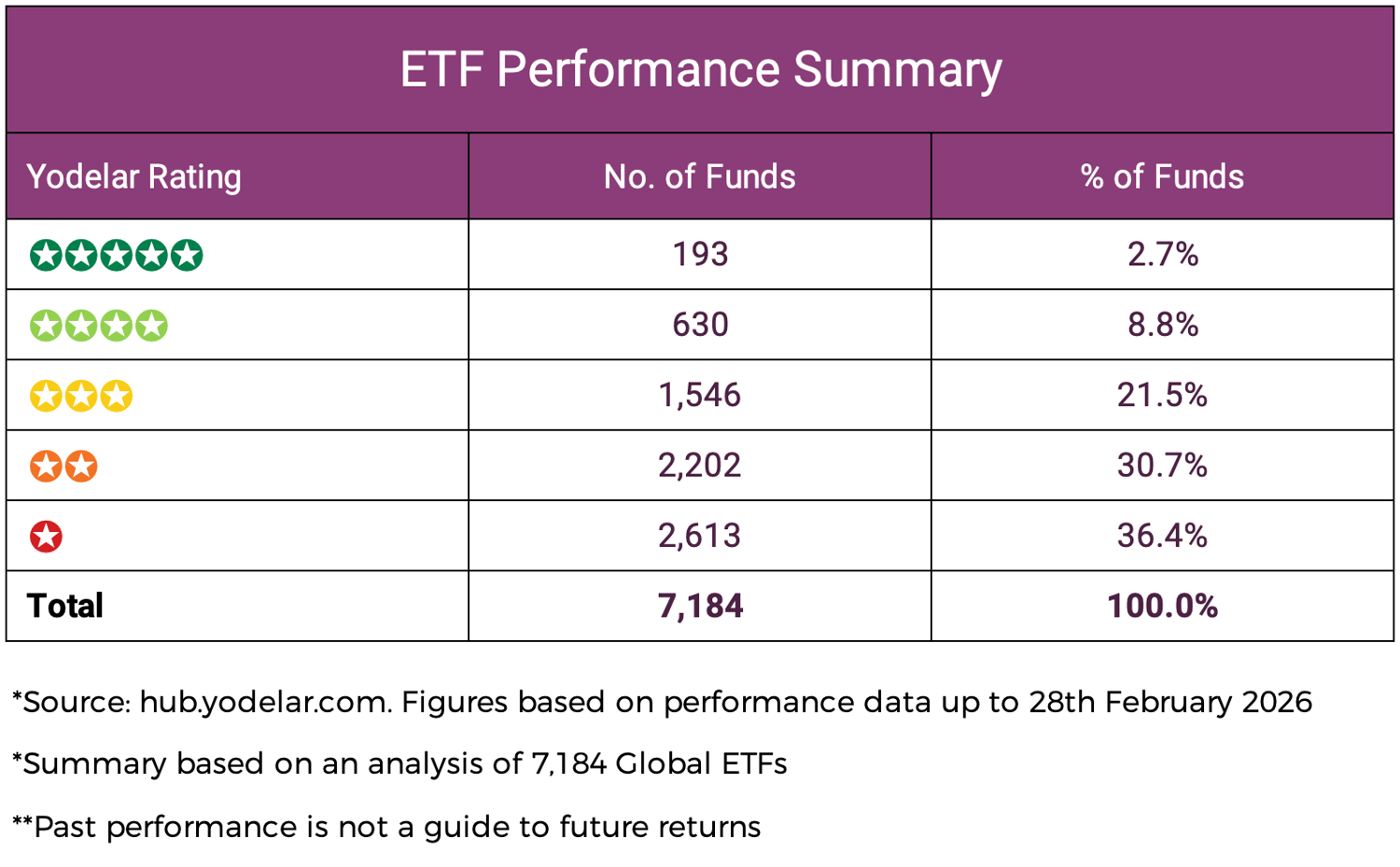
The results highlight an important point. Most ETFs do not consistently rank near the top of their sectors. In fact, more than two thirds of the ETFs analysed fell into the lowest two rating bands.
How Yodelar Rates Fund Performance
10 ETFs That Achieved A 4 Or 5 Star Yodelar Rating
The following ETFs were selected from those that achieved a 4- or 5-star Yodelar rating in the latest review.
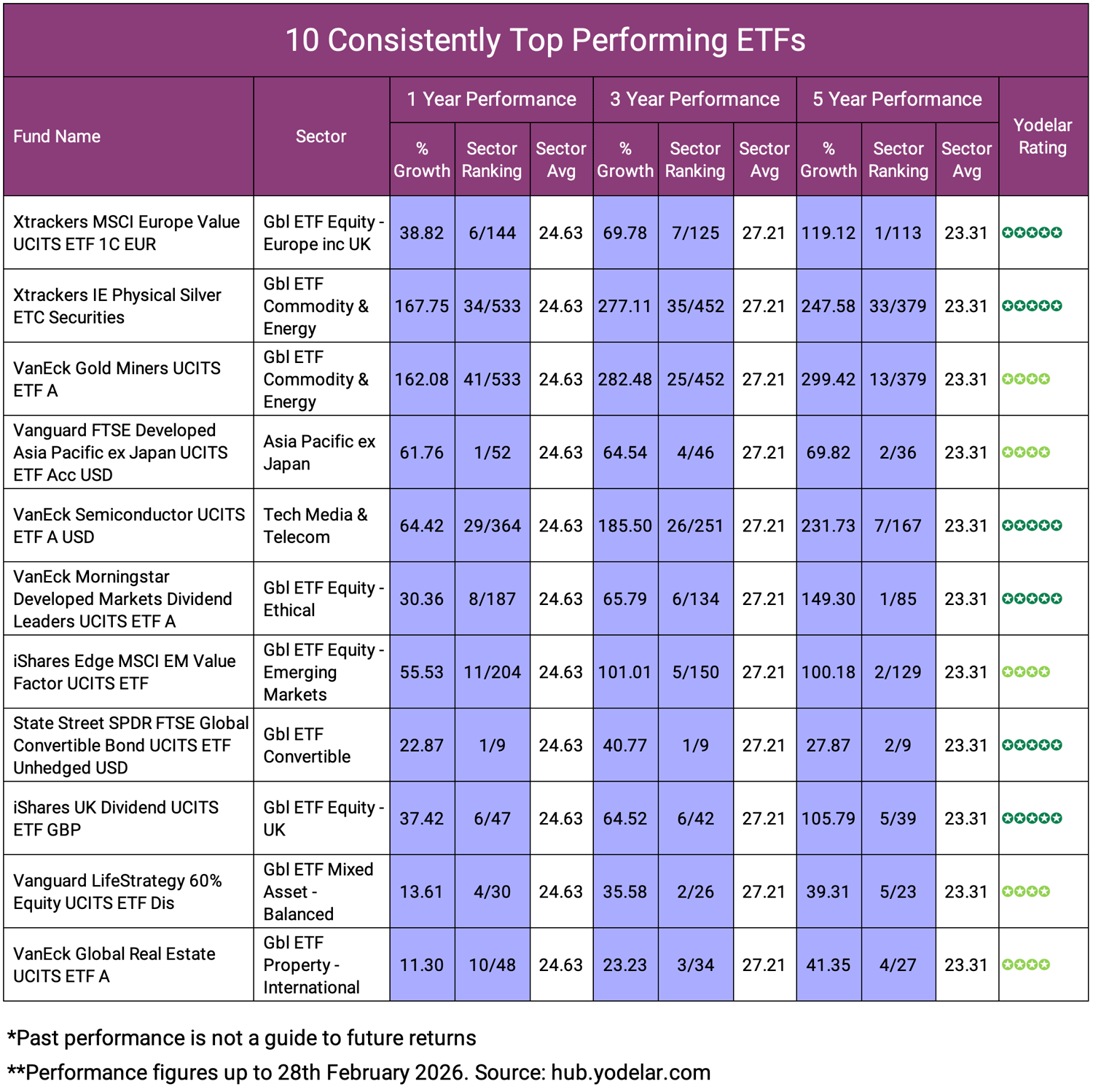
These ETFs achieved strong sector rankings across several time periods in the review.
Some Of The Strongest Returns Came From Narrow Sectors
Several of the strongest returns in the review came from ETFs that track very specific parts of the market rather than broad global indices.
Gold mining companies provide a clear example. The VanEck Gold Miners UCITS ETF returned 162.08% over one year and 299.42% over five years, placing it among the higher-ranking funds in its sector over both periods. Semiconductor companies also produced strong results, with the VanEck Semiconductor UCITS ETF returning 64.42% over one year and 231.73% over five years.
These returns are well above the comparison averages used in the review. However, both ETFs track relatively narrow sectors of the market. This means their performance can be more volatile than broader market funds and more dependent on conditions within those industries.
For investors, this highlights an important point. The ETF with the highest return over a particular period is not always the most suitable investment for a portfolio, particularly if the investment is concentrated in a single sector.

Higher Returns Often Come With Higher Risk
The ETF universe includes a wide range of products, from broad market index trackers to funds that focus on specific sectors or use leverage to increase exposure to market movements.
Some of the highest returns in the review came from these more specialised products. While they can deliver strong gains during favourable market conditions, their prices can also move sharply when markets change direction.
Leveraged ETFs (an ETF that uses financial derivatives and debt to increase the returns of an underlying index or other assets it tracks) in particular aim to multiply daily market movements. This can increase potential gains, but it can also increase losses and lead to greater volatility than traditional index-tracking ETFs.
These products behave very differently from broad market ETFs. This is why, as with any fund, the potential for strong returns should always be considered alongside the level of risk taken to achieve them.
Why Diversification Always Matters
Choosing strong ETFs can improve portfolio performance, but diversification remains one of the most important factors in long term investing.
Holding several ETFs does not automatically create diversification. Many ETFs hold similar companies or focus on the same parts of the market. For example, a number of global equity ETFs have large positions in the same major technology firms. When multiple ETFs hold the same companies, a portfolio can become more concentrated than it first appears.
This is why portfolio structure and asset allocation play such an important role in investment outcomes. A well balanced portfolio spreads investments across different regions, sectors and asset classes rather than relying heavily on one area of the market.
Model portfolios such as those managed by MKC Invest are built around this principle. They combine different types of investments with the aim of creating a portfolio that is diversified and aligned with the level of risk an investor intends to take.

Understanding How Your Portfolio Compares
ETF performance tables can highlight where strong returns have come from, but they do not show how an individual portfolio is structured.
Two investors may hold ETFs from the same sectors yet experience very different results depending on the specific funds they own and how those funds work together within their portfolio. The balance between sectors, regions and asset classes can have a significant influence on overall performance and risk.
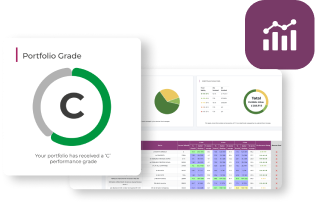
A Yodelar portfolio analysis reviews each fund within a portfolio and compares its performance with others in the same sector. It also assesses how the portfolio has performed as a whole and whether there are areas where holdings may overlap or where diversification could be improved.
The analysis highlights how each fund has performed relative to sector peers, reviews overall portfolio performance, identifies duplication of underlying holdings and highlights potential inefficiencies within the portfolio. It also compares the portfolio with similar risk rated model portfolios from MKC Invest to provide additional context.
More information can be found here:
https://www.yodelar.com/portfolio-analysis

Conclusion
The latest Yodelar ETF review shows that consistently strong ETF performance is relatively rare.
Out of more than 7,000 ETFs analysed, only a small proportion achieved top sector rankings. Some of the strongest returns came from narrow sectors such as gold miners and semiconductors, which can also carry higher levels of risk.
For investors reviewing their portfolios, the more important question is not simply which ETF performed best. It is whether the portfolio as a whole is diversified, efficient and suited to the level of risk being taken.
A structured portfolio review can help provide that perspective.