

-
Advice has a visible cost, but the consequences of an unsuitable investment approach can be harder to recognise.
-
Strong fund performance does not, on its own, establish whether a portfolio supports your retirement plans, income needs or other objectives.
-
One fund can provide broad diversification, while several funds can repeat the same investments. What they hold matters more than how many you own.
-
Financial advice can support planning, investment decisions, tax efficiency and ongoing review, but the service must justify its cost.
-
A free portfolio analysis can help you understand your existing investments before deciding whether a wider advice discussion would be useful.
Good Funds Do Not Answer Every Question
You can choose funds carefully, keep costs under control and watch your investments grow, yet still be unsure whether you can afford to retire.
Can you stop working at 60? How much could you withdraw each year? Which accounts should provide the income? What would change if markets fell, spending increased or your partner died?
Your portfolio value is part of the answer. It is not the whole answer.
This is where the decision about financial advice becomes more practical. It is not simply a question of whether an adviser can choose better funds. It is whether the important decisions around those investments have been considered together, and whether professional support would justify its cost.
Some investors manage both their investments and their planning effectively. Others are confident researching funds but less certain about turning those investments into a retirement income or coordinating several pensions. Recognising that distinction is a useful starting point, not a criticism of investing independently.

Retirement Needs More Than A Target Value
Reaching a particular portfolio value can feel like the point at which retirement becomes possible. But the same amount of money can support very different plans.
An investor whose essential spending is covered by dependable pension income has a different position from someone relying heavily on investment withdrawals. The intended retirement date, other assets, household spending and flexibility all affect what the portfolio needs to do. These are relevant considerations when assessing retirement investment and withdrawal choices.
A wider financial plan should connect the decisions rather than examine each account in isolation.
|
Planning question |
Why it matters |
|---|---|
|
When could you realistically retire? |
The assessment needs to connect expected spending with the income and assets available at different ages. |
|
Where will spending money come from? |
Pensions, ISAs and other accounts have different access and tax rules. |
|
What happens if investments disappoint? |
The plan should show how losses could affect spending, not just the portfolio value. |
|
What needs to remain accessible? |
Planned expenses and unexpected costs can affect how much money should remain available. |
|
What would change for your family? |
A partner’s income, dependants and inheritance wishes may need to be considered alongside your own retirement. |
Even decisions that appear straightforward can interact. Taking taxable money flexibly from an investment based pension can trigger a lower limit on tax-relieved pension contributions. Taking only the usual tax-free lump sum and leaving the rest invested generally does not. That difference can matter for someone who intends to continue contributing to a pension.
The point is not that every investor needs complex arrangements. It is that an apparently simple investment decision can have consequences beyond the fund being bought or sold.
Test The Plan Before Relying On It
A retirement projection can show a comfortable outcome if the assumptions are favourable. The useful question is what happens when they are not.
Would the plan still work with lower investment growth, higher spending or an earlier need to stop working? What would a market fall mean when withdrawals are already being taken?
The Financial Conduct Authority (FCA) expects advisers using retirement financial projections to consider reasonable assumptions, relevant charges, tax and plausible adverse scenarios. It also warns against projections based entirely on past performance or presented with an unjustified impression of accuracy.
These checks do not guarantee that a plan will succeed. They help reveal where it depends on assumptions that may not hold.
For example, taking withdrawals from investments after they have fallen can leave less money invested to benefit from a subsequent recovery. The effect depends on the withdrawals, market movements and the investor’s other resources. It does not mean every growth portfolio must be abandoned at retirement, but it does mean the withdrawal plan and investments need to be assessed together.

Fund Selection Still Matters
Recognising the importance of planning should not diminish the importance of the investments themselves.
A fund’s performance record helps establish what it has delivered and how it has compared with competing funds in the same Investment Association (IA) sector. Persistent weaker rankings deserve investigation, even when the portfolio’s overall value has risen.
However, a sector ranking does not account for every difference between funds. A lower returning holding may have a different investment approach or serve a different purpose. Its replacement should not be selected solely because another fund achieved a higher return.
The portfolio also needs to be considered as a whole. Several individually attractive funds can hold similar companies or depend on the same markets. Diversification concerns the underlying investments and what drives their results, not simply the number of fund names on a statement.
Good fund research and good planning are complementary. A carefully prepared plan still needs suitable investments, while a collection of competitive funds does not, by itself, establish that the plan is affordable or realistic.
One Fund Can Be Enough But The Details Matter
Holding one fund is not automatically a weakness. Some funds combine investments across countries and different types of assets, providing substantial diversification within a single holding. Others focus on a narrower market or investment theme.
An S&P 500 tracker, for example, provides exposure to large US companies. That is a different proposition from a fund investing across global shares and bonds. Its coverage does not establish whether it meets a particular investor’s complete requirements.
The useful question is not whether to own one fund or ten. It is whether the investments provide the mix, risks and flexibility required by the plan.
Adding funds unnecessarily can complicate an otherwise sensible arrangement. Equally, keeping a familiar fund solely because it has performed well can leave questions about its role unanswered. Both decisions deserve the same scrutiny.

What Does The Research Say About Advice?
Research offers evidence of potential benefits, but it should not be presented as a promise.
A 2019 study by the International Longevity Centre, commissioned by Royal London, estimated that people who received advice between 2001 and 2006 had £47,706 more in pension and financial wealth by 2014 to 2016 than similar people who had not received advice, after adjustments for differences between the groups.
This was historical research using observational data, not a trial proving that advice alone caused the difference. It measured wealth rather than demonstrating that advised portfolios consistently outperformed. It does not establish what a new client will gain after paying for a particular service.
Vanguard’s Adviser’s Alpha research considers potential value from a different perspective. It identifies areas including the investment mix, cost-conscious fund selection, financial planning and support with investment behaviour. The benefit varies with the client and circumstances; it is not an automatic additional return each year.
The evidence supports looking beyond fund picking when assessing advice. It does not remove the need to scrutinise the adviser, the service and the fee.
The Work Continues After Funds Are Chosen
Managing investments involves decisions after the initial portfolio has been assembled.
Circumstances change. Contributions may stop, withdrawals may begin or a planned retirement date may move. Investments also need reviewing against the purpose they are intended to fulfil.
For a self managed investor, the practical question is whether there is a reliable process for that work. Enjoying fund research is useful, but it is different from being willing and able to maintain the wider financial plan.
Professional support can help organise these responsibilities, although the services need to be clearly distinguished. Financial advice assesses recommendations against the investor’s circumstances and objectives. Portfolio management concerns investment decisions within the agreed approach. The applicable FCA suitability requirements consider matters including investment objectives, knowledge and experience, risk tolerance and ability to bear losses.
Support can also be useful when market movements make a considered approach harder to maintain. Vanguard identifies this as a potential source of adviser value, but it does not mean an adviser should oppose every change. The aim is to distinguish a decision supported by evidence from one driven mainly by a recent gain or loss.
What Are You Paying The Adviser To Do?
Advice fees are a real cost and should not be dismissed on the assumption that avoiding mistakes will inevitably make them worthwhile.
Before committing, establish what the work includes, what it costs and whether continuing support is needed. MoneyHelper recommends understanding the charging arrangement and comparing quotes. Advice may be provided for a specific decision or as an ongoing service.
The total cost matters. An advice fee may sit alongside charges for the platform, underlying funds and any separate portfolio management service. Those costs should be understood together, rather than comparing only the most visible fee.
Where ongoing advice is agreed, ask what will be reviewed, how often and what happens if your circumstances change. The FCA expects firms to deliver the ongoing services clients are paying for and clearly explain their nature and timing.
An effective review may recommend no changes. That can be a worthwhile outcome where it follows a clear assessment. Frequent transactions are not the measure of a good service, just as a higher fee is not proof of better advice.

When Professional Help Deserves Consideration
Advice becomes worth considering when important decisions remain unresolved or the work involved is more than you can reliably undertake yourself.
That might be the interaction between several pensions, a planned move into retirement, investing an inheritance or deciding how withdrawals should be funded. The useful question is which parts of the decision require help, rather than assuming a larger portfolio automatically needs a more expensive service.
Some investors may need a specific piece of advice. Others may value continuing reviews and support. MoneyHelper recognises both one-off and ongoing advice arrangements, with the appropriate choice depending on the help required.
There is no need to wait for poor performance to justify a conversation. Equally, a disappointing year does not automatically establish that paid advice is the answer. Start with the questions you cannot yet answer confidently and ask what work would be needed to address them.
Start With A Free Portfolio Analysis
Before deciding whether your investments need to change, start by understanding how the funds you already hold have performed.
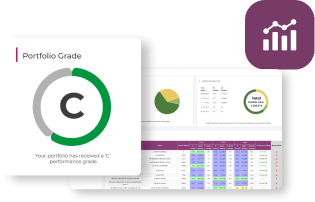
Our free portfolio analysis provides an overview of your existing investments, including available one, three and five-year performance, sector rankings and X Ratings. Where sufficient information is available, it may also highlight potential duplication between holdings and areas of concentration.
To get started, upload a recent portfolio statement or provide the names of your funds and their approximate values. Your first portfolio analysis is free if you are a private investor. The analysis is based on the information you provide and the historical performance data available at the time of review. The scope and detail of the findings may vary depending on the information available.
The analysis is intended to help you better understand your existing holdings. It provides factual information, not personal financial advice or a recommendation to buy, sell or switch investments. It does not assess whether your investments are suitable for your individual circumstances or determine whether your retirement plans are achievable.
Yodelar Ratings compare funds' historical performance against their sector peers. They are not a measure of personal suitability and do not predict future returns.
There is no obligation to change your investments or proceed to paid advice following the analysis.
Upload Your Portfolio For Free Analysis
Book A No Obligation Planning Call
To discuss your investments alongside retirement plans, income needs or other objectives, book a no obligation call with an adviser from our advice partner, MKC Wealth, an FCA authorised firm.
The initial discussion can help establish which questions need fuller assessment and explain the service and costs involved. Any personal recommendation would follow a review of your circumstances, objectives, attitude to risk and ability to withstand losses.
Any paid advice or portfolio management service would be explained and agreed separately. Tax and estate planning may require specialist support and are not themselves regulated by the FCA.
Book A No Obligation Advice Call
Summary
Choosing investments well and planning your financial future are connected responsibilities. A rising portfolio value does not, on its own, show that both are being handled effectively.
Self investing can be appropriate when the research, planning and ongoing decisions receive the attention they need. Financial advice deserves consideration where important questions remain unanswered or professional support would provide work that you cannot reliably complete yourself.
The choice should not be driven by the assumption that advice always pays for itself, or that avoiding an advice fee necessarily delivers better value. It should depend on the decisions involved, the service provided and the full cost.
Before committing to a service or dismissing it, understand how your current investments and financial planning approach align with your objectives, and identify any areas that may warrant further consideration. A portfolio analysis can provide the investment evidence, while a planning conversation can explore what that evidence means for the outcome you want.

Sources And Research
Royal London and the International Longevity Centre, What It’s Worth: Revisiting The Value Of Financial Advice, published in 2019. The findings concern historical differences in pension and financial wealth, not promised investment returns.
Vanguard, Quantifying Adviser’s Alpha, covering potential adviser value through investment structure, planning, costs and decision support.
Financial Conduct Authority, guidance on retirement financial projections, diversification, suitability and ongoing advice services.
MoneyHelper, guidance on pension withdrawals, the money purchase annual allowance, choosing an adviser and advice fees.
S&P Dow Jones Indices, S&P 500 index description. Information checked on 23 October 2026.