

-
- Strong markets can make portfolios feel safer than they really are, especially when returns are being driven by a narrow group of companies or sectors.
- HSBC Asset Management reported in August 2026 that 10 companies accounted for 37.6% of the S&P 500, highlighting how concentrated some broad market trackers have become.
- The Bank for International Settlements has warned that AI-related investment has supported global growth, but also created risks around high expectations, financing structures and market concentration.
- Current market risks being highlighted by major institutions include US market concentration, AI investment uncertainty, fiscal pressure, geopolitical risk and supply chain disruption.
- Investors should not react to market concerns by making rushed changes, but they should understand whether their portfolio is more exposed to these risks than they realise.

Risk Can Build When Markets Look Strong
Many investors think risk is highest when markets are falling. In reality, risk can often build when markets have already performed well.
That is when confidence rises. Investors become more comfortable with higher exposure to shares, global trackers, technology funds or popular growth themes. Strong returns can make a portfolio feel well positioned, even when it has become more dependent on a smaller number of market drivers.
This matters because markets do not need to look weak for portfolios to carry more risk than expected. A portfolio can rise in value but become more concentrated, more exposed to one region, or more reliant on a small group of companies continuing to deliver strong earnings growth.
That is one reason why experienced portfolio oversight can matter. It is not about predicting the next market fall. It is about regularly asking whether the reward for taking risk still looks reasonable, whether the portfolio has become too exposed to one outcome, and whether modest adjustments are needed to keep the portfolio aligned with its objective.
For investors, the key question is simple. Has the portfolio performed well because it is properly balanced, or because it has become heavily exposed to the parts of the market that have recently been strongest?

Broad Trackers Can Still Be Concentrated
Many investors hold global or US index funds because they are low cost, simple and easy to understand. These funds can play a useful role in a portfolio.
But investors should not assume that a broad index fund is always as diversified as it sounds.
The S&P 500 is a good example. It contains around 500 large US companies, but the index is weighted by company size. That means the largest companies have the biggest influence on performance.
In August 2026, HSBC Asset Management reported that 10 companies accounted for 37.6% of the S&P 500’s total weight. It also said the index was more concentrated than at any point since at least 1994, using one measure of concentration. (assetmanagement.hsbc.co.uk)
This does not mean S&P 500 funds are poor investments. It means investors should understand what they own.
A fund can hold hundreds of companies and still be heavily influenced by a small number of them. If those companies continue to perform strongly, the fund may do well. If they disappoint, the impact on the index can be much greater than many investors expect.
For self-managed investors, this is an important point. A portfolio may look diversified on a platform statement, but still rely heavily on the same large US companies through global funds, US funds, technology funds and trackers.
The AI Boom Needs Careful Monitoring
Artificial intelligence has been one of the most important market themes of recent years. It has supported major investment in data centres, chips, cloud services and computing infrastructure.
The opportunity may be significant, but the risks should not be ignored.
The Bank for International Settlements said in its 2026 Annual Economic Report that optimism around AI helped support global growth and financial conditions. However, it also highlighted growing pressure points, including persistent inflation risks, the sustainability of AI-related investment, financial vulnerabilities and weaker fiscal positions. (bis.org)
The BIS also flagged concerns around AI-sector financing. It described arrangements where chipmakers and large cloud companies take stakes in AI labs or infrastructure providers, which then commit to buying chips or computing power from those same firms. It said some of these arrangements are poorly disclosed and can create risks that are hard for investors to see. (bis.org)
For investors, the point is not that AI is a poor theme. It may continue to create major growth opportunities. The issue is that many portfolios now depend heavily on the success of the AI investment cycle, sometimes without the investor realising it.
An investor may not own a dedicated AI fund, but they may still hold AI exposure through global trackers, US equity funds, technology funds and large company growth funds.
This is why portfolio analysis matters. Investors should know how much of their portfolio depends on the same AI-linked companies, sectors and earnings expectations.

Several Risks Can Arrive At Once
Markets rarely move because of one factor alone. Valuations, interest rates, government borrowing, inflation, geopolitics, currencies and investor sentiment can all matter at the same time.
This is what makes portfolio management more difficult than many investors expect.
For example, the Congressional Budget Office projected a US federal deficit of 5.8% of GDP in 2026, rising to 6.7% by 2036, with debt held by the public rising from 101% of GDP to 120% over the same period.
High borrowing needs can affect bond markets, interest rates and the level of return investors demand for taking risk. That does not mean markets must fall, but it does mean the backdrop is more complicated than a simple performance chart suggests.
Geopolitical and supply chain risks add another layer. The BIS has noted that the global economy has faced shocks from tariffs and conflict in the Middle East, while also pointing to financial and fiscal vulnerabilities.
Weather can also affect markets where it disrupts food, energy or supply chains. The US’s National Oceanic and Atmospheric Administration’s (NOAA) Climate Prediction Center issued an El Niño Advisory in July 2026 and said El Niño was expected to strengthen through the end of the year, with a high probability of lasting into early 2027. Strong El Niño events do not guarantee specific outcomes everywhere, but they can increase the chance of weather disruption in some regions.
For investors, the lesson is not to try to predict every risk. It is to avoid building a portfolio that depends on everything continuing to go right.
Taiwan Shows Why Regional Risks Can Become Global
Some risks look regional but can have global effects.
Taiwan is a clear example because of its role in advanced semiconductor manufacturing. The Council on Foreign Relations has noted that more than 90% of the most advanced chips are manufactured in Taiwan. These chips are used across many parts of the global economy, including technology, data centres, smartphones, cars and industrial equipment.
This matters because many investors hold indirect exposure to companies that depend on advanced semiconductors. A serious disruption to semiconductor supply could extend beyond a regional market and affect companies inside global and US indices.
This is not a forecast and it is not a reason to make rushed decisions. It is an example of why headline diversification can be misleading.
A global tracker may hold thousands of companies, but if a meaningful share of returns depends on large technology businesses and those businesses depend on a concentrated supply chain, the portfolio may be carrying a more connected risk than the investor expects.

A Defensive Review Is Not Market Timing
Reviewing risk does not mean moving heavily into cash or trying to predict the next market fall.
In some conditions, a portfolio review may lead to a decision to reduce risk modestly. In other conditions, it may lead to no change at all. The important point is that any decision should be based on evidence, objectives and suitability, not emotion.
This is different from reacting after markets have already fallen.
A measured review asks whether the current level of risk is still justified, whether concentration has increased, whether the portfolio remains aligned with the investor’s objectives, and whether any adjustment would improve the overall structure.
This is where experienced portfolio oversight can be useful. Portfolio managers are not trying to predict every market move. Their role is to review risk, valuations, exposure, diversification and how different parts of the portfolio may behave under different conditions.
For investors managing their own money, the same principle applies. The aim is not to jump in and out of markets. It is to make sure the portfolio is not taking risks that are poorly understood or no longer suitable.
What Investors Should Review Now
Investors do not need to respond to every market concern with a portfolio change. But they should understand where their risks are coming from.
A useful review should ask:
|
Review question |
Why it matters |
|---|---|
|
How much US equity exposure do I hold? |
Many global funds and trackers already have large US allocations. |
|
Am I too dependent on a small number of companies? |
Index concentration can make a portfolio more exposed than it appears. |
|
How much technology and AI-linked exposure do I really have? |
Dedicated technology funds are only one source of this exposure. |
|
Are my funds overlapping? |
Several funds may hold the same companies or sectors. |
|
Does the portfolio still match my risk level? |
Strong markets can increase equity exposure without a deliberate decision. |
|
What would happen if market leadership changed? |
A portfolio built around recent winners may struggle if those areas weaken. |
|
Does each fund still have a clear role? |
Every holding should support the wider portfolio objective. |
This kind of review helps investors move beyond headline performance. It shows whether the portfolio is genuinely diversified or simply benefiting from the same few market drivers.
Get A Free Portfolio Analysis
Many investors hold global funds, US funds, technology funds and trackers without knowing how much overlap exists between them.
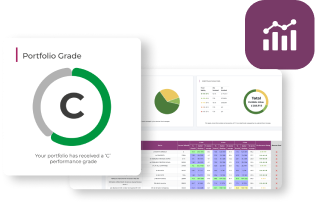
Our free portfolio analysis reviews each fund individually, showing available 1, 3 and 5-year performance, sector ranking and Yodelar Rating. Yodelar Ratings are based on historic sector-relative performance and are not a guide to future returns.
The analysis can also help identify weaker-rated holdings, duplication, concentration, higher charges and funds that may no longer have a clear role.
It does not provide personal advice or recommend whether to buy, sell or switch any investment. It is designed to give investors a clearer view of their portfolio before deciding whether further review may be useful.

Speak To An Adviser
For investors who want to understand whether their current portfolio remains suitable, a no obligation call with an adviser from our advice partner, MKC Wealth, can help.
The discussion can cover current holdings, portfolio analysis results, objectives, time horizon and attitude to risk. It can also explore whether the current portfolio is taking the right level of risk for the outcome the investor wants.
Any personal recommendation would only be made after understanding the investor’s financial position, investment objectives, time horizon and attitude to risk. Any recommendation would include a clear explanation of risks, costs and ongoing service.

Summary
Strong markets can make portfolios feel safer than they are.
US indices have become more concentrated. AI-linked companies have become a major driver of market returns. The financing behind parts of the AI boom has become more complex. At the same time, fiscal pressure, supply chain risks and geopolitical uncertainty remain part of the market backdrop.
None of this means investors should make rushed decisions or move out of markets. It does mean they should understand what risks they are taking.
A portfolio can look diversified but still depend heavily on the same companies, sectors, supply chains or market assumptions. That is the risk many investors miss.
The right response is not panic. It is review.
Before assuming a portfolio is well positioned, investors should check how each fund has performed, where the overlap sits, how much concentration exists, and whether the current level of risk still supports their objectives.

This article is for general information only. It is not personal financial advice or a recommendation to buy, sell or switch any investment. Investments can fall as well as rise, and investors may get back less than they invest. Past performance is not a reliable guide to future returns.
Sources
Bank for International Settlements, Annual Economic Report 2026
https://www.bis.org/publications/aer-2026/progress-peril
HSBC Asset Management, 10 stocks now make up 38 per cent of the S&P 500
https://www.assetmanagement.hsbc.co.uk/en/intermediary/news-and-insights/s-and-p-500-concentration-is-rising
Congressional Budget Office, The Budget and Economic Outlook 2026 to 2036
https://www.cbo.gov/publication/62105
NOAA Climate Prediction Center, ENSO Diagnostic Discussion
https://cpc.ncep.noaa.gov/products/analysis_monitoring/enso_advisory/ensodisc.shtml
Council on Foreign Relations, Onshoring Semiconductor Production
https://www.cfr.org/articles/onshoring-semiconductor-production-national-security-versus-economic-efficiency