

- Many workplace and personal pensions use the retirement date on your account to decide how your money is invested as that date approaches.
- Some pensions gradually move your savings into lower risk investments automatically, without you choosing anything.
- If your plans have changed and the date has not, your pension may be preparing for a retirement you no longer intend to have.
- Checking three things, the date, what the strategy does and how you plan to take the money, is more useful than reacting to the latest valuation.
This article is for general information only. It concerns investment based workplace and personal pensions, not final salary or other defined benefit schemes. It is not personal advice or a recommendation to change funds, transfer a pension or take benefits. The value of investments can fall as well as rise, and you may get back less than you paid in. Pension rules and tax treatment depend on individual circumstances and may change.
A Date Set Years Ago May Still Be Steering Your Pension
When you joined your pension, a retirement date was recorded on your account. You may have chosen it. More often the provider set it for you, typically at 65 or your State Pension age, and you have not thought about it since.
That date is not just a reminder of when to expect paperwork. In many pensions it is an instruction. The provider uses it to decide how your money is invested, and in particular when to start moving it out of shares and into investments expected to be steadier as the date approaches.
Your plans may have moved on. You might now expect to work longer, cut your hours gradually, or leave the pension untouched while you live on other savings. You might need the money sooner than you once thought. If the date on the account has not moved with you, the pension may be preparing for a retirement you no longer intend to have.
This is not a criticism of automatically managed pensions, which are professionally run and suit many people. It is a reason to check what yours is preparing you for, because a strategy can be well managed and still be pointed at the wrong target.

What Your Pension May Be Doing Automatically
If you never chose your own investments, your pension will be in its default arrangement: the fund or strategy the provider uses for members who make no selection. Many defaults are built around the retirement date, and go by names such as lifestyle strategies, lifestyling, target date funds or retirement date funds.
The idea is the same under each name. For most of your working life the money is invested mainly for growth, usually with a large proportion in shares. Then, in the years before your retirement date, the provider gradually shifts it towards bonds, cash or other investments expected to fall less sharply. The switch often begins between five and ten years before the date and happens without any action from you. MoneyHelper, the government backed guidance service, describes this approach in its guidance on pension investment options. Not every pension works this way, and the details differ between providers.
The largest auto enrolment schemes illustrate how far this goes. In one, members who make no choice are placed in a fund matched to the year they are expected to retire, with that year set to their State Pension age when they joined. The scheme manages the money according to how far away that date is, and if a member reaches it without taking their savings, the money is moved into a different fund and the date is rolled forward to age 75. Members can change the date online, but only if they know it matters.
If you only ever look at the value of your pension, none of this is visible. The relevant question is what your money is being moved towards, and whether that still reflects how you intend to use it.

Stopping Work And Needing The Money Are Different Dates
Retirement is often talked about as a single day, but pension money is usually spent over many years, and often not from the day you stop work.
You might finish full time work and live on other savings for a few years first. You might take part of the pension for a specific purpose, such as clearing a mortgage, and leave the rest invested. Or you might want a regular income from day one. Each of those places a different demand on the money, and each suggests a different investment approach.
Since the pension freedoms introduced in 2015, there is no requirement to take everything at once or to buy an annuity. MoneyHelper's guidance makes the point that, unless you withdraw the whole pot or use it to buy a guaranteed income, part of your pension can stay invested after you start taking benefits, and that different pots can reasonably be invested differently if they will be used for different purposes.
This matters most if you have several pensions showing the same retirement date. The same date on three accounts does not mean every pound in all three will be needed on the same day.
A useful plan starts from when the money is likely to be spent, not from when employment ends.
What Is The Fund Preparing You To Do?
The date is only half the question. The other half is what the strategy assumes you will do when you get there.
Older lifestyle strategies were designed for an era when most people bought an annuity, a product that converts a pension pot into a guaranteed income for life. They moved money towards the investments that best matched annuity pricing. Newer strategies may instead prepare for a cash withdrawal, or for keeping most of the pot invested while taking a flexible income, known as drawdown. These are different destinations, and a strategy built for one will not necessarily serve another well.
MoneyHelper's guidance on investment options approaching retirement describes exactly these alternatives: leaving the money untouched, buying an annuity, taking a flexible income, or withdrawing the whole pot. The table below sets out what each implies for the investments.
|
How you intend to use the pension |
The investment question to ask |
|---|---|
|
Take a large sum soon |
Will the money be available when needed, and how much could it fall in the meantime? |
|
Buy a guaranteed income (an annuity) |
Is the strategy designed with that purchase in mind? |
|
Take an income over many years while staying invested |
Will the remaining investments support spending in later years, not just the first few? |
|
Leave the pension invested for now |
Does the approach reflect the longer period before the money is needed? |
The aim is not to pick whichever option has the most growth potential. It is to establish which outcome your pension actually needs to deliver, and then check whether the strategy is built for it.
A Default Fund Is Not An Unmanaged Fund
Some investors conclude from all this that the answer is to leave the default fund and pick their own investments. Picking your own funds is not automatically better. The default can still be the right place for your money; the problem is only ever whether it matches your plans.
Default funds are professionally managed and designed for the broad needs of a scheme's members. For people who do not want to select and monitor funds themselves, they can be a sensible choice. What they cannot do is know when your circumstances or intentions change. They respond to the date on the account, not to the life behind it.
Nor do all providers treat the retirement date as the point at which growth investments must disappear. Some now offer post retirement funds that keep members' money invested so they can continue drawing on it. It would be misleading to suggest every retirement date fund follows the same path into cash, which is one more reason to find out what yours actually does.
The issue is whether the strategy matches you, not whether the word "default" appears on your statement.

Safer Is Not Always More Suitable
Moving money out of shares makes sense for a sum you will need soon. It may make much less sense for money you do not expect to touch for fifteen or twenty years, which is a realistic horizon for part of a pension that will be drawn down gradually. Lower risk investments usually mean lower expected growth, and over long periods that can matter a great deal.
The reverse is also true. Leaving a pension heavily invested in assets that can fall sharply may be unsuitable if you have a near term withdrawal that cannot be postponed.
Neither conclusion can be reached from the retirement date alone. It depends on your other income, your commitments and what a fall in value would do to your plans. The FCA's March 2024 guidance for advisers on cashflow modelling in retirement advice makes the same point from the regulator's side: projections should use reasonable return assumptions, allow for charges and inflation, and test what happens in poor scenarios rather than relying on a favourable forecast.
This is where planning becomes more demanding than picking a fund. The investments have to be considered alongside what would happen to you if the result disappoints.
Five Questions To Ask Your Pension Provider
Before changing the date or switching funds, find out what the current arrangement actually does. Most providers will answer these by phone or through your online account.
|
Question |
Why it matters |
|---|---|
|
What retirement date do you have recorded for me? |
It may be a default you never chose, and it may no longer match when you expect to use the money. |
|
Does my investment mix change automatically as that date approaches? |
If so, you need to know what changes are scheduled and when they start. |
|
What is the strategy designed to prepare me for? |
Cash, an annuity, drawdown or staying invested each call for a different approach. |
|
What happens if I change the date? |
Moving the date can trigger investment changes immediately or later, so understand the effect before you act. |
|
What happens to my money after that date if I do not take it? |
Some providers move it to a different fund or roll the date forward. Find out which. |
These are questions, not instructions to move a pension. Changing an administrative setting without understanding its investment effect could simply create a different mismatch. Get the explanation first, then weigh it against your current plans.
The Plan And The Funds Need Separate Attention
Once you know where your pension is heading, there is still a second check: how good are the funds carrying it there?
The two questions are independent. A strategy can be pointed at the right destination while one of its underlying funds has lagged its peers for years. Equally, a pension can hold funds with strong records that are arranged around a retirement assumption that no longer fits you.
Switching to whichever fund has the highest recent return answers neither question. It changes the balance of investments without addressing when the money will be needed. Leaving everything alone because the provider manages it professionally does not answer them either, because it does not establish that your current circumstances have been considered.
Effective pension investing needs both pieces to connect: a plan that reflects how and when you will use the money, and funds chosen and monitored to support it.
Start With A Portfolio Analysis
Your most recent pension statement will usually show both the funds you hold and the retirement date the provider has recorded. That is the starting point for both checks.
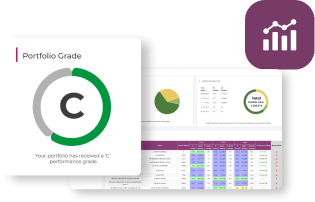
Our free portfolio analysis reviews the funds you hold against their sector peers, showing one, three and five year performance, sector rankings and Yodelar Ratings where sufficient history is available. Where the information allows, it can also highlight duplication and concentration across your pensions and other investments.
The analysis is factual. It tells you how your funds have performed. It does not assess whether your retirement date, strategy or withdrawal plan is suitable, and it does not recommend a transfer or a fund switch.
Upload your statement, or send your fund names and approximate values, and the analysis will give you the investment evidence to start from. It is free, with no obligation to make changes or take advice.

Book A No Obligation Retirement Planning Call
The wider questions, when you will stop work, when you will need the money and what the pension is preparing you for, need a conversation rather than a report.
UK based investors can book a no obligation call with a financial adviser from our advice partner, MKC Wealth, an FCA authorised firm. The call can cover your expected retirement timing, when you may need to draw on your pensions, your other sources of income and the investment approach your pensions are currently following.
Any personal recommendation would follow a fuller assessment, with the risks, costs and ongoing services explained before you decide whether to proceed. The review may confirm that your existing arrangement remains appropriate, or it may identify a date, fund or planning assumption that needs attention. The value lies in finding out which before the money is needed.
Summary
The retirement date on your pension can be an investment instruction as well as an administrative detail. If your plans have changed since it was set, your pension may still be following assumptions you would not choose today.
That does not mean automatic strategies are wrong, or that every pension needs moving. It means three things should be looked at together: the date, how you intend to use the money, and the strategy the provider is following.
Before reacting to the latest valuation, ask what your pension is preparing you to do. A portfolio analysis shows how your funds have performed; a planning conversation establishes whether the arrangement still supports the retirement you actually intend to have.

Sources
Sources include MoneyHelper’s guidance on pension investment options and investing after withdrawals begin, Nest’s explanations of retirement dates and retirement date funds, and the FCA’s guidance on retirement financial projections. These sources describe different arrangements; individual scheme terms should be checked directly.