

-
A portfolio can grow in value while still holding funds that have consistently lagged comparable alternatives.
-
Each fund should be assessed on its own merits - and, where appropriate, compared against funds in the same Investment Association (IA) sector.
-
Owning many funds does not guarantee diversification. Portfolios can remain heavily concentrated in the same companies, markets or investment styles.
-
Financial advice and portfolio management are different services. Investors should understand what each provides and how they work together.
-
A factual portfolio analysis can highlight important performance and structural questions - but only personal advice can determine whether a portfolio remains suitable for you.
Most investors who work with a financial adviser receive some form of regular review. Typically, they are shown the current value of their portfolio, recent performance and any recommended changes. For many, this provides reassurance that things remain on track.
But a genuine review should do more than confirm whether a portfolio went up or down.
A portfolio can deliver positive returns while still containing funds that have repeatedly fallen behind sector peers. It can hold a long list of investments yet depend heavily on one market, one investment style or a small group of companies. It can also become more or less risky over time, even if the investor has not made an obvious decision to change it.
For investors, the real question is not only whether a review meeting took place. It is what the review actually covered and whether it provided clear evidence that the portfolio remains properly monitored, well understood and aligned with the investor’s objectives.
The eight questions below can help investors judge the quality of their own portfolio reviews.
1. Has Each Fund Been Reviewed Individually?
A portfolio return can hide big differences between the funds inside it. One strong-performing fund may have generated most of the growth, while several weaker holdings quietly held back the overall result. The combined figure can still look reasonable because the strongest fund has covered over the weaker parts of the portfolio.
A proper review should assess each fund on its own merits. That means looking at its 1, 3 and 5 year performance where sufficient history exists, how it ranked against funds in a reasonably comparable sector, whether its ranking has improved or deteriorated, and whether the fund still performs the role it was selected for.
Context is important. A fund that returned 20% may sound impressive until it is compared with sector peers that returned 35% over the same period. Equally, a fund that returned 8% may have done its job if it was designed to take less risk and competing funds in the same sector returned less.
For many UK-authorised funds, the relevant IA sector offers a useful starting point for comparison. It allows a fund to be reviewed against other funds investing in broadly similar areas. However, an IA sector is not a complete measure of suitability. Some sectors contain funds with different approaches, risk levels and objectives.
A lower-ranked fund should not automatically be sold. There may be a valid reason to hold it, such as risk control, diversification or a specific role within the wider strategy. The point is that investors should know how each fund has performed and why it is still being held.

2. Is Your Portfolio Being Compared Fairly?
Many investors know how much their portfolio has grown. Far fewer know whether that return was reasonable for the level of risk being taken.
The comparison used can change the conclusion completely.
A benchmark is the reference point used to judge performance. For a fund, this may be the Investment Association sector average, its ranking against funds in the same IA sector, or a relevant market index. For a portfolio, the comparison should reflect the broad mix of investments and the level of risk being taken.
A diversified portfolio holding shares, bonds and lower-risk investments should not normally be judged only against a high-growth share index such as the S&P 500. When share markets rise sharply, a balanced portfolio will often lag a pure equity index. That does not automatically make it a poor portfolio. It may simply be doing the job it was designed to do.
The opposite can also happen. A higher-risk portfolio may look successful because it beat cash or inflation, but if similar-risk portfolios delivered much stronger returns, the result may be less impressive than it first appears.
When comparing funds, the review should focus on whether the fund has performed well against competing funds in the same IA sector over the same period. When comparing a portfolio, the review should consider whether the comparison reflects the portfolio’s risk level, asset mix, charges and the same start and end dates.
The wrong benchmark can make a fund or portfolio look better or worse than it really is. The better question is not simply whether the investment made money. It is whether the comparison being used is fair for what is being reviewed.
3. Are Stronger Investments Hiding Weaker Ones?
Portfolio performance is often presented as one combined figure. That is useful, but it does not show how each investment contributed to the overall result.
An investor may have a large part of their portfolio in one strong-performing fund. If that fund rises sharply, it can lift the overall return even when several smaller holdings have delivered weaker results. The investor may conclude the portfolio is working well, while missing that some funds have consistently ranked poorly against sector peers.
A detailed review should identify which funds contributed most to returns, which funds reduced the overall return, and whether those results were expected given the role each fund plays. A lower-risk fund, bond fund or defensive holding should not be judged in the same way as a higher-risk equity fund. These holdings may be included to reduce volatility, provide income, improve diversification or support a specific part of the plan.
The important question is whether each fund has done its job. If a lower-returning fund has performed broadly as expected for its sector and role, it may still be valuable within the portfolio. If a fund has repeatedly ranked poorly against competing funds in the same IA sector, investors should understand why it remains appropriate.
This does not mean constantly replacing whichever fund performed worst. Different types of funds move through stronger and weaker periods, and selling a fund simply because it recently lagged can lead to poor timing.
The aim is to separate funds that are behaving as expected from funds that may be genuinely weakening the portfolio.

4. Does Every Fund Still Have A Clear Purpose?
Every fund in a portfolio should have a reason for being there. It may provide access to a particular region, exposure to smaller companies, a different investment approach, lower-risk assets, income potential or diversification away from the largest holdings.
Problems can build when funds are added gradually over time without reviewing how they work together. One fund may have been added after a recommendation. Another may have been bought after strong performance. Another may have been kept because it has been held for years.
The result can be a collection of individually chosen funds rather than one joined-up portfolio.
For each meaningful holding, investors should be able to answer a simple question: what job is this fund doing that another holding is not?
Where two funds share the same purpose, hold many of the same companies and react similarly to market movements, there should be a clear reason for keeping both.
This does not mean a portfolio should be stripped back to only a few funds. Some investors genuinely need a broad range of holdings to diversify properly. The number of funds matters less than whether those funds work effectively together.
5. Is The Portfolio Genuinely Diversified?
Holding several funds does not automatically make a portfolio diversified.
Many global, US and technology funds hold substantial positions in the same large companies. The fund names may differ, but the underlying holdings can be similar.
An investor could own ten funds and still be heavily exposed to large US companies, technology-related businesses, one investment style, a small number of currencies or particular sectors such as financial services or healthcare.
When those areas perform strongly, the overlap can look like success because several funds rise together. The issue becomes more visible when the dominant market weakens and several supposedly different funds fall at the same time.
A proper review should assess diversification across countries, regions, company sectors, company sizes, asset types, investment approaches, currencies and underlying companies.
Some overlap is normal and may even be deliberate. It is not automatically a weakness. But the level of duplication should be understood. Investors should know whether their portfolio is genuinely spread, or whether a list of fund names is simply creating the appearance of diversification.

6. Has Your Portfolio’s Risk Changed?
A portfolio’s risk level can shift even when nothing has been bought or sold.
Suppose a portfolio started with 60% in shares and 40% in bonds and lower-risk assets. If shares grow much faster, they gradually become a larger part of the whole portfolio. This can mean the portfolio is now taking more risk than originally intended, because it depends more heavily on share markets.
The reverse can also happen. After a period of uncertainty, growing cash holdings or lower-risk assets can leave a portfolio less likely to achieve the growth the investor’s plans require.
This is often called portfolio drift. It means the portfolio has moved away from its intended balance without anyone making a deliberate decision to change the risk level.
A good review should first check whether the portfolio needs rebalancing. Rebalancing means adjusting the portfolio back towards its intended mix of investments, so the risk level remains in line with the original plan.
Only after that should the review consider whether the investor’s own position has changed. Their willingness to take risk and their ability to absorb loss are not the same thing. An investor may feel comfortable with risk but be close to retirement and dependent on the portfolio for income. Another investor may dislike short-term falls but have decades ahead and strong income from elsewhere.
A suitable review looks beyond a questionnaire score. It asks whether the portfolio has drifted, whether it should be rebalanced, and whether the current level of risk still supports the investor’s plans.
Book A No Obligation Call With An Adviser
7. Does The Portfolio Still Support Your Current Plans?
The investment approach should be selected and reviewed in light of the investor’s circumstances. Circumstances change.
This does not mean every investor needs a fully bespoke portfolio. Model portfolios and managed portfolio services are often designed for different objectives and risk levels, such as growth, income, cautious, balanced or higher-risk strategies.
The important point is that the selected approach should remain suitable for the investor’s circumstances.
An investor may now be closer to retirement, planning regular withdrawals, less dependent on employment income, considering gifts to family, planning for future care costs or thinking more seriously about passing on wealth.
A portfolio that suited someone while they were building wealth may no longer suit them once they begin drawing from it. Equally, a portfolio selected for growth may still be appropriate if the investor has a long time horizon and can accept the level of risk involved.
This is where personal financial advice goes beyond fund selection. Good financial planning connects the portfolio, or the managed portfolio service being used, to expected spending, retirement income, family commitments, tax position and long-term objectives.
Historic fund performance cannot tell an investor whether they can afford to retire, how much they can sustainably withdraw or whether their current risk level is right for them. A highly rated fund is also not automatically appropriate for every investor.
Performance evidence raises the questions. Personal advice determines what the answers mean for the investor.
8. Do You Understand What Each Service Provides?
Many investors receive several connected services, each with a different role.
|
Service |
Main role |
|---|---|
|
Financial adviser |
Understands the investor’s circumstances, objectives, plans and attitude to risk, then provides personal recommendations where appropriate. |
|
Portfolio manager |
Understands the investor’s circumstances, objectives, plans and attitude to risk, then provides personal recommendations where appropriate. |
|
Investment platform or provider |
Holds the investments, processes transactions and provides administration and reporting. |
|
Fund manager |
Manages a fund in line with its stated objective and investment approach. |
Sometimes one business performs several of these roles. In other arrangements, the adviser, portfolio manager, platform provider and fund manager may all be separate, each with their own responsibilities and charges.
This is not automatically a problem, but investors should understand what they are paying for. Costs and charges should be clearly broken down, so it is clear which charge relates to advice, portfolio management, the platform and the underlying funds.
Where ongoing advice is being charged, the investor should have agreed to that service and should understand what they receive in return. This may include review meetings, suitability reviews, support with changing circumstances and ongoing advice where needed.
Advice and portfolio management are different services. Advice focuses on the investor’s personal circumstances and whether the overall recommendation remains suitable. Portfolio management focuses on how the investments are managed within the agreed approach.
A good review should make these roles clear. Investors should know who is responsible for each part of the service, how often the portfolio is reviewed, how the total charges combine and whether the service being received still supports their objectives.
A Good Review Does Not Always Mean Changes
Investors should not judge the quality of a review by the number of changes it recommends.
Frequent buying and selling is not evidence of greater attention. Unnecessary trading can create additional costs, possible tax consequences and a tendency to chase whichever market recently performed best.
Sometimes the right outcome of a review is to change nothing.
But no change should still be supported by evidence. After a review, investors should understand why the current portfolio remains suitable, how its funds have performed against relevant comparisons, whether the risk level remains appropriate, whether the holdings remain properly diversified, why any weaker investments are being retained and what circumstances would trigger future changes.
No change can be a sensible recommendation. No change without a clear review or explanation provides much less reassurance.

What A Portfolio Analysis Can And Cannot Show
A factual portfolio analysis and a personal financial advice review perform different roles.
A portfolio analysis can show how individual funds have performed, how they ranked against funds in the same sector, the proportion of the portfolio held in stronger and weaker historic performers, whether several funds appear to perform similar roles, and areas of concentration or duplication that may warrant closer review.
It cannot determine whether the portfolio is personally suitable, whether the investor is taking the right level of risk, whether any investment should be bought or sold, whether a change would create tax or other financial consequences, whether retirement and withdrawal plans are sustainable, or which financial products or services should be recommended.
Historic performance can help investors ask better questions. It should never be used in isolation to make personal investment decisions.
Start With A Free Portfolio Analysis
Many investors receive portfolio statements without ever knowing how their individual funds have ranked against sector peers.
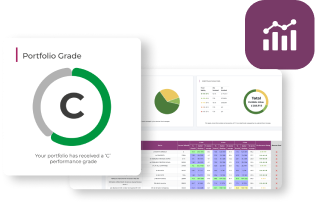
Our free portfolio analysis provides a factual review of the funds currently held. Where sufficient performance history is available, it shows each fund’s 1, 3 and 5 year performance, its ranking within the relevant sector, the average return from funds in that sector, its historic Yodelar performance rating, how much of the portfolio sits in each rating band and an overall portfolio performance grade.
Yodelar Ratings are based on historic sector-relative performance. They do not assess personal suitability, are not a recommendation and should not be treated as a guide to future returns.
To complete the analysis, investors can upload a recent portfolio statement or provide a list of the funds held and the approximate amount invested in each. The service is free, and there is no obligation to make changes or proceed with financial advice.

Discuss Your Portfolio With A Regulated Adviser
Portfolio data can identify important questions, but it cannot establish whether current arrangements remain personally suitable.
UK-based investors who would like to discuss their portfolio alongside their objectives, retirement plans, investment period and attitude to risk can book a no obligation call with a financial adviser from our advice partner, MKC Wealth, an FCA-authorised firm.
The initial discussion can help establish what the investor wants the portfolio to achieve, whether circumstances have changed, whether the current risk level remains appropriate, what concerns have been identified within the portfolio analysis and whether a more detailed financial review would be worthwhile.
Any personal recommendation would only be made after the adviser had considered the investor’s financial position, objectives, investment period, attitude to risk and ability to withstand investment losses. The risks, costs and ongoing services associated with any recommendation would also be clearly explained.
Summary
A proper portfolio review should do more than confirm whether an account went up or down. It should help investors understand how each fund has performed, whether the comparisons used are fair, whether each fund still has a clear purpose, whether the portfolio is genuinely diversified, whether risk has drifted and whether the portfolio still supports current plans.
A diversified portfolio will not usually perform in line with the strongest market in every period. That does not automatically mean the portfolio is poor. It means performance should be judged against the right comparison, the level of risk being taken and the role the portfolio is intended to play.
Investors should have clear evidence showing how their investments have performed, why they are held, what they cost and whether the overall arrangement is still working towards their objectives.
Where those answers are clear, investors can have greater confidence in their existing approach. Where they are not, a factual portfolio analysis can provide a useful starting point for a more informed review.