

-
A rising portfolio value does not, on its own, show whether your investments are well positioned to support your future plans.
-
Different fund names can conceal exposure to the same companies and markets. Diversification depends on what the investments hold, not simply how many funds you own.
-
Equities and bonds can fall together, so a familiar investment mix does not guarantee protection when markets become difficult.
-
Managing risk does not necessarily mean moving into cash. It means understanding which risks are being taken, why they are being taken and what they could mean for you.
-
A portfolio analysis can help you examine your existing funds before deciding whether a wider planning discussion would be useful.
Would A Difficult Year Change Your Plans?
If your portfolio fell in value, would you simply leave it invested, or would it affect when you could retire, how much income you could take or the help you planned to give your family?
That is a more revealing question than whether your funds have performed well recently.
A growing pension or ISA can be reassuring. But before treating that growth as evidence that everything is on track, it is worth understanding what produced it and how much your plans depend on it continuing.
The aim is not to anticipate every market setback. It is to make sure the risks inside your portfolio are ones you understand and can afford to take. An investment should be considered alongside when the money will be needed and the consequences of having to sell during a difficult period.

Different Funds Can Leave You Relying On The Same Thing
Imagine holding a global tracker, an actively managed global fund and a technology fund. The names and approaches are different, and each may have a convincing performance record. Yet they could still hold substantial positions in the same businesses.
Adding the third fund may therefore increase your reliance on an existing investment theme rather than provide much additional diversification. The FCA describes diversification as spreading investments across areas that do not all depend on the same things to perform well.
This is not an argument against global trackers or technology funds. The question is what the combination means for your money.
Some overlap may be deliberate. You may have chosen to invest more heavily in a particular market and be comfortable with the consequences. The concern is when the exposure is larger than intended because each fund has been assessed separately.
Before adding another successful fund, ask what it would change about the portfolio you already own. A different provider name is not, by itself, evidence of a different investment.
Strong Performance Can Make The Next Decision Harder
Suppose one part of your portfolio has performed particularly well. Leaving it untouched may allow it to become a larger proportion of your investments, increasing its influence on future results.
Reducing it can feel counterintuitive. Why take money away from something that has worked?
The answer depends on whether the larger position still fits the plan. Restoring an intended balance is different from deciding that the investment is now poor or predicting that it will fall.
There is a cost to either choice. Retaining the larger position preserves more potential benefit if it continues to perform strongly, but also leaves more dependent on that outcome. Reducing it limits that dependence but can mean missing some gains.
This is why “keep the winners” and “take profits” are both incomplete rules. Neither establishes how much of your portfolio should rely on a particular investment.
The relevant decision concerns the amount invested and its purpose, not simply whether the fund deserves praise for its past performance.

The Investments Providing Balance Need Scrutiny Too
It is easy to focus attention on the funds expected to deliver growth and give less thought to the holdings intended to provide balance. Yet these investments can introduce risks of their own.
Equities and bonds do not always move in opposite directions. Inflation and changing interest rate expectations can put both under pressure, as happened across global markets in 2022. Diversification remains useful, but it is not a guarantee that gains in one part will offset losses elsewhere.
The type of bond fund also matters. Two funds lending to financially strong borrowers can still respond differently to changing market conditions.
One important difference is duration, which measures sensitivity to changes in market yields. A fund with higher duration will generally experience larger price movements when yields change. Lower duration can reduce the effect of rising yields, but typically provides less benefit when yields fall. Credit quality does not answer this separate question.
For an investor, the practical point is straightforward. Knowing that your portfolio contains bonds does not establish how those holdings might behave or whether they provide the balance you expect.
The explanation should go beyond the fund’s category and address the risks within it.
The Same Loss Can Have Different Consequences
Consider two investors holding similar portfolios. One expects to leave the money invested for many years and has income from elsewhere. The other is about to begin withdrawals to cover everyday spending.
A market fall could produce a similar percentage loss, but the financial consequences would be different.
The first investor may have flexibility over when to use the money. The second may need to continue withdrawing while values are lower. Taking money out after a fall leaves less invested to benefit from any subsequent recovery, although the eventual effect depends on market returns, withdrawal levels and other resources.
This is why being comfortable with market fluctuations is only part of the assessment. Being able to afford them is another.
A risk questionnaire can help begin the conversation, but it cannot replace an examination of spending, income and financial commitments. The FCA’s retirement planning guidance expects advisers to consider plausible adverse scenarios, rather than rely only on a projection in which investment returns develop as hoped.
The useful question is what you would need to change if results disappointed. If the answer involves important spending or a retirement date, that deserves attention before the money is needed.
Feeling Safer Is Not Always The Same As Being Better Prepared
Moving into cash can reduce exposure to investment price movements and make money available for spending. It can also leave you with less opportunity for investment growth, while inflation may reduce what the cash can buy.
That does not make cash a poor choice. It means the reason for holding it matters.
Money set aside for a known expense has a different purpose from money intended to support spending decades into the future. Treating both in the same way may leave one objective insufficiently considered.
The same applies to becoming more cautious generally. Reducing risk may be appropriate when circumstances change, but it should not be an automatic response to uncomfortable headlines. Equally, retaining a higher risk portfolio simply because it has previously performed well does not establish that it remains suitable.
Efficient investing is not about taking the least risk possible or pursuing the highest return available. It is about choosing an approach that gives the objective a reasonable basis, while recognising that the outcome remains uncertain.

Good Fund Research Is Only One Part Of The Work
Fund performance still matters. Investors should know whether their holdings have competed effectively against sector peers and whether weaker results have persisted across several periods.
However, there are two different questions to answer:
Has the fund delivered a competitive result for the approach it follows? And does that approach belong in this portfolio, in this proportion?
A fund may have a strong record and still add exposure you already have in abundance. A lower returning fund may provide something different, but that does not excuse persistent weak performance against relevant sector peers.
Neither question should be used to avoid the other. A well constructed portfolio still needs scrutiny of its individual holdings, while a collection of successful funds still needs a coherent investment plan.
For investors managing their own money, this is where the responsibility extends beyond the original purchase. The research needs to be maintained, the combined holdings understood and the decisions reconsidered when circumstances change.
Where Professional Oversight Can Be Valuable
The practical value of portfolio management should be visible in the decisions and explanations it provides.
Why does the portfolio hold this amount in a particular market? What risks are the bond funds introducing? Would another fund genuinely improve the mix? What would justify retaining a disappointing holding, reducing it or replacing it?
A useful service should be able to explain those decisions, including what could be lost as well as gained. It should also distinguish a change made to maintain an agreed investment approach from a change based on a forecast about markets.
Financial advice addresses a connected but different issue: whether the arrangement suits the investor’s circumstances and objectives. Advice can be obtained for a particular decision or on an ongoing basis, depending on the support required.
This is not a claim that paying for advice or management guarantees better returns. Charges reduce what remains for the investor, and the scope and cost of any service need to be understood.
The comparison is between the work you can reliably undertake yourself and the work the service would provide. Selecting funds is part of that work, but so is understanding how they fit together and whether they continue to support the plan.
Start With The Investments You Already Hold
Before adding another fund or making a defensive change, get a clearer view of your current portfolio.
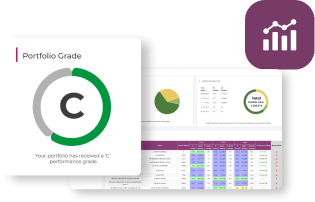
Our free initial portfolio analysis reviews available one, three and five year performance, rankings against funds in the same Investment Association (IA) sector and Yodelar Ratings. Upload a recent portfolio statement or provide your fund names and approximate values.
Where information is available, the analysis can also highlight possible duplication and concentration. It provides factual information, not personal advice, a prediction of future losses or a recommendation to buy, sell or switch.
Yodelar Ratings describe historic performance against sector peers. They do not establish personal suitability or predict future returns. There is no obligation to make changes or proceed with advice.
Upload Your Portfolio For Free Analysis
Discuss What The Findings Mean For Your Plans
Knowing how your funds have performed is useful. Understanding what the portfolio needs to achieve for you is the next part of the conversation.
Book a no obligation call with an adviser from our advice partner, MKC Wealth, to discuss your investments alongside your retirement plans, income needs or other objectives. MKC Wealth provides financial planning and investment advice to UK clients.
Any personal recommendation would follow a fuller assessment of your circumstances, objectives, attitude to risk and ability to withstand losses. The risks, costs and ongoing services would be explained before you decide whether to proceed.
Book A No Obligation Advice Call
Summary
A portfolio should not be judged only by how reassuring it looks when markets are favourable. It should also have a clear explanation for what it holds, what could affect it and how those risks relate to the plans it is meant to support.
That does not mean avoiding successful investments, abandoning bonds or moving into cash whenever uncertainty increases. It means understanding the consequences of those choices rather than allowing recent performance to make the decision for you.
Before deciding that your portfolio needs changing, establish whether its risks are deliberate and affordable. If you cannot explain how a difficult period would affect your plans, that is a worthwhile reason to begin the conversation now.

Sources And Context
Financial Conduct Authority, guidance on diversification and choosing investments appropriate to an investor’s needs.
Financial Conduct Authority, guidance on using financial projections in retirement advice.
Vanguard, research on the changing relationship between equity and bond returns.
PIMCO, guidance on bond duration and interest rate sensitivity.
MoneyHelper, guidance on investing pensions in retirement, investment risks and choosing a financial adviser.