

-
Yodelar analysed more than 4,000 Investment Association (IA) sector-classified funds across 56 IA sectors, using performance data to 30 June 2026.
-
IA Asia Pacific Excluding Japan, IA Global Emerging Markets and IA Technology & Technology Innovation were among the strongest sectors over the first six months of 2026.
-
Strong sector performance did not mean every fund in those sectors performed well against sector peers.
-
Some sectors had a wide gap between the highest and lowest returning funds, showing why fund selection still matters.
The first half of 2026 delivered strong returns across several Investment Association (IA) sectors. Asia Pacific, emerging markets, technology and North American smaller companies all featured among the strongest areas of the market.
For self-managed investors, that can create a familiar temptation. A sector rises sharply, performance tables start to look attractive, and the natural reaction is to question whether the portfolio should have more exposure to that area.
That reaction is understandable, but it can be dangerous if it leads to decisions based only on recent returns.
A sector that has performed well is not automatically the right sector to buy next. It may already have risen significantly. It may carry more risk than the investor expects. It may also duplicate exposure already held through global funds, tracker funds or multi-asset funds.
The bigger issue is that chasing the latest strong sector can pull a portfolio away from its original purpose. A portfolio built for retirement income, long-term growth, capital protection or balanced risk should not be reshaped simply because one area of the market has had a strong six months.
Sector performance is useful information. It shows where returns have come from. But it should be used as evidence for review, not as a reason to make rushed changes.

Top IA Sectors By 6-Month Return
The table below shows the 10 strongest IA sectors by average 6-month return to 30 June 2026.
|
Rank |
IA sector |
Average 1-month return |
Average 3-month return |
Average 6-month return |
|---|---|---|---|---|
|
1 |
IA Asia Pacific Excluding Japan |
0.92% |
20.08% |
26.72% |
|
2 |
IA Global Emerging Markets |
1.43% |
19.77% |
26.69% |
|
3 |
IA Technology & Technology Innovation |
-0.16% |
31.09% |
24.78% |
|
4 |
IA North American Smaller Companies |
6.84% |
21.13% |
20.78% |
|
5 |
IA Asia Pacific Including Japan |
1.27% |
15.20% |
20.04% |
|
6 |
IA Japan |
1.97% |
12.72% |
17.65% |
|
7 |
IA Infrastructure |
1.34% |
5.46% |
13.42% |
|
8 |
IA Specialist |
0.52% |
10.23% |
12.32% |
|
9 |
IA Latin America |
-1.55% |
-1.52% |
11.73% |
|
10 |
IA Listed Property |
2.55% |
10.58% |
10.76% |
The strongest sectors were concentrated in a relatively small number of areas. Asia Pacific Excluding Japan and Global Emerging Markets both returned more than 26% on average over the first six months of 2026. Technology & Technology Innovation also delivered a strong 6-month return, although its latest 1-month average was slightly negative.
This is important because the strongest 6-month return does not always mean recent momentum is still strong. Some sectors performed well earlier in the period but weakened more recently. Others delivered lower 6-month returns but showed stronger recent movement.
For investors, the table should be treated as a map of what has happened, not a list of where to invest next.

The Problem With Chasing In-Form Sectors
Chasing performance usually starts with a reasonable thought. If a sector has performed strongly, it may look like an area the investor should add to the portfolio.
The problem is timing.
By the time a sector appears near the top of a performance table, much of the return may already have happened. Adding exposure after a sharp rise can increase reliance on an area that may now carry more risk, especially if many investors have already moved into the same theme.
This can also affect portfolio balance. An investor may start with a balanced portfolio, then add a technology fund after a strong run, an emerging markets fund after another strong period, and a specialist fund after reading about recent gains. Each decision may seem sensible on its own, but the combined portfolio may become more concentrated and more volatile than intended.
That can have real consequences. A portfolio designed to support retirement, school fees, future withdrawals or long-term financial security should not be driven mainly by the latest sector winners. If the portfolio becomes too dependent on one region, sector or theme, a reversal in that area can have a much larger impact than the investor expected.
The issue is not that investors should avoid strong sectors. The issue is that strong sectors should be reviewed in the context of the existing portfolio, not chased in isolation.
Strong Sectors Can Still Contain Weak Funds
A sector average can hide large differences between the funds inside it.
This matters because investors do not own the sector average. They own specific funds. A sector may perform strongly, but an individual fund in that sector can still lag its peers or even lose money over the same period.
The table below shows selected IA sectors where the gap between the highest and lowest 6-month fund returns was significant.
|
IA sector |
Funds reviewed |
Average 6-month return |
Highest 6-month return |
Lowest 6-month return |
Difference between highest and lowest |
|---|---|---|---|---|---|
|
IA Specialist |
237 |
12.32% |
128.83% |
-35.91% |
164.74% |
|
IA Technology & Technology Innovation |
38 |
24.78% |
70.95% |
-16.67% |
87.62% |
|
IA Global Emerging Markets |
171 |
26.69% |
79.45% |
-3.55% |
83.00% |
|
IA Global |
541 |
8.89% |
63.97% |
-15.64% |
79.61% |
|
IA China/Greater China |
62 |
2.41% |
53.49% |
-19.05% |
72.54% |
|
IA Asia Pacific Excluding Japan |
107 |
26.72% |
60.07% |
-10.60% |
70.67% |
|
IA North America |
261 |
9.01% |
49.67% |
-14.44% |
64.11% |
The IA Technology & Technology Innovation sector averaged 24.78% over six months, but fund returns ranged from 70.95% to -16.67%. That is a difference of 87.62 percentage points within one sector.
Global Emerging Markets also showed a wide spread. The sector average was 26.69%, but individual fund returns ranged from 79.45% to -3.55%.
This shows why sector performance alone is not enough. A portfolio may have exposure to a strong sector but still hold a fund that ranked poorly against competing funds in the same IA sector.
Yodelar Ratings are based on historic sector-relative performance. They are not a recommendation, do not assess personal suitability and should not be treated as a guide to future returns.
Why Funds In The Same Sector Perform Differently
Funds in the same IA sector can still invest in very different ways.
One technology fund may focus on semiconductors. Another may focus on cloud computing. Another may hold a broader mix of technology companies. All three can sit in the same general area, but their returns can be very different.
The same applies to emerging markets. One fund may hold more Korea or Taiwan. Another may have more exposure to China, India, Latin America or smaller companies. These differences can have a major impact on performance.
Even global funds can vary widely. Some may hold a large allocation to US technology companies. Others may be more spread across regions, sectors or investment styles.
This is why investors should look beyond the sector name. The sector tells investors the broad area of the market. The fund ranking shows whether the fund has performed competitively against sector peers.
For self-managed investors, this is a key point. It is possible to be in a strong sector and still hold a weak fund. It is also possible to be in a weaker sector and hold one of the better funds in that area.
Short-Term Strength Can Hide Longer-Term Weakness
The strongest sectors over six months did not always have strong Yodelar long-term fund rating profiles.
|
IA sector |
Average 6-month return |
Funds rated 4 or 5 stars |
Funds rated 1 or 2 stars |
|---|---|---|---|
|
IA Global Emerging Markets |
26.69% |
15.8% |
60.2% |
|
IA Technology & Technology Innovation |
24.78% |
15.8% |
60.5% |
This is an important finding. Both sectors delivered strong average 6-month returns, but only 15.8% of funds in each sector were rated 4 or 5 stars. Around 60% were rated 1 or 2 stars.
That does not mean these sectors should be avoided. It means short-term sector strength should not be confused with longer-term fund quality.
A fund may benefit from a strong short-term trend but still have a weaker performance record over the wider periods analysed. Investors should therefore review several timeframes, sector ranking and Yodelar Rating before drawing conclusions.
Recent performance can start the review. It should not finish it.

Portfolio Balance Comes Before Sector Performance
The strongest sectors of the year can be useful to understand, but they should not replace portfolio planning.
A well-structured portfolio should be built around the investor’s objectives, risk level, time horizon and need for access to money. Sector exposure should support that plan, not disrupt it.
For example, an investor approaching retirement may need a different balance from someone investing for long-term growth. A portfolio designed for withdrawals should not necessarily be reshaped around the latest high-growth sector. A cautious investor may not need large exposure to specialist or highly concentrated funds, even if those funds have recently performed well.
The opposite can also be true. An investor with a long time horizon may need enough growth exposure to meet their objectives, but that still does not mean chasing every strong sector. Growth exposure should be deliberate, balanced and reviewed.
The danger is when sector performance starts driving the portfolio rather than the investor’s objective. That can lead to too much risk, too much duplication, or a portfolio that no longer matches what the investor needs the money to do.
Poor Planning Can Put Objectives At Risk
Investment decisions should be judged by whether they help the investor reach their objective.
That objective may be retirement income, long-term growth, preserving capital, helping family, funding care, or building financial security over time. A strong recent sector return is only useful if it supports that objective in a suitable way.
A portfolio built by chasing performance can become harder to control. It may end up with too much exposure to one region, too many funds doing the same job, or too little protection if markets fall. This can make it harder for investors to stay on track.
For someone approaching retirement, this can be especially important. A sharp fall shortly before withdrawals begin can affect the income strategy. For someone investing for long-term growth, being too cautious may reduce the chance of reaching the desired outcome. For someone relying on a portfolio for future plans, taking the wrong type of risk can be just as damaging as taking too much risk.
The point is not that investors should avoid risk. Risk is part of investing. The point is that risk should be taken for a clear reason and linked to the outcome the investor wants.
A portfolio should not be a collection of recent winners. It should be a structured plan designed around the investor’s objectives.
What Investors Should Check Before Acting
Before adding exposure to a strong-performing sector, investors should review their current portfolio first.
|
Review question |
Why it matters |
|---|---|
|
Do I already hold this sector? |
Exposure may already exist through global, regional or multi-asset funds. |
|
Did my fund rank well in its sector? |
A fund can sit in a strong sector but still lag sector peers. |
|
Would adding more increase concentration? |
Too much exposure to one region or theme can increase risk. |
|
Does this fit my objective? |
Sector exposure should support the goal, not distract from it. |
|
Has the sector already had a strong run? |
Buying after large gains can increase the risk of poor timing. |
|
What would this replace? |
Adding another fund without reviewing existing holdings can create duplication. |
These questions help investors avoid making changes based only on recent performance.
The aim is not to stop investors using strong sectors. It is to make sure any sector exposure is deliberate, suitable and part of a wider plan.
Download The Full IA Sector Fund Rankings
The sector tables show where average returns were strongest, but they do not show how every fund in each sector performed.
That detail matters.
A fund in a strong sector may have ranked poorly. A fund in a weaker sector may still have ranked well against sector peers. Without fund-level data, investors may draw the wrong conclusion.
To support this analysis, readers can download the full IA sector fund rankings. The download provides performance data, sector ranking and Yodelar Rating for funds across all 56 Investment Association sectors reviewed.
The download is designed as a research tool. It does not provide personal advice and does not recommend whether to buy, sell or switch any investment.

Start With A Free Portfolio Analysis
The full IA sector fund rankings can help investors compare funds, but they do not show whether an individual investor’s own portfolio is well structured.
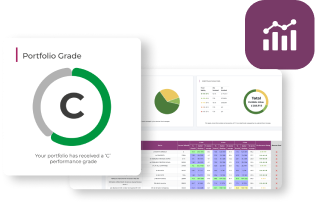
Our free portfolio analysis reviews each fund individually, showing 1, 3 and 5-year performance, sector ranking and Yodelar Rating, where data is available. Yodelar Ratings are based on historic sector-relative performance and are not a guide to future returns.
The analysis can also help identify weaker-rated holdings, duplication, concentration, higher charges and funds that may no longer have a clear role.
This is a historic comparison only. It does not provide personal advice, is not a recommendation to invest in an MKC portfolio and should not be treated as a guide to future performance.
For investors looking at the strongest sectors of 2026 so far, the first step should be to understand their current portfolio. The analysis can help show whether they already hold exposure to those areas, whether their funds have ranked well against sector peers, and whether the portfolio remains aligned with their objectives.

Speak To An Adviser
For investors who want to understand whether their current portfolio remains suitable, a no obligation call with an adviser from our advice partner, MKC Wealth, can help.
The discussion can cover current holdings, portfolio analysis results, objectives, time horizon and attitude to risk. It can also explain how a more structured investment approach may compare with the portfolio currently held.
Any personal recommendation would only be made after understanding the investor’s financial position, investment objectives, time horizon and attitude to risk. Any recommendation would include a clear explanation of risks, costs and ongoing service.

Summary
The first half of 2026 showed that sector performance can have a major impact on investor returns. Asia Pacific, emerging markets, technology and North American smaller companies were among the strongest areas.
But the data also shows why investors should be careful. Strong sector performance did not mean every fund in those sectors performed well. In some leading sectors, the difference between the strongest and weakest funds was substantial.
For self-managed investors, the risk is using recent sector performance as a reason to chase returns. That can disrupt portfolio balance, increase concentration and move the portfolio away from the investor’s original objective.
The more useful response is to review the portfolio already held. Investors should check which sectors they are exposed to, whether their funds ranked well against sector peers, and whether each holding still supports their wider plan.
Before making decisions based on the strongest sectors of 2026 so far, investors should first understand what they already own and whether it is still aligned with their objectives.

Source and Methodology
Source: Yodelar analysis of Investment Association sector-classified funds using performance data to 30 June 2026.
Sector performance gaps are based on the difference between the highest and lowest 6-month fund returns within each IA sector. Yodelar Ratings are based on historic fund performance relative to funds in the same Investment Association sector. Figures are rounded. Past performance is not a reliable guide to future returns.