

-
A fall in fund value can reflect wider market conditions, the investments within the fund, or both.
-
Losing money and underperforming are different. A fund can fall while holding up better than relevant alternatives, or rise while falling behind them.
-
Performance comparisons need matching dates, consistent treatment of income and charges, and an understanding of the risks involved.
-
The amount invested in each fund matters. The fund with the largest percentage loss may not have had the greatest effect on your portfolio.
-
Our free initial portfolio analysis can help you understand how your funds have performed before deciding whether a fuller advice discussion would be useful.
When your pension or ISA falls, “markets are down” can offer some reassurance. It still leaves an important question unanswered: are your funds behaving as expected, or is something within your portfolio worth investigating?
The same fall in value can tell different stories. One fund may have held up better than its sector peers, while another has continued a longer period of weaker performance. A third may be following its approach as intended but carrying risks that no longer suit the person holding it. Understanding the difference gives you a more useful starting point for your next decision.

A Loss And Underperformance Are Different
A fund that falls less than an appropriate sector average has outperformed that average over the period, despite delivering a negative return. Equally, a fund can grow in value while underperforming because relevant alternatives have grown more.
The comparison adds context, but it does not make a loss less significant to the investor. Nor does a stronger relative result establish whether the fund remains suitable for their circumstances.
Market conditions and the choices made within a fund can both contribute to its performance. A weak market may help explain the broad direction, while the fund’s particular investments, approach and costs help explain the result it delivered.
The useful question is how the fund performed in relation to what it was trying to achieve, the risks it took and an appropriate comparison.
Choose A Comparison That Means Something
Investment Association (IA) sectors group funds by broad characteristics, such as the types of investments they hold or the markets they cover. They provide a starting point for comparing performance, but funds within the same sector can still have different holdings, approaches and risk profiles.
Two global equity funds, for example, may invest different proportions in particular countries, industries or sizes of company. Those differences matter when assessing why their returns have diverged.
Read the fund’s stated objective and any benchmark it uses, alongside relevant sector comparisons. A benchmark is a reference used to assess performance, often a market index. For some sectors containing particularly varied approaches, the IA advises against comparisons across the whole sector.
The fund’s purpose also matters. An index tracker aims to follow its chosen index, including when that index falls. Its result needs to be assessed against that objective and the costs of following the index. A loss alone does not establish that it has failed to do its job.
Look For An Explanation And A Pattern
Once the comparison is sound, the next step is to understand what drove the result.
The fund’s reporting for the period can help identify which investments contributed to its performance. If a manager attributes weakness to a particular country or industry, that explanation should relate to what the fund held at the time. A general account of difficult markets may leave the more specific question unanswered: why did this fund perform differently from relevant alternatives?
Then look at when the gap appeared. Has the fund recently fallen behind, or does the weakness extend across earlier periods?
One, three and five year returns can help, but those periods overlap. Reviewing separate annual periods can provide a clearer picture of when the fund gained or lost ground. It is also useful to check whether the manager or investment approach has changed during the period being examined.
Repeated weaker results against a suitable comparison deserve a clear explanation. They do not establish what will happen next, just as a strong past record cannot guarantee that a fund will recover from its latest fall.

Consider How Much Of Your Portfolio Is Affected
The fund showing the largest percentage loss may catch your attention first. Its effect on your overall finances, however, depends on how much you have invested in it.
Over the same period, a larger holding with a smaller percentage fall can reduce the portfolio’s value more than a smaller holding with a sharper decline. Reviewing each fund in isolation can therefore give an incomplete picture of where the losses came from.
It also helps to examine what the funds hold collectively. Different fund names can conceal repeated investments in the same companies or dependence on the same markets. Diversification concerns those underlying investments and can reduce reliance on any one area, although it cannot eliminate the risk of losses.
Several funds falling together does not, by itself, prove that a portfolio is poorly diversified. The question is whether the combined exposure is understood and appropriate for the purpose of the money.
Does The Risk Still Fit Your Plans?
Understanding why a fund fell is one part of the assessment. Understanding what that loss means for you is another.
A fund may have moved broadly in line with its market, yet the result could reveal that its risks were not fully understood or that your circumstances have changed. A useful review should explain what can cause losses and consider your ability to withstand them.
The Financial Conduct Authority (FCA) distinguishes between feeling comfortable with investment values moving up and down and being able to cope financially with a loss. Both matter when assessing the risk you are taking.
Perhaps retirement is closer, withdrawals have increased or money originally intended for long term growth is now needed for spending. In those circumstances, even a competitive sector ranking cannot establish whether the investment remains appropriate.
Any proposed change should address an identified issue. That might concern the fund itself, the amount invested in it or the wider mix of investments. Choosing a replacement solely because it recently performed better leaves those questions unresolved.
See How Your Funds Compare
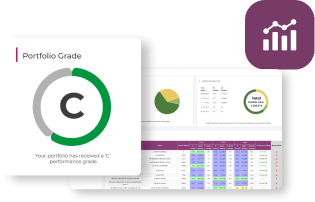
If your account value has fallen but you are unsure how your funds compare with their sector peers, our free initial portfolio analysis provides a practical starting point.
You can upload a recent portfolio statement or provide the fund names and amounts held. The analysis shows available performance over one, three and five years, together with sector rankings, helping you identify where further investigation may be useful. The first analysis is free for private investors.
This is factual information about your holdings and their historical performance. It does not assess personal suitability, establish the cause of every loss or recommend buying, selling or switching investments. There is no obligation to change your investments or proceed to paid advice.

Get Help With The Decision Behind The Figures
Working through these questions takes more than checking a performance table. It involves keeping track of holdings, examining relevant comparisons, understanding risks and connecting the findings to what your money needs to achieve.
Some investors have the time and knowledge to undertake that work themselves. Others would value professional help assessing the evidence and deciding whether their approach still supports their plans.
A no obligation call with an adviser from our advice partner, MKC Wealth, gives you an opportunity to discuss your concerns and whether a fuller assessment would be useful. MKC Wealth Ltd is authorised and regulated by the Financial Conduct Authority, firm reference number 428734.
If you choose to proceed with advice, the service and its cost would be explained and agreed before the work begins. Any personal recommendation would follow an assessment of your circumstances, objectives, investment period, attitude to risk and ability to withstand losses. The risks and costs of the recommendation would be explained before you decide whether to act on it.
This may result in a single piece of advice. Any ongoing support would be considered separately, with its services and charges explained and agreed before it starts. Professional advice cannot guarantee better returns or prevent investment losses. Its role is to help assess whether the decisions being considered are suitable for your needs.
Summary
A falling fund deserves an explanation that goes beyond its latest return. How it compares, what it holds, the amount invested and the implications for your plans all contribute to a more useful assessment.
That assessment may support retaining your existing investments or identify something that needs closer attention. The next decision should follow from understanding the issue and what any proposed change would achieve.

Important Information
This article provides general information and is not personal financial advice or a recommendation to buy, sell or switch investments. The value of investments and the income from them can fall as well as rise, and you may get back less than you invest. Past performance is not a reliable guide to future returns.